
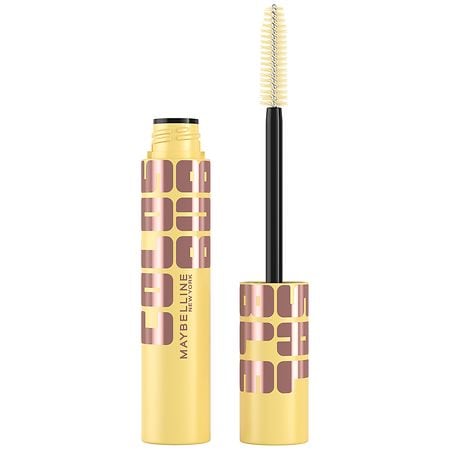

Maybelline Colossal Bubble Mascara for Volume and Length - Brownish Black - 0.33 fl oz: Volumizing, Eyelashes
Analysis updated July 2026 · How Scout scores
At a glance
Summary
This mascara contains a mix of synthetic ingredients such as acrylates copolymer and phenoxyethanol, which are common in cosmetics but can be concerning for sensitive skin. However, it does not include any heavily penalized ingredients like parabens or formaldehyde releasers. The presence of natural minerals like kaolin and mica is a positive aspect, but the overall formulation is moderately processed, which affects its rating.
Key ingredients 25
KaolinGood
Beneficial ingredient — whole-food or functional value in this product class.
Risks
There are minimal risks, though it may cause mild irritation in some individuals.
Benefits
It provides oil control and enhances product texture.
MicaGood
Beneficial ingredient — whole-food or functional value in this product class.
Risks
There are minimal risks, though it may cause mild irritation in some individuals.
Benefits
It provides a shimmering effect to cosmetic products.
AquaNeutral
Aqua, or water, is a common solvent used in cosmetics. It helps dissolve other ingredients and provides a base for the formulation. It is generally considered safe and non-irritating.
Risks
There are no significant risks associated with water in cosmetics.
Benefits
Water helps to hydrate and blend other ingredients effectively.
Behenyl BehenateNeutral
Behenyl Behenate is an ester used as a thickening agent and emollient in cosmetics. It helps improve the texture and spreadability of the product. It is generally considered safe for use in cosmetics.
Risks
There are minimal risks associated with Behenyl Behenate, though some individuals may experience mild irritation.
Benefits
It provides a smooth application and enhances the product's texture.
Cetearyl AlcoholNeutral
Cetearyl Alcohol is a fatty alcohol used as an emollient and thickener in cosmetics. It helps to soften the skin and improve the texture of the product. It is generally considered safe and non-irritating.
Risks
Rarely, it may cause mild irritation in sensitive individuals.
Benefits
It provides moisturizing properties and improves product consistency.
Stearic AcidNeutral
Stearic Acid is a fatty acid used as an emulsifier and thickener in cosmetics. It helps stabilize formulations and provides a smooth texture. It is generally considered safe for use.
Risks
There are minimal risks, though it may cause mild irritation in some individuals.
Benefits
It enhances the stability and texture of cosmetic products.
Palmitic AcidNeutral
Palmitic Acid is a fatty acid used as an emollient and thickener in cosmetics. It helps to soften the skin and improve the texture of the product. It is generally considered safe for use.
Risks
There are minimal risks, though it may cause mild irritation in some individuals.
Benefits
It provides moisturizing properties and improves product consistency.
Poly C10-30 Alkyl AcrylateNeutral
Poly C10-30 Alkyl Acrylate is used as a thickening agent and film-former in cosmetics. It helps to stabilize emulsions and improve product texture. It is generally considered safe for use.
Risks
There are minimal risks, though it may cause mild irritation in some individuals.
Benefits
It enhances the stability and texture of cosmetic products.
Butylene GlycolNeutral
Butylene Glycol is a humectant used to retain moisture in cosmetics. It helps improve the spreadability and texture of the product. It is generally considered safe for use.
Risks
There are minimal risks, though it may cause mild irritation in some individuals.
Benefits
It provides moisturizing properties and enhances product texture.
PVPNeutral
PVP is a film-forming agent used in cosmetics to provide hold and adhesion. It is commonly used in hair and lash products for its binding properties. It is generally considered safe for use.
Risks
There are minimal risks, though it may cause mild irritation in some individuals.
Benefits
It enhances the hold and longevity of cosmetic products.
VP/Eicosene CopolymerNeutral
VP/Eicosene Copolymer is used as a film-forming agent in cosmetics, providing water resistance and adhesion. It is commonly used in mascaras to help them adhere to lashes. It is generally considered safe for use.
Risks
Some individuals may experience mild irritation or allergic reactions.
Benefits
It enhances the longevity and water resistance of the mascara.
Aminomethyl PropanediolNeutral
Aminomethyl Propanediol is used as a pH adjuster in cosmetics. It helps to maintain the stability and efficacy of the product. It is generally considered safe for use.
Risks
There are minimal risks, though it may cause mild irritation in some individuals.
Benefits
It helps maintain the stability and performance of cosmetic formulations.
Caprylyl GlycolNeutral
Caprylyl Glycol is used as a skin conditioning agent and preservative booster in cosmetics. It helps to improve the moisture content and stability of the product. It is generally considered safe for use.
Risks
There are minimal risks, though it may cause mild irritation in some individuals.
Benefits
It enhances the moisturizing properties and stability of cosmetic products.
Pentylene GlycolNeutral
Pentylene Glycol is a humectant and solvent used in cosmetics to retain moisture and improve texture. It helps to enhance the spreadability and feel of the product. It is generally considered safe for use.
Risks
There are minimal risks, though it may cause mild irritation in some individuals.
Benefits
It provides moisturizing properties and enhances product texture.
Potassium Cetyl PhosphateNeutral
Potassium Cetyl Phosphate is used as an emulsifier and surfactant in cosmetics. It helps to stabilize formulations and improve texture. It is generally considered safe for use.
Risks
There are minimal risks, though it may cause mild irritation in some individuals.
Benefits
It enhances the stability and texture of cosmetic products.
Myristic AcidNeutral
Myristic Acid is a fatty acid used as an emollient and thickener in cosmetics. It helps to soften the skin and improve the texture of the product. It is generally considered safe for use.
Risks
There are minimal risks, though it may cause mild irritation in some individuals.
Benefits
It provides moisturizing properties and improves product consistency.
SilicaNeutral
Silica is used as an absorbent and anti-caking agent in cosmetics. It helps to control oil and improve the texture of the product. It is generally considered safe for use.
Risks
There are minimal risks, though it may cause mild irritation in some individuals.
Benefits
It provides oil control and enhances product texture.
CI 77491Neutral
CI 77491 is an iron oxide pigment used for coloring in cosmetics. It provides a red hue and is commonly used in makeup products. It is generally considered safe for use.
Risks
There are minimal risks, though it may cause mild irritation in some individuals.
Benefits
It provides color to cosmetic products.
CI 77492Neutral
CI 77492 is an iron oxide pigment used for coloring in cosmetics. It provides a yellow hue and is commonly used in makeup products. It is generally considered safe for use.
Risks
There are minimal risks, though it may cause mild irritation in some individuals.
Benefits
It provides color to cosmetic products.
CI 77499Neutral
CI 77499 is an iron oxide pigment used for coloring in cosmetics. It provides a black hue and is commonly used in makeup products. It is generally considered safe for use.
Risks
There are minimal risks, though it may cause mild irritation in some individuals.
Benefits
It provides color to cosmetic products.
CI 77007Neutral
CI 77007 is an ultramarine pigment used for coloring in cosmetics. It provides a blue hue and is commonly used in makeup products. It is generally considered safe for use.
Risks
There are minimal risks, though it may cause mild irritation in some individuals.
Benefits
It provides color to cosmetic products.
CI 77742Neutral
CI 77742 is a manganese violet pigment used for coloring in cosmetics. It provides a violet hue and is commonly used in makeup products. It is generally considered safe for use.
Risks
There are minimal risks, though it may cause mild irritation in some individuals.
Benefits
It provides color to cosmetic products.
CI 77891Neutral
CI 77891, also known as Titanium Dioxide, is used as a pigment and opacifying agent in cosmetics. It provides a white color and is commonly used in makeup products. It is generally considered safe for use.
Risks
There are minimal risks, though it may cause mild irritation in some individuals.
Benefits
It provides color and opacity to cosmetic products.
Acrylates CopolymerBad
Processed additive flagged under Scout's ingredient doctrine.
Risks
Some individuals may experience mild irritation or allergic reactions.
Benefits
It enhances the longevity and water resistance of the mascara.
PhenoxyethanolBad
Processed additive flagged under Scout's ingredient doctrine.
Risks
In high concentrations, it may cause irritation or allergic reactions.
Benefits
It effectively preserves the product and prevents contamination.
Get the full breakdown in the Scout appTake Scout shopping
Scan any product to see lab results, healthy alternatives, and your personalized analysis.
Download on theApp Store GET IT ONGoogle PlayAmazon pricing & content
Amazon price as of . Product prices and availability are accurate as of the date/time indicated and are subject to change. Any price and availability information displayed on Amazon.com at the time of purchase will apply to the purchase of this product.
CERTAIN CONTENT THAT APPEARS ON THIS SITE COMES FROM AMAZON. THIS CONTENT IS PROVIDED “AS IS” AND IS SUBJECT TO CHANGE OR REMOVAL AT ANY TIME.