
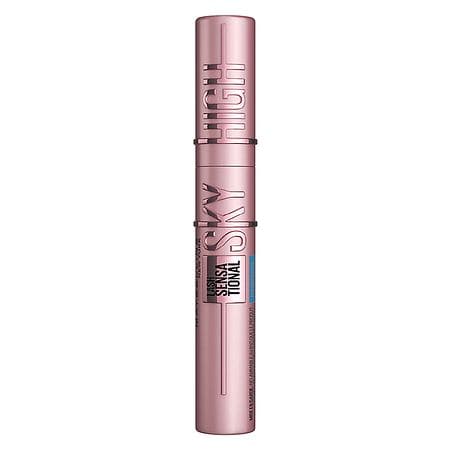

Maybelline Lash Sensational Sky High Lengthening Mascara - 802 Waterproof Very Black - 0.24 fl oz
Analysis updated August 2026 · How Scout scores
At a glance
Summary
This mascara contains beneficial natural ingredients like beeswax, carnauba wax, and hydrogenated jojoba oil, which provide emollient and protective properties. However, the presence of denatured alcohol, which can be drying and irritating, and talc, which has potential contamination concerns, negatively impacts the overall ingredient safety. The product's formulation includes both natural and synthetic components, resulting in a mixed assessment of ingredient quality.
Key ingredients 23
CERA ALBA / BEESWAX / CIRE DABEILLEVery Good
Beeswax is a natural wax produced by honey bees and is used in cosmetics for its emollient properties. It helps to lock in moisture and provides a protective barrier on the skin. It is well-tolerated by most skin types.
Risks
There is a low risk of allergic reactions, particularly in individuals with bee allergies.
Benefits
Beeswax is beneficial for its moisturizing and skin-protective properties.
HYDROGENATED JOJOBA OILVery Good
Hydrogenated jojoba oil is a natural oil derived from the jojoba plant and is used in cosmetics for its emollient properties. It helps to lock in moisture and provides a protective barrier on the skin. It is well-tolerated by most skin types.
Risks
There are minimal risks associated with hydrogenated jojoba oil, though it can cause mild irritation in sensitive individuals.
Benefits
It is beneficial for its moisturizing and skin-protective properties.
ORYZA SATIVA CERA / RICE BRAN WAXGood
Rice bran wax is a natural wax derived from rice bran oil and is used in cosmetics for its emollient properties. It helps to lock in moisture and provides a smooth texture. It is well-tolerated by most skin types.
Risks
There are minimal risks associated with rice bran wax, though it can cause mild irritation in sensitive individuals.
Benefits
It is beneficial for its moisturizing and skin-smoothing properties.
CAPRYLIC/CAPRIC TRIGLYCERIDEGood
Caprylic/capric triglyceride is a natural emollient derived from coconut oil and glycerin. It is used in cosmetics for its moisturizing properties and to improve texture. It is well-tolerated by most skin types.
Risks
There are minimal risks associated with caprylic/capric triglyceride, though it can cause mild irritation in sensitive individuals.
Benefits
It is beneficial for its moisturizing and skin-smoothing properties.
BAMBUSA VULGARIS EXTRACTGood
Bambusa vulgaris extract is a botanical extract used in cosmetics for its antioxidant properties. It helps in protecting the skin from environmental damage. It is well-tolerated by most skin types.
Risks
There are minimal risks associated with bambusa vulgaris extract, though it can cause mild irritation in sensitive individuals.
Benefits
It is beneficial for its antioxidant properties and skin-protective benefits.
ISODODECANENeutral
Isododecane is a hydrocarbon commonly used in cosmetics for its lightweight and non-greasy feel. It helps in the even application of products. It is generally considered safe for use in cosmetics.
Risks
There are minimal risks associated with isododecane, though it can cause mild irritation in sensitive individuals.
Benefits
It provides a smooth application and helps in the longevity of the product on the skin.
COPERNICIA CERIFERA CERA / CARNAUBA WAX / CIRE DE CARNAUBANeutral
Standard formulation ingredient — neither beneficial nor harmful at typical use.
Risks
There are minimal risks associated with carnauba wax, though it can cause mild irritation in sensitive individuals.
Benefits
It is beneficial for its ability to provide a glossy finish and improve the texture of cosmetic products.
DISTEARDIMONIUM HECTORITENeutral
Disteardimonium hectorite is a clay-derived thickening agent used in cosmetics to stabilize formulations. It helps in maintaining the consistency of the product. It is generally considered safe for use in cosmetics.
Risks
There are minimal risks associated with disteardimonium hectorite, though it can cause mild irritation in sensitive individuals.
Benefits
It helps in stabilizing and thickening cosmetic formulations, improving their texture.
AQUA / WATER / EAUNeutral
Water is a universal solvent used in cosmetics as a base for formulations. It helps in dissolving other ingredients and provides hydration. It is essential for the formulation of many cosmetic products.
Risks
There are no significant risks associated with water in cosmetics.
Benefits
Water is beneficial for its hydrating properties and as a solvent for other ingredients.
ALLYL STEARATE/VA COPOLYMERNeutral
This copolymer is used in cosmetics as a film-forming agent to provide a smooth and even application. It helps in the adhesion of the product to the skin. It is generally considered safe for use in cosmetics.
Risks
There are minimal risks associated with this copolymer, though it can cause mild irritation in sensitive individuals.
Benefits
It provides a smooth application and helps in the longevity of the product on the skin.
POLYVINYL LAURATENeutral
Polyvinyl laurate is a synthetic polymer used in cosmetics as a film-forming agent. It helps in the adhesion of the product to the skin and provides a smooth application. It is generally considered safe for use in cosmetics.
Risks
There are minimal risks associated with polyvinyl laurate, though it can cause mild irritation in sensitive individuals.
Benefits
It provides a smooth application and helps in the longevity of the product on the skin.
VP/EICOSENE COPOLYMERNeutral
This copolymer is used in cosmetics as a film-forming agent to provide a smooth and even application. It helps in the adhesion of the product to the skin. It is generally considered safe for use in cosmetics.
Risks
There are minimal risks associated with this copolymer, though it can cause mild irritation in sensitive individuals.
Benefits
It provides a smooth application and helps in the longevity of the product on the skin.
PROPYLENE CARBONATENeutral
Propylene carbonate is a solvent used in cosmetics to dissolve other ingredients and improve the texture of the product. It is generally considered safe for use in cosmetics. It helps in the even distribution of the product.
Risks
There are minimal risks associated with propylene carbonate, though it can cause mild irritation in sensitive individuals.
Benefits
It helps in dissolving other ingredients and improves the texture of cosmetic products.
ETHYLENEDIAMINE/STEARYL DIMER DILINOLEATE COPOLYMERNeutral
This copolymer is used in cosmetics as a film-forming agent to provide a smooth and even application. It helps in the adhesion of the product to the skin. It is generally considered safe for use in cosmetics.
Risks
There are minimal risks associated with this copolymer, though it can cause mild irritation in sensitive individuals.
Benefits
It provides a smooth application and helps in the longevity of the product on the skin.
PEG-30 GLYCERYL STEARATENeutral
PEG-30 glyceryl stearate is an emulsifier used in cosmetics to stabilize formulations and improve texture. It helps in the even distribution of ingredients. It is generally considered safe for use in cosmetics.
Risks
There are minimal risks associated with PEG-30 glyceryl stearate, though it can cause mild irritation in sensitive individuals.
Benefits
It helps in stabilizing formulations and improves the texture of cosmetic products.
RAYONNeutral
Rayon is a semi-synthetic fiber used in cosmetics for its absorbent properties and to improve texture. It is generally considered safe for use in cosmetics. It helps in providing a smooth finish in products.
Risks
There are minimal risks associated with rayon, though it can cause mild irritation in sensitive individuals.
Benefits
It provides a smooth finish and helps in absorbing excess moisture.
SILICANeutral
Silica is a mineral used in cosmetics for its absorbent properties and to improve texture. It helps in providing a smooth finish and controls shine. It is generally considered safe for use in cosmetics.
Risks
There are minimal risks associated with silica, though it can cause mild irritation in sensitive individuals.
Benefits
It provides a smooth finish and helps in absorbing excess moisture.
PENTAERYTHRITYL TETRA-DI-T-BUTYL HYDROXYHYDROCINNAMATENeutral
This ingredient is an antioxidant used in cosmetics to prevent the oxidation of other ingredients. It helps in maintaining the stability and shelf-life of the product. It is generally considered safe for use in cosmetics.
Risks
There are minimal risks associated with this antioxidant, though it can cause mild irritation in sensitive individuals.
Benefits
It helps in maintaining the stability and shelf-life of cosmetic products.
PARAFFINBad
Processed additive flagged under Scout's ingredient doctrine.
Risks
There are minimal risks associated with paraffin, though it can cause mild irritation in sensitive individuals.
Benefits
It is beneficial for its moisturizing and skin-protective properties.
TALCBad
Talc is a mineral used in cosmetics for its absorbent properties and to improve texture. However, it has been associated with respiratory issues and potential contamination with asbestos. It is often used to provide a smooth finish in products.
Risks
There is a risk of respiratory issues and potential contamination with asbestos.
Benefits
It provides a smooth finish and helps in absorbing excess moisture.
SYNTHETIC BEESWAXBad
Processed additive flagged under Scout's ingredient doctrine.
Risks
There are minimal risks associated with synthetic beeswax, though it can cause mild irritation in sensitive individuals.
Benefits
It is beneficial for its moisturizing and skin-protective properties.
BHTBad
Processed additive flagged under Scout's ingredient doctrine.
Risks
There are minimal risks associated with BHT, though it can cause mild irritation in sensitive individuals.
Benefits
It helps in maintaining the stability and shelf-life of cosmetic products.
ALCOHOL DENAT.Very Bad
Denatured alcohol is used in cosmetics for its quick-drying properties and as a solvent. However, it can be drying and irritating to the skin, especially with prolonged use. It is often used to enhance the penetration of other ingredients.
Risks
It can cause dryness and irritation, particularly in sensitive skin types.
Benefits
It helps in the quick drying of products and enhances the penetration of active ingredients.
Get the full breakdown in the Scout appTake Scout shopping
Scan any product to see lab results, healthy alternatives, and your personalized analysis.
Download on theApp Store GET IT ONGoogle PlayAmazon pricing & content
Amazon price as of . Product prices and availability are accurate as of the date/time indicated and are subject to change. Any price and availability information displayed on Amazon.com at the time of purchase will apply to the purchase of this product.
CERTAIN CONTENT THAT APPEARS ON THIS SITE COMES FROM AMAZON. THIS CONTENT IS PROVIDED “AS IS” AND IS SUBJECT TO CHANGE OR REMOVAL AT ANY TIME.