
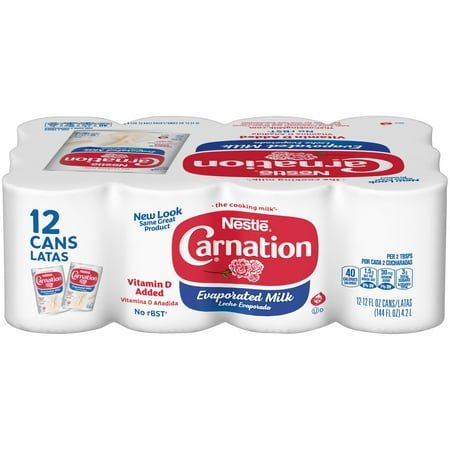


CARNATION Evaporated Milk 12-12 fl. oz. Cans
Summary
This product contains beneficial ingredients like milk and Vitamin D3, which provide essential nutrients such as calcium and support bone health. However, it is moderately processed and includes carrageenan, a thickening agent that has been linked to digestive issues in some studies. The presence of additives and the processing level limit its overall healthiness compared to less processed alternatives.
At a glance
Key ingredients 6
MilkGood
Milk is a primary source of calcium and protein, essential for bone health and muscle maintenance. It is minimally processed in evaporated milk, retaining most of its nutritional benefits. The quality of milk can vary based on the source, with organic and grass-fed options offering additional health benefits.
Risks
Potential lactose intolerance or milk allergy concerns for sensitive individuals.
Benefits
Rich in calcium and protein, supporting bone health and muscle function.
Dipotassium PhosphateNeutral
Dipotassium phosphate is used as a stabilizer and emulsifier in food products. It helps maintain texture and consistency in evaporated milk. While generally recognized as safe, it provides no significant nutritional benefits.
Risks
Excessive intake may lead to imbalances in phosphate levels, but this is unlikely in typical consumption.
CarrageenanBad
Carrageenan is a thickening agent derived from seaweed, used to improve texture in dairy products. It has been associated with digestive issues and inflammation in some studies. The processing of carrageenan can lead to degraded forms that may pose health risks.
Risks
Potential digestive issues and inflammation concerns, particularly with degraded forms.
Vitamin D3Good
Vitamin D3 is essential for calcium absorption and bone health. It is often added to dairy products to enhance nutritional value. Sourced from animal products, it is more effective than plant-based vitamin D2.
Benefits
Supports calcium absorption and bone health, enhancing the nutritional profile of the product.
DextroseNeutral
Dextrose is a simple sugar used to enhance sweetness and balance flavors. It is a refined sugar, contributing to the carbohydrate content without additional nutritional benefits. Overconsumption of sugars can lead to health issues, but dextrose itself is not inherently harmful in moderation.
Risks
Excessive sugar intake can contribute to metabolic issues and dental problems.
Vitamin A PalmitateNeutral
Vitamin A Palmitate is a synthetic form of vitamin A added to fortify foods. It supports vision and immune function but is less bioavailable than natural sources. It is stable in processed foods, ensuring consistent vitamin A levels.
Risks
High doses can lead to toxicity, but this is unlikely in typical food fortification levels.
Benefits
Supports vision and immune function, enhancing the nutritional profile of the product.
Processing
Processed Foods
Get the full breakdown in the Scout app
Scan any product to see lab results, healthy alternatives, and your personalized analysis.
Download on theApp Store