
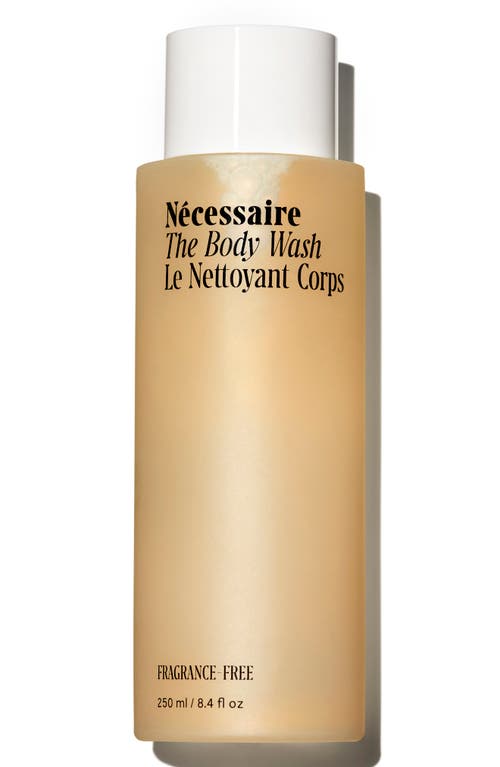
Nécessaire The Body Wash Fragrance Free
Analysis updated September 2026 · How Scout scores
At a glance
Summary
This body wash features a blend of mild surfactants and beneficial ingredients like niacinamide and ceramides, which support skin health and hydration. The formula is largely free from harsh chemicals, though it does contain phenoxyethanol, a preservative that can be an irritant for some individuals. Overall, the product is well-formulated with a focus on gentle cleansing and skin barrier support.
Key ingredients 33
Ceramide AGVery Good
Ceramides are lipids that help form the skin's barrier and retain moisture. They are essential for maintaining healthy skin.
Risks
There are no significant risks associated with ceramides.
Benefits
They help in restoring the skin barrier and preventing moisture loss.
Ceramide APVery Good
Ceramide AP is a type of ceramide that helps strengthen the skin's natural barrier. It is crucial for maintaining skin hydration.
Risks
There are no significant risks associated with ceramides.
Benefits
It aids in skin barrier repair and enhances moisture retention.
Ceramide EOPVery Good
Ceramide EOP is a lipid molecule that plays a key role in maintaining the skin's barrier function. It helps in protecting the skin from environmental damage.
Risks
There are no significant risks associated with ceramides.
Benefits
It supports skin barrier integrity and helps in reducing transepidermal water loss.
Ceramide NGVery Good
Ceramide NG is a skin-identical lipid that helps in maintaining the skin's natural barrier. It is beneficial for dry and sensitive skin.
Risks
There are no significant risks associated with ceramides.
Benefits
It helps in improving skin hydration and resilience.
Centella Asiatica ExtractVery Good
Centella Asiatica Extract is known for its wound healing and anti-inflammatory properties. It is used to soothe and repair damaged skin.
Risks
There are no significant risks associated with Centella Asiatica.
Benefits
It helps in calming irritated skin and promoting skin regeneration.
Sclerocarya Birrea Seed OilVery Good
Also known as marula oil, it is rich in antioxidants and fatty acids. It is known for its moisturizing and nourishing properties.
Risks
There are no significant risks associated with marula oil.
Benefits
It helps in hydrating the skin and improving skin elasticity.
Caprylyl/Capryl GlucosideGood
This is a mild, non-ionic surfactant derived from sugar and fatty alcohols. It is biodegradable and gentle on the skin. It enhances the foaming and cleansing properties of the product.
Risks
There are no significant risks associated with this ingredient.
Benefits
It is effective in cleansing while being gentle, making it suitable for sensitive skin.
Disodium CocoamphodiacetateGood
This is a mild surfactant derived from coconut oil. It is used to reduce irritation potential in cleansing products. It is known for its ability to create a rich lather.
Risks
There are minimal risks, but it can cause mild irritation in very sensitive skin.
Benefits
It helps in creating a creamy lather and is gentle on the skin.
GlycerinGood
Glycerin is a humectant that attracts moisture to the skin. It is widely used in skincare for its hydrating properties. It helps maintain the skin's moisture balance.
Risks
There are no significant risks associated with glycerin.
Benefits
It provides excellent hydration and helps in maintaining skin softness.
Sodium Methyl Cocoyl TaurateGood
This is a mild surfactant derived from coconut oil and taurine. It is known for its gentle cleansing properties and ability to produce a stable foam.
Risks
There are minimal risks, but it can cause mild irritation in very sensitive skin.
Benefits
It provides gentle cleansing and is suitable for sensitive skin.
NiacinamideGood
Niacinamide is a form of Vitamin B3 that is known for its anti-inflammatory and skin-soothing properties. It helps improve skin texture and tone.
Risks
There are no significant risks associated with niacinamide.
Benefits
It helps in reducing redness and improving the overall appearance of the skin.
Ceramide NPGood
Ceramide NP is a type of ceramide that helps in restoring the skin's barrier and retaining moisture. It is effective in reducing dryness and irritation.
Risks
There are no significant risks associated with ceramides.
Benefits
It enhances skin hydration and supports barrier function.
Sodium HyaluronateGood
Sodium Hyaluronate is a salt form of hyaluronic acid known for its ability to hold water and hydrate the skin. It penetrates the skin easily and provides long-lasting moisture.
Risks
There are no significant risks associated with sodium hyaluronate.
Benefits
It provides deep hydration and helps in plumping the skin.
Linoleic AcidGood
Linoleic acid is an essential fatty acid that helps in maintaining the skin's barrier function. It is beneficial for dry and sensitive skin.
Risks
There are no significant risks associated with linoleic acid.
Benefits
It helps in reducing inflammation and improving skin texture.
Linolenic AcidGood
Linolenic acid is an omega-3 fatty acid that has anti-inflammatory properties. It is beneficial for maintaining healthy skin.
Risks
There are no significant risks associated with linolenic acid.
Benefits
It helps in soothing irritated skin and improving skin elasticity.
TocopherolGood
Tocopherol, or Vitamin E, is an antioxidant that helps protect the skin from free radical damage. It is known for its moisturizing and healing properties.
Risks
There are no significant risks associated with tocopherol.
Benefits
It helps in nourishing the skin and improving its overall health.
CholesterolGood
Cholesterol is a lipid that helps in maintaining the skin's barrier function. It is essential for healthy skin.
Risks
There are no significant risks associated with cholesterol.
Benefits
It helps in restoring the skin barrier and improving hydration.
Hydrogenated LecithinGood
Hydrogenated lecithin is an emulsifier that helps in stabilizing formulations. It is known for its moisturizing properties.
Risks
There are no significant risks associated with hydrogenated lecithin.
Benefits
It helps in improving skin hydration and texture.
Aqua/Water/EauNeutral
Water is a universal solvent used as a base in many cosmetic formulations. It helps dissolve other ingredients and provides hydration. It is generally considered safe and non-irritating.
Risks
There are no significant risks associated with water in cosmetic formulations.
Benefits
Water helps in hydrating the skin and acts as a carrier for other beneficial ingredients.
Sodium Laurylglucosides HydroxypropylsulfonateNeutral
This is a mild surfactant used for its cleansing properties. It is derived from natural sources and is considered less irritating than traditional sulfates. It is suitable for sensitive skin.
Risks
There are minimal risks, but overuse can still lead to dryness in sensitive individuals.
Benefits
It provides gentle cleansing without stripping the skin of its natural oils.
Sodium ChlorideNeutral
Commonly known as salt, it is used to thicken the aqueous portion of the product. It can also help in cleansing by removing dirt and oil.
Risks
In high concentrations, it can be drying to the skin.
Benefits
It helps in improving the texture and viscosity of the product.
Glyceryl StearateNeutral
Glyceryl Stearate is an emulsifier that helps blend water and oil components. It is commonly used to stabilize formulations.
Risks
There are no significant risks associated with glyceryl stearate.
Benefits
It helps in improving the texture and consistency of the product.
Oleic AcidNeutral
Oleic acid is a fatty acid that helps in moisturizing the skin. It is commonly found in natural oils.
Risks
In high concentrations, it can be comedogenic for some skin types.
Benefits
It helps in softening and nourishing the skin.
Palmitic AcidNeutral
Palmitic acid is a fatty acid used for its emollient properties. It helps in forming a protective barrier on the skin.
Risks
There are no significant risks associated with palmitic acid.
Benefits
It helps in maintaining skin hydration and smoothness.
Stearic AcidNeutral
Stearic acid is a fatty acid used as an emulsifier and thickener. It helps in stabilizing formulations.
Risks
There are no significant risks associated with stearic acid.
Benefits
It helps in improving the texture and consistency of the product.
Sucrose DistearateNeutral
Sucrose distearate is an emulsifier derived from sugar and stearic acid. It helps in blending oil and water components.
Risks
There are no significant risks associated with sucrose distearate.
Benefits
It helps in stabilizing formulations and improving texture.
1,2-HexanediolNeutral
1,2-Hexanediol is a synthetic preservative and moisture-binding agent. It is used to enhance the shelf life of products.
Risks
There are minimal risks, but it can cause mild irritation in sensitive individuals.
Benefits
It helps in preserving the product and maintaining its efficacy.
Dipropylene GlycolNeutral
Dipropylene glycol is a solvent used to improve the texture and spreadability of products. It is generally considered safe for use in cosmetics.
Risks
There are minimal risks, but it can cause mild irritation in sensitive individuals.
Benefits
It helps in enhancing the texture and application of the product.
Caprylyl GlycolNeutral
Caprylyl glycol is a humectant and preservative that helps in retaining moisture. It is used to enhance the shelf life of products.
Risks
There are minimal risks, but it can cause mild irritation in sensitive individuals.
Benefits
It helps in preserving the product and maintaining skin hydration.
Citric AcidNeutral
Citric acid is used to adjust the pH of cosmetic formulations. It is derived from citrus fruits and is generally considered safe.
Risks
In high concentrations, it can cause irritation to sensitive skin.
Benefits
It helps in maintaining the stability and efficacy of the product.
ChlorphenesinNeutral
Chlorphenesin is a preservative used to prevent microbial growth in cosmetics. It is considered effective and safe in low concentrations.
Risks
There are minimal risks, but it can cause mild irritation in sensitive individuals.
Benefits
It helps in preserving the product and ensuring its safety.
Sodium PhytateNeutral
Sodium phytate is a chelating agent used to stabilize formulations. It is derived from plant sources and is considered safe.
Risks
There are no significant risks associated with sodium phytate.
Benefits
It helps in improving the stability and efficacy of the product.
PhenoxyethanolBad
Phenoxyethanol is a preservative used to prevent microbial growth. It is considered a potential irritant and allergen for some individuals.
Risks
It can cause skin irritation and allergic reactions in sensitive individuals.
Benefits
It helps in preserving the product and preventing contamination.
Get the full breakdown in the Scout appTake Scout shopping
Scan any product to see lab results, healthy alternatives, and your personalized analysis.
Download on theApp Store GET IT ONGoogle PlayAmazon pricing & content
Amazon price as of . Product prices and availability are accurate as of the date/time indicated and are subject to change. Any price and availability information displayed on Amazon.com at the time of purchase will apply to the purchase of this product.
CERTAIN CONTENT THAT APPEARS ON THIS SITE COMES FROM AMAZON. THIS CONTENT IS PROVIDED “AS IS” AND IS SUBJECT TO CHANGE OR REMOVAL AT ANY TIME.