



At a glance
Summary
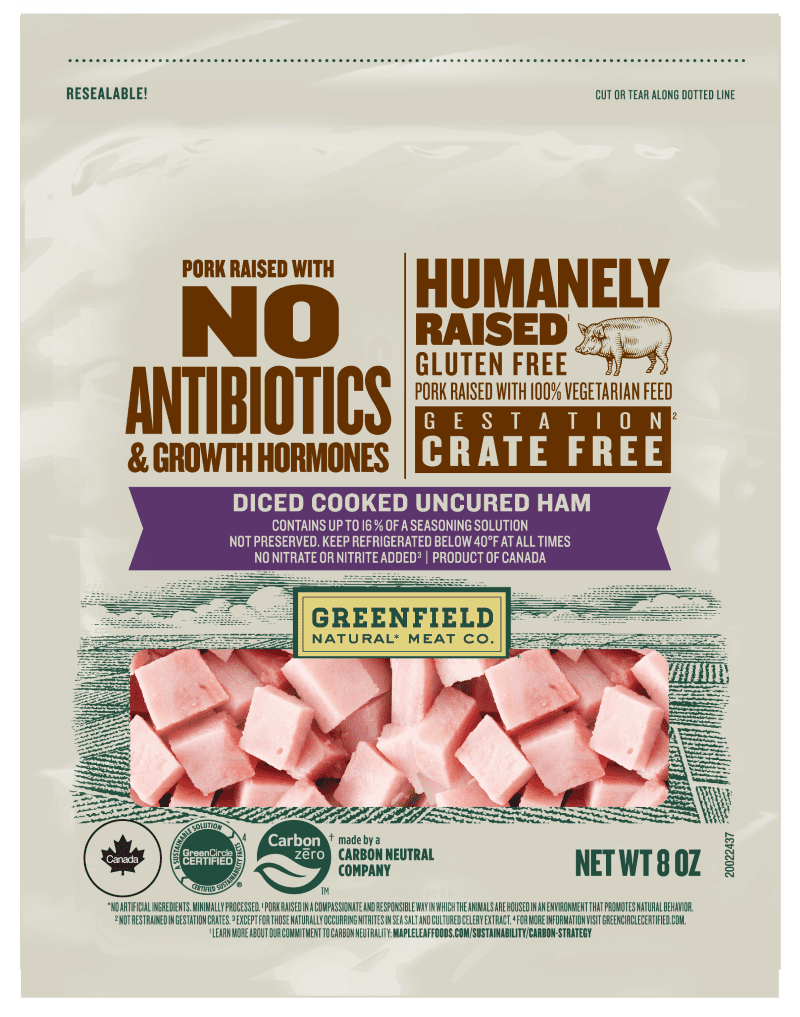
This diced cooked uncured ham is a processed food with a relatively clean ingredient list, consisting mainly of pork, water, sea salt, cultured celery extract, and vinegar. The use of natural ingredients like sea salt and cultured celery extract instead of artificial preservatives is a positive aspect. However, the product's processing level limits its score, despite the absence of harmful additives.
Key ingredients 5
PorkGood
Pork is a high-quality source of animal protein, providing essential amino acids necessary for muscle maintenance and growth. It is rich in vitamins and minerals such as thiamine, selenium, and zinc. Compared to plant-based proteins, animal proteins like pork offer a more complete amino acid profile.
Risks
Consumption of processed pork products may be associated with increased sodium intake, which can affect cardiovascular health if consumed in excess.
Benefits
Pork provides a rich source of protein and essential nutrients, supporting muscle health and overall nutrition.
Sea SaltGood
Sea salt is a minimally processed source of sodium and trace minerals. It is often preferred over refined table salt due to its natural mineral content. The use of sea salt can enhance flavor without the need for artificial additives.
Risks
Excessive consumption of sodium can lead to hypertension and cardiovascular issues.
Benefits
Provides essential sodium and trace minerals, contributing to electrolyte balance and flavor enhancement.
WaterNeutral
Water is used as a processing aid and does not contribute nutritional value. It helps maintain moisture and texture in the product. As a neutral ingredient, it does not impact the health profile of the product.
See more about Water →Cultured Celery ExtractNeutral
Cultured celery extract is used as a natural preservative due to its nitrate content, which helps in curing meats. It is a cleaner alternative to synthetic preservatives. The extract is derived from celery, which is naturally high in nitrates.
Risks
Nitrates, even from natural sources, can form nitrosamines, which are potential carcinogens, especially when meats are cooked at high temperatures.
Benefits
Acts as a natural preservative, helping to maintain product safety and shelf life without synthetic additives.
VinegarNeutral
Vinegar is used for its preservative and flavor-enhancing properties. It is a natural ingredient that can help inhibit bacterial growth. The acidity of vinegar can also enhance the overall taste profile of the product.
Benefits
Provides preservative benefits and enhances flavor without adding calories or artificial substances.
Processing
Processed Foods
Get the full breakdown in the Scout appTake Scout shopping
Scan any product to see lab results, healthy alternatives, and your personalized analysis.
Download on theApp Store GET IT ONGoogle Play