
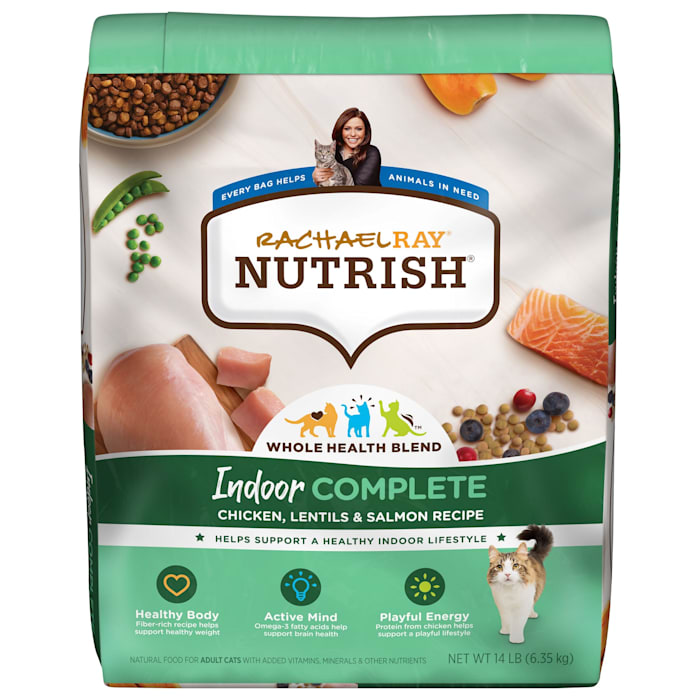
Rachael Ray Nutrish Indoor Complete Chicken Lentils & Salmon Recipe Dry Cat Food 14 lb. Bag
Analysis updated July 2026 · How Scout scores
At a glance
Summary
This cat food contains high-quality ingredients like chicken and salmon, which provide essential proteins and omega-3 fatty acids. Lentils add fiber and additional nutrients, supporting digestive health. However, the product is processed, which limits its score potential, and it includes several additives that slightly detract from its overall healthiness.
Key ingredients 11
SalmonVery Good
Salmon is an excellent source of omega-3 fatty acids, which support heart health and reduce inflammation. It is a high-quality protein source with beneficial fats. Wild-caught salmon is preferred for its lower contaminant levels compared to farmed varieties.
Risks
Potential for mercury accumulation, though generally lower in salmon compared to other fish.
Benefits
Provides essential omega-3 fatty acids and high-quality protein, promoting healthy skin, coat, and overall health.
ChickenGood
Chicken is a high-quality source of animal protein, providing essential amino acids for muscle maintenance and growth. It is minimally processed and typically free from additives when used in pet food. Compared to plant-based proteins, chicken offers a more complete amino acid profile.
Benefits
Rich in protein and essential nutrients, supporting muscle health and overall well-being in pets.
LentilsGood
Lentils are a good source of plant-based protein and fiber, supporting digestive health. They are minimally processed and provide essential nutrients like iron and folate. Lentils complement animal proteins by adding fiber and additional nutrients.
Benefits
Rich in fiber and plant-based protein, supporting digestive health and providing essential nutrients.
NiacinGood
Beneficial ingredient — whole-food or functional value in this product class.
Risks
Excessive niacin intake can lead to flushing and liver issues, though unlikely in regulated amounts.
Benefits
Supports energy metabolism and skin health by providing essential vitamin B3.
Zinc SulfateNeutral
Zinc sulfate is a mineral supplement used to ensure adequate zinc intake, important for immune function and skin health. It is a processed form of zinc, commonly used in pet foods. While beneficial in small amounts, excessive intake can lead to toxicity.
Risks
Excessive zinc intake can lead to toxicity, though this is unlikely in regulated pet food formulations.
Benefits
Supports immune function and skin health by providing essential zinc.
Calcium CarbonateNeutral
Calcium carbonate is used as a calcium supplement to support bone health. It is a processed form of calcium, commonly added to pet foods. While beneficial for bone health, excessive intake can lead to imbalances.
Risks
Excessive calcium intake can lead to imbalances and health issues, though regulated in pet foods.
Benefits
Provides essential calcium for bone health and development.
Ferrous SulfateNeutral
Ferrous sulfate is an iron supplement used to prevent anemia and support oxygen transport in the body. It is a processed form of iron, commonly used in fortified foods. While beneficial in small amounts, excessive intake can cause gastrointestinal issues.
Risks
Excessive iron intake can cause gastrointestinal issues and toxicity.
Benefits
Supports oxygen transport and prevents anemia by providing essential iron.
DandelionNeutral
Dandelion is used for its potential diuretic and digestive benefits. It is a natural ingredient often included in pet foods for its herbal properties. While generally safe, excessive use can lead to electrolyte imbalances.
Risks
Excessive use can lead to electrolyte imbalances, though unlikely in typical pet food formulations.
Benefits
May support digestion and act as a natural diuretic, promoting overall health.
Manganese SulfateNeutral
Manganese sulfate is a mineral supplement used to support bone development and enzyme function. It is a processed form of manganese, commonly added to pet foods. While beneficial, excessive intake can lead to toxicity.
Risks
Excessive manganese intake can lead to toxicity, though regulated in pet foods.
Benefits
Supports bone development and enzyme function by providing essential manganese.
Thiamine MononitrateNeutral
Thiamine mononitrate is a form of vitamin B1, essential for energy metabolism and nerve function. It is often added to pet foods to ensure adequate intake. While beneficial, excessive intake can lead to imbalances.
Benefits
Supports energy metabolism and nerve function by providing essential vitamin B1.
D-calciumNeutral
D-calcium is a form of calcium used to support bone health and development. It is a processed form of calcium, commonly added to pet foods. While beneficial for bone health, excessive intake can lead to imbalances.
Risks
Excessive calcium intake can lead to imbalances and health issues, though regulated in pet foods.
Benefits
Provides essential calcium for bone health and development.
Processing
Processed Foods
Get the full breakdown in the Scout appTake Scout shopping
Scan any product to see lab results, healthy alternatives, and your personalized analysis.
Download on theApp Store GET IT ONGoogle Play