
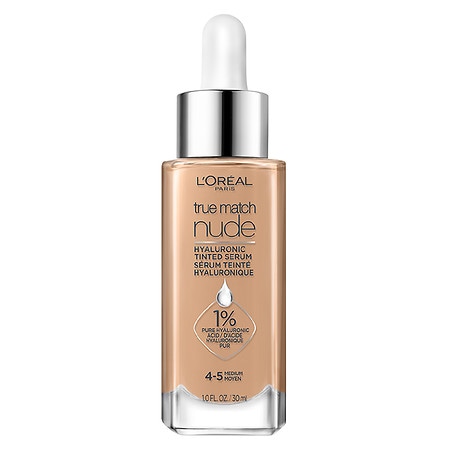

L'Oreal Paris True Match Hyaluronic Tinted Serum Makeup Skincare Hybrid - 4-5 Medium - 1 fl oz: Noncomedogenic Foundation
Analysis updated August 2026 · How Scout scores
At a glance
Summary
This foundation contains beneficial ingredients like sodium hyaluronate and tocopherol, which provide hydration and antioxidant benefits. However, the presence of denatured alcohol as a top ingredient is concerning due to its potential to dry and irritate the skin. Additionally, the inclusion of PEG compounds and synthetic ingredients suggests a moderate level of processing, which impacts the overall safety and quality of the product.
Key ingredients 34
TocopherolVery Good
Tocopherol, also known as Vitamin E, is an antioxidant that helps protect the skin from free radical damage. It is widely used in cosmetics for its skin conditioning properties. It is considered beneficial for maintaining skin health.
Benefits
Protects skin from free radical damage and improves skin health.
Sodium HyaluronateGood
Sodium hyaluronate is a form of hyaluronic acid known for its excellent hydrating properties. It helps to retain moisture in the skin, making it plump and hydrated. It is highly regarded in skincare for its ability to improve skin texture and appearance.
Benefits
Provides deep hydration and improves skin texture.
Moroccan Lava ClayGood
Moroccan lava clay, also known as Rhassoul clay, is used for its absorbent properties and ability to cleanse and detoxify the skin. It is considered beneficial for oily and acne-prone skin. It helps in removing impurities and excess oil.
Risks
May cause dryness in very dry skin types.
Benefits
Cleanses and detoxifies the skin, removing impurities and excess oil.
GlycerinGood
Glycerin is a humectant used to draw moisture into the skin, keeping it hydrated. It is widely used in cosmetics for its moisturizing properties. It is considered beneficial for maintaining skin hydration.
Benefits
Keeps skin hydrated and improves moisture retention.
Ci 77491, Ci 77492, Ci 77499/Iron OxidesGood
Beneficial ingredient — whole-food or functional value in this product class.
Benefits
Provide pigmentation and color to the product.
Aqua/Water/EauNeutral
Water is a common solvent used in cosmetics to dissolve other ingredients. It helps in the application and absorption of the product. It does not have any direct benefits or risks associated with its use in cosmetics.
Benefits
Provides a base for other ingredients and helps in product application.
IsododecaneNeutral
Isododecane is a hydrocarbon used for its emollient properties and ability to create a smooth application. It evaporates quickly, leaving a weightless feel. It is generally considered safe for use in cosmetics.
Risks
May cause mild irritation in sensitive individuals.
Benefits
Provides a lightweight, non-greasy feel to the product.
TrimethylsiloxysilicateNeutral
Trimethylsiloxysilicate is a silicone used to provide water resistance and long-lasting wear in cosmetics. It forms a flexible film on the skin. It is generally considered safe for use in cosmetics.
Risks
May cause mild irritation in sensitive skin types.
Benefits
Enhances product longevity and water resistance.
Butylene GlycolNeutral
Butylene glycol is a common humectant used to retain moisture in the skin. It also helps improve the texture of the product. It is generally considered safe for use in cosmetics.
Risks
May cause irritation in very sensitive skin.
Benefits
Helps to keep the skin hydrated and improves product texture.
PEG-10 DimethiconeNeutral
PEG-10 Dimethicone is a silicone-based polymer used for its conditioning properties and to improve product spreadability. It is generally considered safe for use in cosmetics. It helps in forming a smooth, even layer on the skin.
Risks
Potential for mild irritation in sensitive individuals.
Benefits
Improves product application and provides a smooth finish.
PerliteNeutral
Perlite is a natural mineral used for its absorbent properties and to provide a matte finish. It helps in controlling oil and shine. It is considered safe for use in cosmetics.
Benefits
Helps in oil absorption and provides a matte finish.
Nylon-12Neutral
Nylon-12 is a synthetic polymer used to improve the texture and feel of cosmetic products. It provides a soft, smooth finish and helps in oil absorption. It is considered safe for use in cosmetics.
Benefits
Improves product texture and provides a smooth finish.
Isopropyl Lauroyl SarcosinateNeutral
Isopropyl lauroyl sarcosinate is an emollient and conditioning agent used to improve the texture and spreadability of products. It is generally considered safe for use in cosmetics. It helps in providing a smooth application.
Benefits
Enhances product spreadability and provides a smooth feel.
Diisopropyl SebacateNeutral
Diisopropyl sebacate is an emollient used to improve the texture and spreadability of cosmetic products. It provides a lightweight, non-greasy feel. It is considered safe for use in cosmetics.
Benefits
Improves product texture and provides a lightweight feel.
Disteardimonium HectoriteNeutral
Disteardimonium hectorite is a clay-derived thickening agent used to stabilize emulsions and improve texture. It is considered safe for use in cosmetics. It helps in maintaining product consistency.
Benefits
Stabilizes emulsions and improves product texture.
Hdi/Trimethylol Hexyllactone CrosspolymerNeutral
This ingredient is a polymer used to provide a smooth, even application and enhance the texture of cosmetic products. It is considered safe for use in cosmetics. It helps in forming a flexible film on the skin.
Benefits
Enhances product texture and provides a smooth application.
Bis-PEG/PPG-14/14 DimethiconeNeutral
This is a silicone-based polymer used to improve the texture and spreadability of products. It is generally considered safe for use in cosmetics. It helps in forming a smooth, even layer on the skin.
Risks
Potential for mild irritation in sensitive individuals.
Benefits
Improves product application and provides a smooth finish.
Magnesium SulfateNeutral
Magnesium sulfate is used as a thickening agent and to improve the texture of cosmetic products. It is considered safe for use in cosmetics. It helps in maintaining product consistency.
Benefits
Improves product texture and consistency.
Synthetic FluorphlogopiteNeutral
Synthetic fluorphlogopite is a synthetic mica used to provide shimmer and improve the texture of cosmetic products. It is considered safe for use in cosmetics. It helps in creating a luminous finish.
Benefits
Provides shimmer and improves product texture.
Ethylhexyl HydroxystearateNeutral
Ethylhexyl hydroxystearate is an emollient used to improve the texture and spreadability of cosmetic products. It is considered safe for use in cosmetics. It helps in providing a smooth application.
Benefits
Enhances product spreadability and provides a smooth feel.
CelluloseNeutral
Cellulose is a natural polymer used as a thickening agent and to improve the texture of cosmetic products. It is considered safe for use in cosmetics. It helps in maintaining product consistency.
Benefits
Improves product texture and consistency.
Dipentaerythrityl Tetrahydroxystearate/TetraisostearateNeutral
This ingredient is used as an emollient and to improve the texture of cosmetic products. It is considered safe for use in cosmetics. It helps in providing a smooth application.
Benefits
Enhances product spreadability and provides a smooth feel.
Silica SilylateNeutral
Silica silylate is used as a thickening agent and to improve the texture of cosmetic products. It is considered safe for use in cosmetics. It helps in maintaining product consistency.
Benefits
Improves product texture and consistency.
Disodium Stearoyl GlutamateNeutral
Disodium stearoyl glutamate is an emulsifier used to stabilize formulations and improve texture. It is considered safe for use in cosmetics. It helps in maintaining product consistency.
Benefits
Stabilizes formulations and improves product texture.
Calcium Aluminum BorosilicateNeutral
Calcium aluminum borosilicate is used to provide shimmer and improve the texture of cosmetic products. It is considered safe for use in cosmetics. It helps in creating a luminous finish.
Benefits
Provides shimmer and improves product texture.
Empetrum Nigrum Fruit JuiceNeutral
Empetrum nigrum fruit juice is used for its antioxidant properties and potential skin benefits. It is considered safe for use in cosmetics. It may help in protecting the skin from environmental damage.
Benefits
Provides antioxidant benefits and may protect skin from environmental damage.
Aluminum HydroxideNeutral
Aluminum hydroxide is used as a thickening agent and to improve the texture of cosmetic products. It is considered safe for use in cosmetics. It helps in maintaining product consistency.
Benefits
Improves product texture and consistency.
SilicaNeutral
Silica is used as a thickening agent and to improve the texture of cosmetic products. It is considered safe for use in cosmetics. It helps in maintaining product consistency.
Benefits
Improves product texture and consistency.
Ci 77891/Titanium DioxideNeutral
Titanium dioxide is used as a pigment and for its UV filtering properties in cosmetics. It is considered safe for use in cosmetics. It helps in providing color and sun protection.
Benefits
Provides pigmentation and UV protection.
Ci 77163/Bismuth OxychlorideNeutral
Bismuth oxychloride is used as a pigment and to provide a pearlescent finish in cosmetics. It is considered safe for use in cosmetics. It helps in providing a luminous finish.
Risks
May cause mild irritation in sensitive skin types.
Benefits
Provides a pearlescent finish and improves product texture.
DimethiconeBad
Occlusive silicone film-former — flagged under clean-beauty doctrine.
Risks
Can potentially clog pores in some individuals.
Benefits
Improves product spreadability and provides a silky feel.
PhenoxyethanolBad
Processed additive flagged under Scout's ingredient doctrine.
Risks
May cause irritation in sensitive skin at higher concentrations.
Benefits
Prevents microbial growth and extends product shelf life.
Potassium SorbateBad
Synthetic preservative — flagged in daily-use products.
Risks
May cause irritation in sensitive skin at higher concentrations.
Benefits
Prevents microbial growth and extends product shelf life.
Alcohol DenatVery Bad
Denatured alcohol is used as a solvent and to help products dry quickly. However, it can be drying and irritating to the skin, especially with prolonged use. It is often criticized for its potential to disrupt the skin barrier.
Risks
Can cause skin dryness and irritation.
Benefits
Helps in quick drying of the product and acts as a solvent.
Get the full breakdown in the Scout appTake Scout shopping
Scan any product to see lab results, healthy alternatives, and your personalized analysis.
Download on theApp Store GET IT ONGoogle PlayAmazon pricing & content
Amazon price as of . Product prices and availability are accurate as of the date/time indicated and are subject to change. Any price and availability information displayed on Amazon.com at the time of purchase will apply to the purchase of this product.
CERTAIN CONTENT THAT APPEARS ON THIS SITE COMES FROM AMAZON. THIS CONTENT IS PROVIDED “AS IS” AND IS SUBJECT TO CHANGE OR REMOVAL AT ANY TIME.