
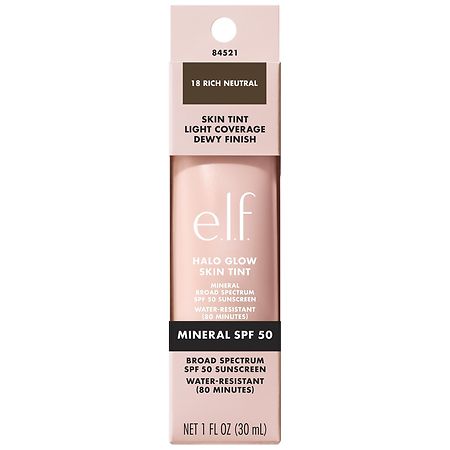
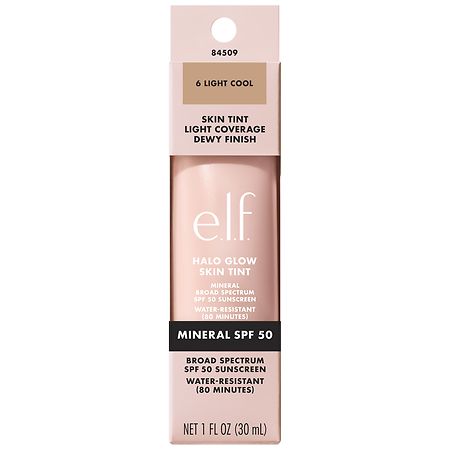


e.l.f. Halo Glow Skin Tint Light Coverage Foundation - Mineral SPF 50 - 18 Rich Neutral - 1 fl oz
Analysis updated July 2026 · How Scout scores
At a glance
Summary
This foundation contains beneficial ingredients like niacinamide, which is known for its skin conditioning and anti-inflammatory properties. However, it also includes synthetic compounds such as dimethicone and phenoxyethanol, which are common in cosmetics but can be concerning for those seeking natural formulations. The presence of these synthetic ingredients and the overall processing level of the product influence its rating.
Key ingredients 35
NIACINAMIDEGood
Niacinamide is a form of vitamin B3 used as a skin conditioning agent in cosmetics. It is known for its anti-inflammatory and skin brightening properties. It is considered very beneficial for skin health.
Risks
There are no significant risks associated with this ingredient in cosmetic formulations.
Benefits
It helps in improving skin texture, reducing inflammation, and brightening the skin.
ALKYL (C12-15) BENZOATENeutral
Alkyl benzoate is an emollient that helps to improve the texture and spreadability of cosmetic products. It is generally considered safe for use in cosmetics. It does not have significant known risks or benefits.
Risks
There are no significant risks associated with this ingredient in cosmetic formulations.
Benefits
It helps in improving the texture and spreadability of the product.
SILICA DIMETHYL SILYLATENeutral
Silica dimethyl silylate is used as a thickening agent and to improve the texture of cosmetic products. It is generally regarded as safe for use in cosmetics. It does not have significant known risks or benefits.
Risks
There are no significant risks associated with this ingredient in cosmetic formulations.
Benefits
It helps in improving the texture and stability of the product.
DISTEARDIMONIUM HECTORITENeutral
Disteardimonium hectorite is a thickening agent used to stabilize emulsions in cosmetics. It is considered safe for use in cosmetics. It does not have significant known risks or benefits.
Risks
There are no significant risks associated with this ingredient in cosmetic formulations.
Benefits
It helps in stabilizing emulsions and improving product consistency.
ETHYLHEXYLGLYCERINNeutral
Ethylhexylglycerin is used as a skin conditioning agent and preservative enhancer in cosmetics. It is considered safe for use in cosmetics. It does not have significant known risks or benefits.
Risks
There are no significant risks associated with this ingredient in cosmetic formulations.
Benefits
It helps in enhancing the efficacy of preservatives and conditioning the skin.
TRIDECYL SALICYLATENeutral
Tridecyl salicylate is used as an emollient and UV filter in cosmetics. It is generally considered safe for use in cosmetics. It does not have significant known risks or benefits.
Risks
There are no significant risks associated with this ingredient in cosmetic formulations.
Benefits
It helps in providing emollient properties and may offer some UV protection.
HEXYLENE GLYCOLNeutral
Hexylene glycol is used as a solvent and viscosity agent in cosmetics. It is generally considered safe for use in cosmetics. It does not have significant known risks or benefits.
Risks
There are no significant risks associated with this ingredient in cosmetic formulations.
Benefits
It helps in improving the texture and consistency of the product.
FERRIC OXIDE REDNeutral
Ferric oxide red is a pigment used to provide color in cosmetics. It is considered safe for use in cosmetics. It does not have significant known risks or benefits.
Risks
There are no significant risks associated with this ingredient in cosmetic formulations.
Benefits
It provides color to the product.
FERROSOFERRIC OXIDENeutral
Ferrosoferric oxide is a pigment used to provide color in cosmetics. It is considered safe for use in cosmetics. It does not have significant known risks or benefits.
Risks
There are no significant risks associated with this ingredient in cosmetic formulations.
Benefits
It provides color to the product.
SODIUM CHLORIDENeutral
Sodium chloride is used as a thickening agent and to improve the texture of cosmetic products. It is generally regarded as safe for use in cosmetics. It does not have significant known risks or benefits.
Risks
There are no significant risks associated with this ingredient in cosmetic formulations.
Benefits
It helps in improving the texture and stability of the product.
POLYGLYCERYL-2 DIPOLYHYDROXYSTEARATENeutral
Polyglyceryl-2 dipolyhydroxystearate is used as an emulsifier in cosmetics. It is generally regarded as safe for use in cosmetics. It does not have significant known risks or benefits.
Risks
There are no significant risks associated with this ingredient in cosmetic formulations.
Benefits
It helps in stabilizing emulsions and improving product consistency.
TITANIUM DIOXIDENeutral
Titanium dioxide is used as a pigment and UV filter in cosmetics. It is considered safe for use in cosmetics. It does not have significant known risks or benefits.
Risks
There are no significant risks associated with this ingredient in cosmetic formulations.
Benefits
It provides color and UV protection to the product.
POLYGLYCERYL-3 RICINOLEATENeutral
Polyglyceryl-3 ricinoleate is used as an emulsifier in cosmetics. It is generally regarded as safe for use in cosmetics. It does not have significant known risks or benefits.
Risks
There are no significant risks associated with this ingredient in cosmetic formulations.
Benefits
It helps in stabilizing emulsions and improving product consistency.
CAPRYLYL GLYCOLNeutral
Caprylyl glycol is used as a skin conditioning agent and preservative enhancer in cosmetics. It is considered safe for use in cosmetics. It does not have significant known risks or benefits.
Risks
There are no significant risks associated with this ingredient in cosmetic formulations.
Benefits
It helps in enhancing the efficacy of preservatives and conditioning the skin.
ALLANTOINNeutral
Allantoin is used as a skin conditioning agent in cosmetics. It is known for its soothing and skin-protecting properties. It is considered safe for use in cosmetics.
Risks
There are no significant risks associated with this ingredient in cosmetic formulations.
Benefits
It helps in soothing and protecting the skin.
HYDROGENATED SOYBEAN LECITHINNeutral
Hydrogenated soybean lecithin is used as an emulsifier and skin conditioning agent in cosmetics. It is generally regarded as safe for use in cosmetics. It does not have significant known risks or benefits.
Risks
There are no significant risks associated with this ingredient in cosmetic formulations.
Benefits
It helps in stabilizing emulsions and conditioning the skin.
TETRASODIUM GLUTAMATE DIACETATENeutral
Tetrasodium glutamate diacetate is used as a chelating agent in cosmetics. It is considered safe for use in cosmetics. It does not have significant known risks or benefits.
Risks
There are no significant risks associated with this ingredient in cosmetic formulations.
Benefits
It helps in enhancing the stability and efficacy of the product.
OCTYLDODECYL NEOPENTANOATENeutral
Octyldodecyl neopentanoate is used as an emollient in cosmetics. It is generally regarded as safe for use in cosmetics. It does not have significant known risks or benefits.
Risks
There are no significant risks associated with this ingredient in cosmetic formulations.
Benefits
It helps in providing emollient properties and improving product texture.
SOYBEANNeutral
Soybean derivatives are used as emollients and skin conditioning agents in cosmetics. They are generally regarded as safe for use in cosmetics. They do not have significant known risks or benefits.
Risks
There are no significant risks associated with this ingredient in cosmetic formulations.
Benefits
They help in providing emollient properties and conditioning the skin.
ISODODECANENeutral
Isododecane is used as a solvent and emollient in cosmetics. It is generally regarded as safe for use in cosmetics. It does not have significant known risks or benefits.
Risks
There are no significant risks associated with this ingredient in cosmetic formulations.
Benefits
It helps in improving the texture and spreadability of the product.
CALCIUM SODIUM BOROSILICATENeutral
Calcium sodium borosilicate is used as a filler and to provide shimmer in cosmetics. It is considered safe for use in cosmetics. It does not have significant known risks or benefits.
Risks
There are no significant risks associated with this ingredient in cosmetic formulations.
Benefits
It helps in providing shimmer and improving the texture of the product.
POLYGLYCERYL-4 DIISOSTEARATE/POLYHYDROXYSTEARATE/SEBACATENeutral
This ingredient is used as an emulsifier in cosmetics. It is generally regarded as safe for use in cosmetics. It does not have significant known risks or benefits.
Risks
There are no significant risks associated with this ingredient in cosmetic formulations.
Benefits
It helps in stabilizing emulsions and improving product consistency.
PROPANEDIOLNeutral
Propanediol is used as a solvent and skin conditioning agent in cosmetics. It is generally regarded as safe for use in cosmetics. It does not have significant known risks or benefits.
Risks
There are no significant risks associated with this ingredient in cosmetic formulations.
Benefits
It helps in improving the texture and conditioning the skin.
LAURYL PEG-8 DIMETHICONE (300 CPS)Neutral
Lauryl PEG-8 dimethicone is used as an emulsifier and conditioning agent in cosmetics. It is generally regarded as safe for use in cosmetics. It does not have significant known risks or benefits.
Risks
There are no significant risks associated with this ingredient in cosmetic formulations.
Benefits
It helps in stabilizing emulsions and conditioning the skin.
ALUMINUM HYDROXIDENeutral
Aluminum hydroxide is used as an opacifying agent and to improve the texture of cosmetics. It is considered safe for use in cosmetics. It does not have significant known risks or benefits.
Risks
There are no significant risks associated with this ingredient in cosmetic formulations.
Benefits
It helps in improving the texture and opacity of the product.
C13-15 ALKANENeutral
C13-15 alkane is used as an emollient and solvent in cosmetics. It is generally regarded as safe for use in cosmetics. It does not have significant known risks or benefits.
Risks
There are no significant risks associated with this ingredient in cosmetic formulations.
Benefits
It helps in improving the texture and spreadability of the product.
.BETA.-BISABOLOLNeutral
Beta-bisabolol is used as a skin conditioning agent in cosmetics. It is known for its soothing and anti-inflammatory properties. It is considered safe for use in cosmetics.
Risks
There are no significant risks associated with this ingredient in cosmetic formulations.
Benefits
It helps in soothing and conditioning the skin.
SODIUM HYDROXIDENeutral
Sodium hydroxide is used as a pH adjuster in cosmetics. It is considered safe for use in cosmetics at low concentrations. It does not have significant known risks or benefits.
Risks
In high concentrations, it can be irritating, but it is used in safe amounts in cosmetics.
Benefits
It helps in adjusting the pH of the product to ensure stability and efficacy.
CAPRYLYL TRIMETHICONENeutral
Caprylyl trimethicone is used as an emollient and conditioning agent in cosmetics. It is generally regarded as safe for use in cosmetics. It does not have significant known risks or benefits.
Risks
There are no significant risks associated with this ingredient in cosmetic formulations.
Benefits
It helps in providing emollient properties and improving product texture.
FERRIC OXIDE YELLOWNeutral
Ferric oxide yellow is a pigment used to provide color in cosmetics. It is considered safe for use in cosmetics. It does not have significant known risks or benefits.
Risks
There are no significant risks associated with this ingredient in cosmetic formulations.
Benefits
It provides color to the product.
WATERNeutral
Water is used as a solvent in cosmetics. It is considered safe and is a common ingredient in many formulations. It does not have significant known risks or benefits.
Risks
There are no significant risks associated with this ingredient in cosmetic formulations.
Benefits
It acts as a solvent and helps in dissolving other ingredients.
PHENOXYETHANOLBad
Processed additive flagged under Scout's ingredient doctrine.
Risks
In rare cases, it may cause skin irritation or allergic reactions.
Benefits
It helps in preserving the product by preventing microbial growth.
BUTYLOCTYL SALICYLATEBad
Processed additive flagged under Scout's ingredient doctrine.
Risks
There are no significant risks associated with this ingredient in cosmetic formulations.
Benefits
It helps in providing emollient properties and may offer some UV protection.
DIMETHICONEBad
Occlusive silicone film-former — flagged under clean-beauty doctrine.
Risks
There are no significant risks associated with this ingredient in cosmetic formulations.
Benefits
It helps in providing a smooth application and improving the texture of the product.
LECITHINBad
Processed additive flagged under Scout's ingredient doctrine.
Risks
There are no significant risks associated with this ingredient in cosmetic formulations.
Benefits
It helps in stabilizing emulsions and conditioning the skin.
Processing
Processed Foods
Get the full breakdown in the Scout appTake Scout shopping
Scan any product to see lab results, healthy alternatives, and your personalized analysis.
Download on theApp Store GET IT ONGoogle PlayAmazon pricing & content
Amazon price as of . Product prices and availability are accurate as of the date/time indicated and are subject to change. Any price and availability information displayed on Amazon.com at the time of purchase will apply to the purchase of this product.
CERTAIN CONTENT THAT APPEARS ON THIS SITE COMES FROM AMAZON. THIS CONTENT IS PROVIDED “AS IS” AND IS SUBJECT TO CHANGE OR REMOVAL AT ANY TIME.