
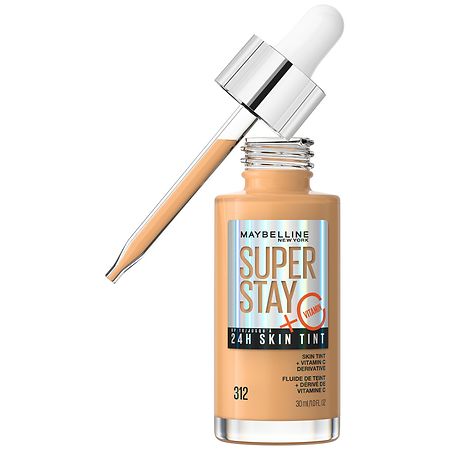


Maybelline Super Stay 24HR Skin Tint Foundation Serum with Vitamin C - 312 - 1 fl oz
Analysis updated August 2026 · How Scout scores
At a glance
Summary
This foundation contains beneficial ingredients like Vitamin C and Vitamin E, which offer antioxidant benefits and help protect the skin. However, the presence of denatured alcohol as a top ingredient is concerning due to its potential to dry and irritate the skin. Additionally, the product includes synthetic ingredients and PEG compounds, which contribute to a moderate level of processing.
Key ingredients 29
Ascorbyl GlucosideVery Good
Ascorbyl glucoside is a stable form of Vitamin C used for its antioxidant properties. It helps to brighten the skin and reduce signs of aging.
Risks
There are minimal risks associated with its use.
Benefits
It provides antioxidant protection and helps to improve skin tone and texture.
TocopherolVery Good
Tocopherol, also known as Vitamin E, is used for its antioxidant properties. It helps to protect the skin from free radical damage.
Risks
There are minimal risks associated with its use.
Benefits
It provides antioxidant protection and helps to improve skin health.
MicaGood
Beneficial ingredient — whole-food or functional value in this product class.
Risks
There are minimal risks associated with its use.
Benefits
It provides a shimmering effect and enhances the visual appeal of the product.
Ci 77491, Ci 77492, Ci 77499 / Iron OxidesGood
Beneficial ingredient — whole-food or functional value in this product class.
Risks
There are minimal risks associated with their use.
Benefits
They provide natural-looking color and enhance the visual appeal of the product.
Aqua / Water / EauNeutral
Water is a common solvent used in cosmetics to dissolve other ingredients. It helps in forming emulsions and is essential for the texture of the product.
Risks
There are no significant risks associated with water in cosmetics.
Benefits
Water helps in hydrating the skin and acts as a base for other ingredients.
IsododecaneNeutral
Isododecane is a hydrocarbon used for its emollient properties and ability to create a smooth application. It evaporates quickly, leaving a lightweight feel.
Risks
There are minimal risks, though it can cause mild irritation in sensitive individuals.
Benefits
It provides a silky texture and helps in the even application of the product.
TrimethylsiloxysilicateNeutral
This ingredient is a silicone resin that provides water resistance and long-lasting wear. It forms a flexible film on the skin.
Risks
There are minimal risks, though it may cause mild irritation in sensitive skin.
Benefits
It enhances the longevity of the product and provides a smooth finish.
Butylene GlycolNeutral
Butylene glycol is a common solvent and conditioning agent. It helps to improve the texture and spreadability of the product.
Risks
It can cause irritation in very sensitive skin types.
Benefits
It acts as a humectant, helping to retain moisture in the skin.
Peg-10 DimethiconeNeutral
PEG-10 Dimethicone is a silicone-based polymer used for its emollient and conditioning properties. It helps to improve the texture and spreadability of the product.
Risks
There is a potential risk of irritation and sensitization in some individuals.
Benefits
It provides a smooth application and enhances the feel of the product on the skin.
Synthetic FluorphlogopiteNeutral
Synthetic fluorphlogopite is a synthetic mica used to add shimmer and shine to cosmetics. It is considered safe for use in cosmetics.
Risks
There are minimal risks associated with its use.
Benefits
It provides a shimmering effect and enhances the visual appeal of the product.
Isopropyl Lauroyl SarcosinateNeutral
This ingredient is used as an emollient and conditioning agent. It helps to improve the texture and spreadability of the product.
Risks
There are minimal risks, though it can cause mild irritation in sensitive individuals.
Benefits
It provides a silky feel and enhances the application of the product.
Diisopropyl SebacateNeutral
Diisopropyl sebacate is an emollient that helps to soften and smooth the skin. It is used to improve the texture and spreadability of the product.
Risks
There are minimal risks associated with its use.
Benefits
It provides a lightweight feel and enhances the application of the product.
Disteardimonium HectoriteNeutral
Disteardimonium hectorite is a thickening agent used to stabilize emulsions. It helps to improve the texture and consistency of the product.
Risks
There are minimal risks associated with its use.
Benefits
It provides stability to the formulation and enhances the texture.
Tin OxideNeutral
Tin oxide is used as an opacifying agent and to add shine to cosmetics. It is considered safe for use in cosmetics.
Risks
There are minimal risks associated with its use.
Benefits
It enhances the visual appeal of the product by adding shine.
Calcium Aluminum BorosilicateNeutral
This ingredient is used to add shimmer and shine to cosmetics. It is considered safe for use in cosmetics.
Risks
There are minimal risks associated with its use.
Benefits
It provides a shimmering effect and enhances the visual appeal of the product.
Dipentaerythrityl Tetrahydroxystearate/TetraisostearateNeutral
This ingredient is used as an emollient and thickening agent. It helps to improve the texture and spreadability of the product.
Risks
There are minimal risks associated with its use.
Benefits
It provides a smooth application and enhances the feel of the product on the skin.
SilicaNeutral
Silica is used as an absorbent and to improve the texture of cosmetics. It helps to control shine and oiliness.
Risks
Inhalation of silica dust can be harmful, but this is not a concern in liquid formulations.
Benefits
It provides a matte finish and helps to control oiliness.
Silica SilylateNeutral
Silica silylate is used as a thickening agent and to improve the texture of cosmetics. It helps to control shine and oiliness.
Risks
There are minimal risks associated with its use.
Benefits
It provides a matte finish and helps to control oiliness.
Hdi/Trimethylol Hexyllactone CrosspolymerNeutral
This ingredient is used as a film-forming agent to provide long-lasting wear. It helps to improve the texture and spreadability of the product.
Risks
There are minimal risks associated with its use.
Benefits
It enhances the longevity of the product and provides a smooth finish.
CelluloseNeutral
Cellulose is used as a thickening agent and to improve the texture of cosmetics. It is derived from plant sources and is considered safe for use.
Risks
There are minimal risks associated with its use.
Benefits
It provides stability to the formulation and enhances the texture.
Aluminum HydroxideNeutral
Aluminum hydroxide is used as an opacifying agent and to improve the texture of cosmetics. It is considered safe for use in cosmetics.
Risks
There are minimal risks associated with its use.
Benefits
It enhances the visual appeal of the product by providing opacity.
Magnesium SulfateNeutral
Magnesium sulfate is used as a thickening agent and to improve the texture of cosmetics. It is considered safe for use in cosmetics.
Risks
There are minimal risks associated with its use.
Benefits
It provides stability to the formulation and enhances the texture.
Disodium Stearoyl GlutamateNeutral
Disodium stearoyl glutamate is used as an emulsifier and conditioning agent. It helps to improve the texture and spreadability of the product.
Risks
There are minimal risks associated with its use.
Benefits
It provides a smooth application and enhances the feel of the product on the skin.
Bis-Peg/Ppg-14/14 DimethiconeNeutral
This ingredient is used as an emollient and conditioning agent. It helps to improve the texture and spreadability of the product.
Risks
There are minimal risks associated with its use.
Benefits
It provides a smooth application and enhances the feel of the product on the skin.
Ci 77007 / UltramarinesNeutral
Ultramarines are pigments used to add color to cosmetics. They are considered safe for use in cosmetics.
Risks
There are minimal risks associated with its use.
Benefits
It provides vibrant color and enhances the visual appeal of the product.
Ci 77891 / Titanium DioxideNeutral
Titanium dioxide is used as a pigment and UV filter in cosmetics. It is considered safe for use in cosmetics.
Risks
There are minimal risks associated with its use.
Benefits
It provides opacity and UV protection, enhancing the product's functionality.
DimethiconeBad
Occlusive silicone film-former — flagged under clean-beauty doctrine.
Risks
It can potentially clog pores in some individuals, leading to breakouts.
Benefits
It provides a smooth, silky feel and helps to fill in fine lines and wrinkles.
PhenoxyethanolBad
Processed additive flagged under Scout's ingredient doctrine.
Risks
It can cause irritation in sensitive skin types.
Benefits
It helps to preserve the product and extend its shelf life.
Alcohol Denat.Very Bad
Denatured alcohol is used as a solvent and to help other ingredients penetrate the skin. However, it can be drying and irritating to the skin.
Risks
It can strip the skin of natural oils, leading to dryness and irritation.
Benefits
It helps in quick drying of the product and enhances the penetration of active ingredients.
Get the full breakdown in the Scout appTake Scout shopping
Scan any product to see lab results, healthy alternatives, and your personalized analysis.
Download on theApp Store GET IT ONGoogle PlayAmazon pricing & content
Amazon price as of . Product prices and availability are accurate as of the date/time indicated and are subject to change. Any price and availability information displayed on Amazon.com at the time of purchase will apply to the purchase of this product.
CERTAIN CONTENT THAT APPEARS ON THIS SITE COMES FROM AMAZON. THIS CONTENT IS PROVIDED “AS IS” AND IS SUBJECT TO CHANGE OR REMOVAL AT ANY TIME.