
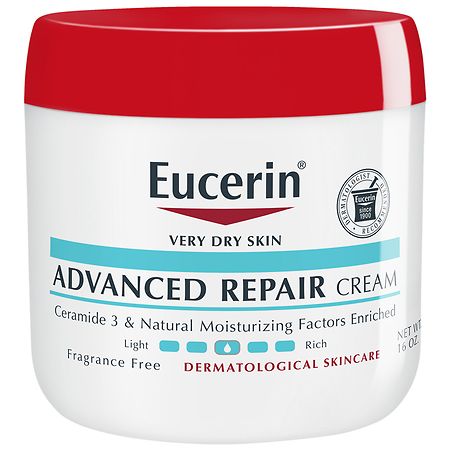
Eucerin Advanced Repair Body Cream for Dry Skin 16 oz Jar
Analysis updated August 2026 · How Scout scores
At a glance
Summary
This body cream contains beneficial ingredients such as glycerin, urea, ceramides, and shea butter, which are known for their moisturizing and skin barrier-enhancing properties. The formulation is free from harmful substances like parabens, synthetic fragrances, and harsh surfactants, making it a safe choice for skin hydration. Despite being processed, the ingredient list is clean and focused on skin health, contributing to a high score.
Key ingredients 11
CeramideVery Good
Ceramides are lipids that are naturally found in the skin and are crucial for maintaining the skin barrier. They help to retain moisture and protect the skin from environmental damage. Ceramides are highly beneficial for improving skin hydration and barrier function.
Risks
There are no significant risks associated with ceramides.
Benefits
Ceramides help to restore the skin barrier and improve moisture retention, making them excellent for dry skin.
Butyrospermum Parkii ButterVery Good
Butyrospermum Parkii Butter, commonly known as shea butter, is a natural fat extracted from the nuts of the shea tree. It is an excellent emollient and moisturizer, rich in vitamins and fatty acids. Shea butter is highly beneficial for nourishing and softening the skin.
Risks
There are minimal risks associated with shea butter, though it may cause allergic reactions in individuals with nut allergies.
Benefits
Shea butter deeply moisturizes and nourishes the skin, improving its texture and elasticity.
GlycerinGood
Glycerin is a well-known humectant that attracts moisture to the skin. It helps maintain the skin's hydration levels and improves skin barrier function. It is widely used in skincare for its moisturizing properties.
Risks
There are minimal risks associated with glycerin, though it may cause irritation in very sensitive skin.
Benefits
Glycerin helps keep the skin hydrated and soft, making it an excellent ingredient for dry skin.
UreaGood
Urea is a natural moisturizing factor that helps to maintain skin hydration. It also has keratolytic properties, which help in exfoliating dead skin cells. It is beneficial for dry and rough skin conditions.
Risks
In high concentrations, urea can cause irritation or stinging in sensitive skin.
Benefits
Urea enhances skin moisture and smoothness, making it effective for treating dry skin.
Hydrogenated Coco-GlyceridesGood
Hydrogenated Coco-Glycerides are derived from coconut oil and serve as emollients in skincare products. They help to moisturize and condition the skin. They are generally considered safe and beneficial for skin health.
Risks
There are minimal risks associated with hydrogenated coco-glycerides.
Benefits
These ingredients help to improve skin texture and provide a smooth, soft feel.
Natural Moisturizing FactorsGood
Natural Moisturizing Factors (NMF) are components that help to maintain skin hydration. They include amino acids, urea, and other compounds that attract and retain moisture. NMFs are beneficial for keeping the skin hydrated and healthy.
Risks
There are minimal risks associated with natural moisturizing factors.
Benefits
NMFs help to maintain optimal skin hydration and improve skin texture.
WaterNeutral
Water is a common solvent used in cosmetic formulations. It helps dissolve other ingredients and provides a base for the product. It does not have any direct benefits or risks associated with its use in cosmetics.
Risks
There are no significant risks associated with water in cosmetic products.
Benefits
Water helps in hydrating the skin by acting as a vehicle for other moisturizing ingredients.
Cetearyl AlcoholNeutral
Standard formulation ingredient — neither beneficial nor harmful at typical use.
Risks
There are minimal risks associated with cetearyl alcohol, though it may cause irritation in very sensitive skin.
Benefits
Cetearyl Alcohol provides a creamy texture and helps to lock in moisture, improving skin feel.
OctyldodecanolNeutral
Octyldodecanol is a fatty alcohol used as an emollient and emulsifier in cosmetics. It helps to improve the texture and spreadability of products. It is generally considered safe for use in skincare.
Risks
There are minimal risks associated with octyldodecanol.
Benefits
It helps to enhance the texture of the product and provides a smooth application.
Lactic AcidNeutral
Standard formulation ingredient — neither beneficial nor harmful at typical use.
Risks
Lactic acid can cause irritation or sensitivity, especially in high concentrations.
Benefits
Lactic acid helps to exfoliate dead skin cells and improve skin texture, making it smoother and more radiant.
CarnitineNeutral
Carnitine is an amino acid derivative that is sometimes used in skincare for its potential antioxidant properties. Its efficacy in topical applications is not well-established. It is generally considered safe for use in cosmetics.
Risks
There are minimal risks associated with carnitine in skincare.
Benefits
Carnitine may provide antioxidant benefits, though its effects in topical applications are not well-documented.
Processing
Processed Foods
Get the full breakdown in the Scout appTake Scout shopping
Scan any product to see lab results, healthy alternatives, and your personalized analysis.
Download on theApp Store GET IT ONGoogle PlayAmazon pricing & content
Amazon price as of . Product prices and availability are accurate as of the date/time indicated and are subject to change. Any price and availability information displayed on Amazon.com at the time of purchase will apply to the purchase of this product.
CERTAIN CONTENT THAT APPEARS ON THIS SITE COMES FROM AMAZON. THIS CONTENT IS PROVIDED “AS IS” AND IS SUBJECT TO CHANGE OR REMOVAL AT ANY TIME.