
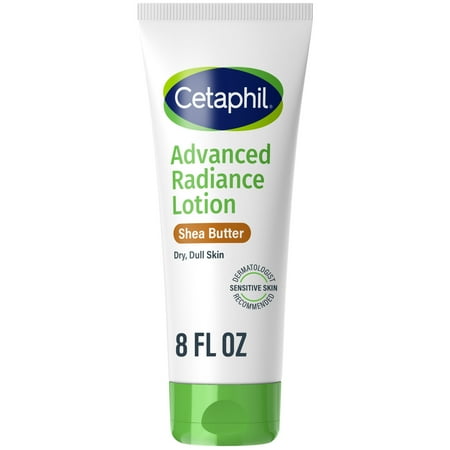
Cetaphil Advanced Radiance Lotion with Shea Butter for Sensitive Skin Fragrance Free 8 oz
Analysis updated August 2026 · How Scout scores
At a glance
Summary
This lotion contains beneficial ingredients such as shea butter, niacinamide, and sunflower seed oil, which are known for their moisturizing and skin-soothing properties. However, the presence of acrylates and synthetic emulsifiers slightly lowers its rating due to their processed nature. The absence of fragrance and harmful substances like parabens or phthalates is a positive aspect, contributing to its relatively high score.
Key ingredients 18
Butyrospermum Parkii (Shea) ButterVery Good
Shea Butter is a natural fat extracted from the nuts of the shea tree, known for its rich emollient properties. It helps to deeply moisturize and nourish the skin.
Risks
There are minimal risks, though it may cause allergic reactions in individuals with nut allergies.
Benefits
It provides deep hydration and helps to improve skin elasticity.
PanthenolVery Good
Panthenol, also known as provitamin B5, is a humectant that helps to retain moisture in the skin. It is known for its soothing and healing properties.
Risks
There are minimal risks, though it may cause irritation in very sensitive skin.
Benefits
It helps to hydrate, soothe, and improve skin barrier function.
GlycerinGood
Glycerin is a humectant that attracts moisture to the skin, helping to keep it hydrated. It is widely used in skincare for its moisturizing properties.
Risks
There are minimal risks associated with glycerin, though it may cause irritation in very sensitive skin.
Benefits
Glycerin helps maintain skin hydration and improves skin barrier function.
Helianthus Annuus (Sunflower) Seed OilGood
Sunflower Seed Oil is a natural oil rich in linoleic acid, which helps to maintain the skin's natural barrier and reduce moisture loss. It is known for its emollient properties.
Risks
There are minimal risks, though it may cause allergic reactions in individuals with sunflower allergies.
Benefits
It helps to moisturize and protect the skin barrier.
NiacinamideGood
Niacinamide is a form of vitamin B3 that helps to improve skin texture, reduce inflammation, and enhance the skin barrier. It is widely praised for its versatility in skincare.
Risks
There are minimal risks, though it may cause mild irritation in sensitive skin.
Benefits
It helps to brighten the skin, reduce redness, and improve overall skin health.
Tocopheryl AcetateGood
Tocopheryl Acetate is a form of vitamin E that acts as an antioxidant, protecting the skin from free radical damage. It is commonly used for its moisturizing and protective properties.
Risks
There are minimal risks, though it may cause irritation in very sensitive skin.
Benefits
It helps to protect the skin from environmental damage and improve moisture retention.
Sodium PCAGood
Sodium PCA is a naturally occurring humectant that helps to attract and retain moisture in the skin. It is known for its excellent hydrating properties.
Risks
There are minimal risks associated with Sodium PCA.
Benefits
It helps to maintain skin hydration and improve skin texture.
WaterNeutral
Water is a common solvent used in cosmetics to dissolve other ingredients. It helps in the application and absorption of the product. It does not provide direct benefits or risks.
Risks
There are no significant risks associated with water in cosmetics.
Benefits
Water aids in the hydration and application of the product.
Isopropyl PalmitateNeutral
Isopropyl Palmitate is an emollient that helps to soften and smooth the skin. It is commonly used to enhance the texture of skincare products.
Risks
It may cause pore-clogging in acne-prone skin.
Benefits
It provides a smooth application and helps to soften the skin.
Cetearyl AlcoholNeutral
Cetearyl Alcohol is a fatty alcohol used as an emollient and thickener in cosmetics. It helps to stabilize and improve the texture of products.
Risks
It is generally safe, but may cause irritation in very sensitive skin.
Benefits
It provides a creamy texture and helps to soften the skin.
Ceteareth-20Neutral
Ceteareth-20 is an emulsifier that helps to blend oil and water-based ingredients. It is commonly used to improve the consistency of skincare products.
Risks
There is a potential risk of contamination with 1,4-dioxane, a byproduct of ethoxylation.
Benefits
It helps to stabilize emulsions and improve product texture.
PantolactoneNeutral
Pantolactone is a derivative of pantothenic acid used as a conditioning agent in cosmetics. It helps to improve the texture and feel of the product.
Risks
There are minimal risks associated with Pantolactone.
Benefits
It helps to condition the skin and improve product texture.
Glyceryl StearateNeutral
Glyceryl Stearate is an emulsifier that helps to blend oil and water-based ingredients. It is commonly used to improve the consistency and stability of skincare products.
Risks
There are minimal risks associated with Glyceryl Stearate.
Benefits
It helps to stabilize emulsions and improve product texture.
Citric AcidNeutral
Citric Acid is used to adjust the pH of cosmetic formulations. It is commonly used to ensure product stability and effectiveness.
Risks
There are minimal risks, though it may cause irritation in very sensitive skin.
Benefits
It helps to maintain the stability and effectiveness of the product.
DimethiconeBad
Occlusive silicone film-former — flagged under clean-beauty doctrine.
Risks
It may cause buildup on the skin, potentially leading to clogged pores.
Benefits
It helps to smooth the skin and lock in moisture.
Acrylates/C10-30 Alkyl Acrylate CrosspolymerBad
Processed additive flagged under Scout's ingredient doctrine.
Risks
There are minimal risks, though it may cause irritation in very sensitive skin.
Benefits
It helps to stabilize and thicken the product for better application.
Sodium BenzoateBad
Synthetic preservative that can form benzene in the presence of vitamin C.
Risks
There are minimal risks, though it may cause irritation in very sensitive skin.
Benefits
It helps to preserve the product and extend its shelf life.
Potassium SorbateBad
Synthetic preservative — flagged in daily-use products.
Risks
There are minimal risks, though it may cause irritation in very sensitive skin.
Benefits
It helps to maintain product safety and extend shelf life.
Get the full breakdown in the Scout appTake Scout shopping
Scan any product to see lab results, healthy alternatives, and your personalized analysis.
Download on theApp Store GET IT ONGoogle PlayAmazon pricing & content
Amazon price as of . Product prices and availability are accurate as of the date/time indicated and are subject to change. Any price and availability information displayed on Amazon.com at the time of purchase will apply to the purchase of this product.
CERTAIN CONTENT THAT APPEARS ON THIS SITE COMES FROM AMAZON. THIS CONTENT IS PROVIDED “AS IS” AND IS SUBJECT TO CHANGE OR REMOVAL AT ANY TIME.