
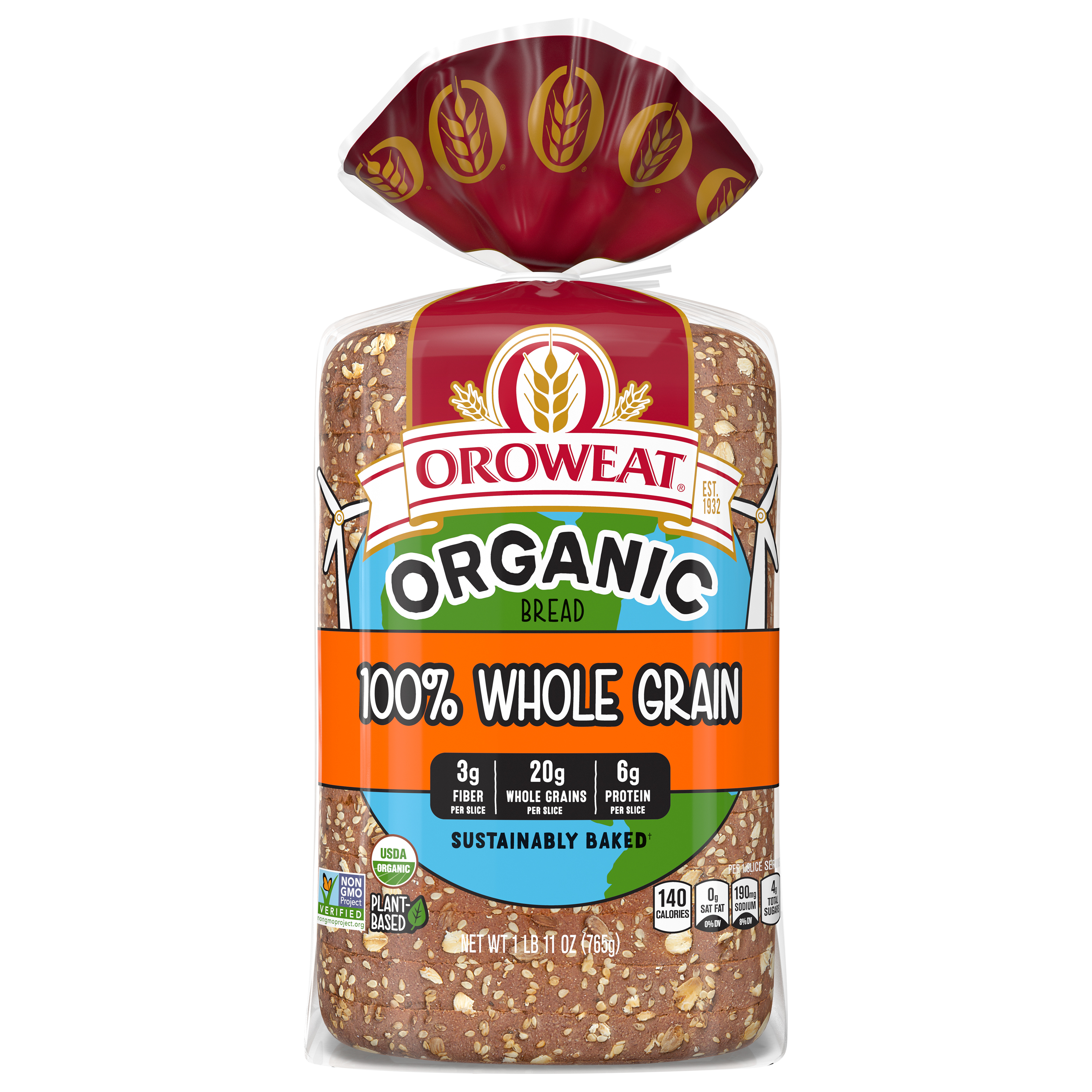



100% WHOLE GRAIN BREAD
Analysis updated August 2026 · How Scout scores
At a glance
Summary
This bread contains several beneficial whole grain ingredients such as whole wheat flour, flax seed, and whole rye flour, which contribute to its nutritional value. However, the presence of soybean oil, a highly processed seed oil, and monoglycerides, a synthetic emulsifier, detracts from its healthiness. The product is also classified as ultra-processed due to its ingredient complexity and use of additives, which limits its overall score.
Key ingredients 11
Whole wheat flourVery Good
Whole wheat flour is a minimally processed ingredient rich in fiber and essential nutrients. It retains the bran and germ, providing more vitamins and minerals compared to refined flour. Its consumption is associated with improved digestive health and reduced risk of chronic diseases.
Benefits
Rich in dietary fiber, vitamins, and minerals, supporting digestive health and reducing the risk of chronic diseases.
Flax seedGood
Flax seed is a nutrient-dense ingredient high in omega-3 fatty acids and lignans. It provides anti-inflammatory benefits and supports heart health. Its inclusion in the diet can improve digestive health due to its fiber content.
Risks
Excessive consumption may lead to digestive discomfort due to high fiber content.
Benefits
Rich in omega-3 fatty acids and lignans, supporting heart health and providing anti-inflammatory benefits.
Sunflower seedGood
Sunflower seeds are a good source of healthy fats, protein, and vitamin E. They provide antioxidant benefits and support cardiovascular health. Their inclusion in the diet can contribute to improved skin health and reduced inflammation.
Risks
High in calories, so should be consumed in moderation to avoid excessive calorie intake.
Benefits
Provides healthy fats, protein, and vitamin E, supporting cardiovascular and skin health.
Whole rye flourGood
Whole rye flour is a whole grain flour that is rich in fiber and nutrients. It has a lower glycemic index compared to wheat flour, which can help in managing blood sugar levels. Its consumption is linked to improved digestive health and reduced risk of heart disease.
Benefits
Rich in fiber and nutrients, supporting digestive health and helping manage blood sugar levels.
Whole spelt flourGood
Whole spelt flour is an ancient grain flour that is high in fiber and protein. It provides essential nutrients and has a nutty flavor. Its consumption can support digestive health and provide a more diverse nutrient profile compared to refined flours.
Risks
Contains gluten, which may not be suitable for individuals with celiac disease or gluten sensitivity.
Benefits
High in fiber and protein, supporting digestive health and providing essential nutrients.
Ascorbic acidGood
Vitamin C — beneficial even when serving as a preservative.
Benefits
Improves dough strength and volume as a dough conditioner.
YeastNeutral
Yeast is a natural leavening agent used in bread making. It helps dough rise and contributes to the bread's texture and flavor. It is a common ingredient in bread and generally considered safe.
Benefits
Contributes to the bread's texture and flavor as a natural leavening agent.
SaltNeutral
Salt is used to enhance flavor and preserve food. It is a common ingredient in bread but should be consumed in moderation due to potential health risks associated with high sodium intake. It does not provide significant nutritional benefits.
Risks
High sodium intake can lead to increased blood pressure and cardiovascular issues.
Benefits
Enhances flavor and acts as a preservative in food.
Calcium sulfateNeutral
Calcium sulfate is used as a firming agent and dough conditioner in bread. It helps improve the texture and stability of the dough. It is generally recognized as safe when used in food processing.
Benefits
Improves texture and stability of dough as a firming agent.
MonoglyceridesBad
Monoglycerides are emulsifiers used to improve texture and shelf life in processed foods. They are synthetic additives that can contribute to the ultra-processed nature of foods. Their consumption may be linked to digestive issues in sensitive individuals.
Risks
May cause digestive issues in sensitive individuals and contribute to the ultra-processed nature of foods.
Soybean oilVery Bad
Soybean oil is a highly processed seed oil high in omega-6 fatty acids. Its consumption is associated with increased inflammation and potential negative impacts on heart health. The extraction process often involves chemical solvents, which can affect the oil's quality.
Risks
High omega-6 content may promote inflammation when consumed in excess.
Processing
Ultra-Processed Foods
Get the full breakdown in the Scout appTake Scout shopping
Scan any product to see lab results, healthy alternatives, and your personalized analysis.
Download on theApp Store GET IT ONGoogle Play