
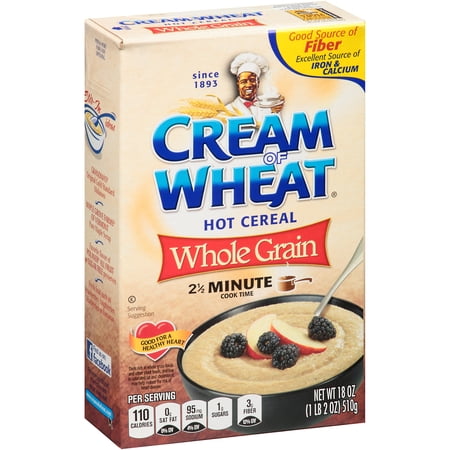


CREAM OF WHEAT, WHOLE GRAIN HOT CEREAL
At a glance
Summary
This product is minimally processed and primarily composed of whole grain ingredients like wheat farina, wheat bran, and wheat germ, which provide essential nutrients and fiber. The inclusion of vitamins and minerals such as calcium carbonate and ferric orthophosphate enhances its nutritional profile. The low level of processing and absence of harmful additives contribute to its high rating.
Key ingredients 11
Wheat branGood
Wheat bran is a high-fiber component of wheat that aids in digestion and promotes satiety. It is minimally processed and retains most of its natural nutrients. It can help regulate blood sugar levels and support heart health.
Risks
Excessive consumption may lead to digestive discomfort in some individuals.
Benefits
Rich in dietary fiber, which supports digestive health and may reduce the risk of chronic diseases.
Defatted wheat germGood
Defatted wheat germ is a nutrient-rich component of wheat that is low in fat. It is minimally processed and provides vitamins, minerals, and protein. It enhances the nutritional profile of the cereal.
Benefits
Rich in vitamins and minerals, including vitamin E and folic acid, supporting overall health.
Wheat germGood
Wheat germ is the nutrient-dense embryo of the wheat kernel. It is minimally processed and provides essential nutrients like vitamin E, folic acid, and healthy fats. It contributes to the cereal's nutritional value.
Risks
May cause allergic reactions in individuals sensitive to wheat.
Benefits
High in essential nutrients and antioxidants, supporting heart health and immune function.
NiacinamideGood
Vitamin B3 — evidence-backed skin and metabolic benefits.
Benefits
Supports energy metabolism and contributes to overall nutritional balance.
RiboflavinGood
Essential B vitamin — beneficial micronutrient.
Benefits
Supports energy production and contributes to overall health.
Wheat farinaNeutral
Wheat farina is a refined wheat product that provides carbohydrates and some protein. It is minimally processed but lacks the fiber and nutrients found in whole grains. It serves as a base for the cereal, offering a smooth texture.
Risks
May cause digestive issues for individuals with gluten intolerance or celiac disease.
Benefits
Provides a source of energy and some protein, contributing to daily nutritional needs.
Calcium carbonateNeutral
Calcium carbonate is a common dietary supplement used to fortify foods with calcium. It is a processed form of calcium that helps maintain bone health. It is generally safe but can cause digestive issues in high doses.
Risks
High doses may lead to constipation or interfere with the absorption of other minerals.
Benefits
Provides a source of calcium, essential for bone health and various metabolic functions.
Disodium phosphateNeutral
Disodium phosphate is used as an emulsifier and stabilizer in foods. It is a processed ingredient that helps maintain texture and consistency. It is generally recognized as safe in small amounts.
Risks
Excessive intake may lead to imbalances in phosphate levels, affecting kidney function.
Benefits
Helps maintain the texture and consistency of the cereal, enhancing its palatability.
Ferric orthophosphateNeutral
Ferric orthophosphate is an iron supplement used to fortify foods. It is a processed form of iron that helps prevent iron deficiency anemia. It is generally safe but may cause gastrointestinal discomfort in some individuals.
Risks
High doses may cause gastrointestinal issues such as constipation or nausea.
Benefits
Provides a source of iron, essential for oxygen transport and energy production in the body.
Thiamine mononitrateNeutral
Thiamine mononitrate is a form of vitamin B1 used to fortify foods. It is a processed ingredient that supports energy metabolism and nerve function. It is essential for converting carbohydrates into energy.
Benefits
Essential for energy metabolism and proper nerve function.
Folic acidNeutral
Folic acid is a synthetic form of vitamin B9 used to fortify foods. It is essential for DNA synthesis and cell division. It is particularly important for pregnant women to prevent neural tube defects.
Risks
Excessive intake may mask vitamin B12 deficiency symptoms.
Benefits
Essential for DNA synthesis and cell division, supporting overall health and development.
Processing
Unprocessed or Minimally Processed Foods
Get the full breakdown in the Scout appTake Scout shopping
Scan any product to see lab results, healthy alternatives, and your personalized analysis.
Download on theApp Store GET IT ONGoogle Play