
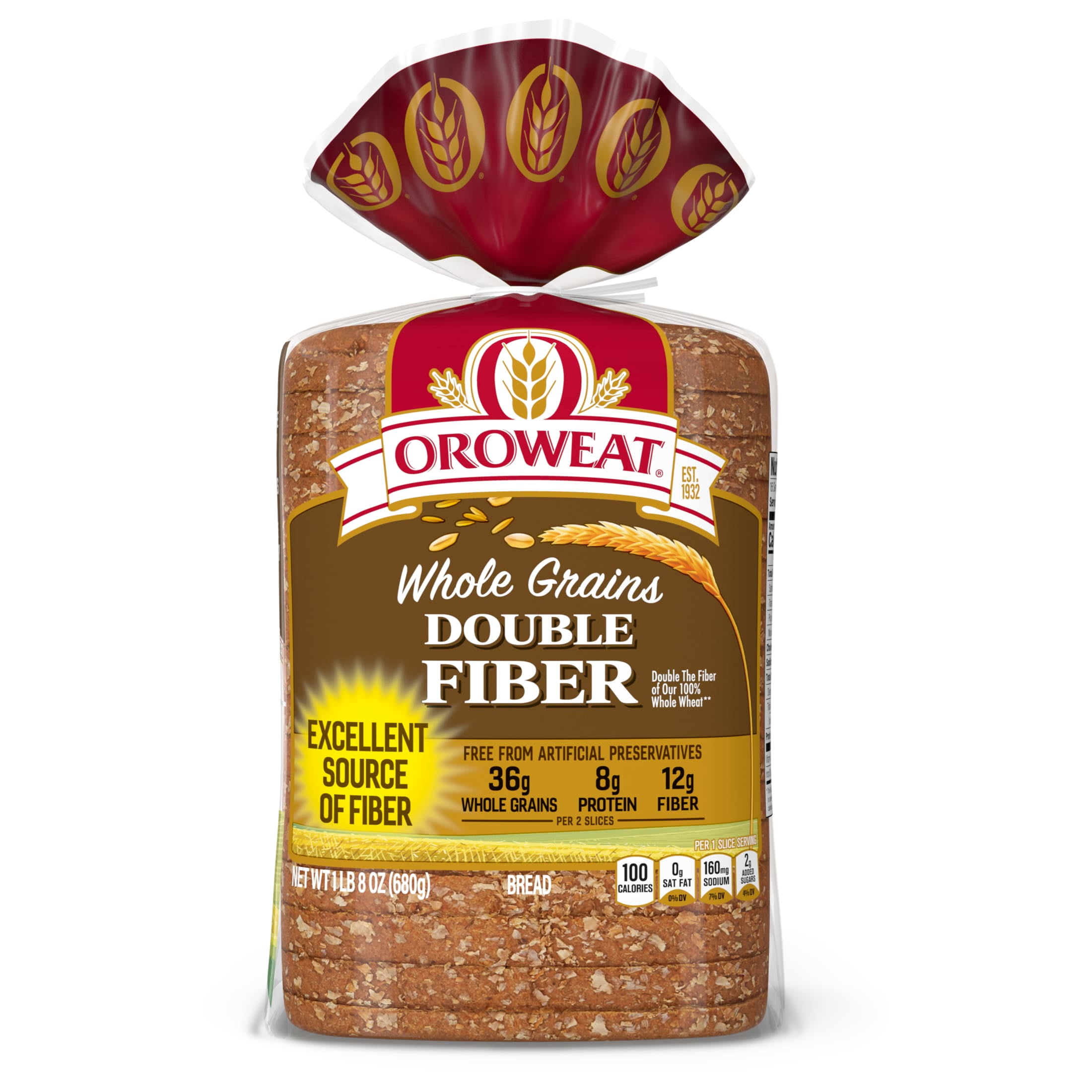


Oroweat Whole grain double fiber
Analysis updated August 2026 · How Scout scores
At a glance
Summary
This bread contains beneficial ingredients like whole wheat flour, oat fiber, and wheat bran, which contribute to its fiber content and nutritional value. However, the presence of soybean oil, a highly processed seed oil, and refined sugar detracts from its healthiness. The product is moderately processed, which limits its score despite the inclusion of some wholesome ingredients.
Key ingredients 13
Whole Wheat FlourVery Good
Whole wheat flour is a minimally processed ingredient rich in fiber and essential nutrients. It retains the bran and germ, providing more vitamins and minerals compared to refined flour. This ingredient supports digestive health and provides sustained energy.
Benefits
Rich in dietary fiber, vitamins, and minerals, supporting digestive health and providing long-lasting energy.
Oat FiberGood
Oat fiber is a natural source of dietary fiber that supports digestive health. It is minimally processed and helps increase the fiber content of foods. This ingredient can aid in maintaining healthy cholesterol levels and promoting satiety.
Benefits
Supports digestive health and may help maintain healthy cholesterol levels due to its high fiber content.
Wheat BranGood
Wheat bran is a high-fiber component of wheat that supports digestive health. It is minimally processed and rich in essential nutrients like B vitamins and minerals. This ingredient can aid in maintaining regular bowel movements and promoting satiety.
Benefits
Rich in dietary fiber and essential nutrients, supporting digestive health and promoting satiety.
WaterNeutral
Water is a neutral ingredient used as a solvent and to provide moisture in food products. It is essential for hydration but does not contribute additional nutrients. In this product, it helps achieve the desired texture and consistency.
Benefits
Essential for hydration and helps achieve the desired texture in food products.
Wheat GlutenNeutral
Wheat gluten is a protein that provides elasticity and structure to baked goods. It is beneficial for texture but can cause issues for those with gluten intolerance or celiac disease. In this product, it helps maintain the bread's shape and chewiness.
Risks
May cause adverse reactions in individuals with gluten intolerance or celiac disease.
Benefits
Enhances texture and structure in baked goods, providing elasticity and chewiness.
Modified Wheat StarchNeutral
Modified wheat starch is used to improve texture and stability in processed foods. It is derived from wheat and undergoes processing to alter its properties. While it provides functional benefits, it does not offer significant nutritional value.
Benefits
Improves texture and stability in food products, enhancing the overall eating experience.
PolydextroseNeutral
Polydextrose is a synthetic polymer of glucose used as a low-calorie bulking agent and fiber source. It is often added to increase fiber content without significantly affecting taste or texture. While it provides functional benefits, it is not a natural source of fiber.
Risks
Excessive consumption may cause digestive discomfort in some individuals.
Benefits
Increases fiber content and acts as a low-calorie bulking agent in food products.
Cellulose FiberNeutral
Cellulose fiber is a plant-derived ingredient used to increase dietary fiber content. It is minimally processed and helps improve the texture of food products. While it aids in digestion, it does not provide additional nutrients.
Benefits
Increases dietary fiber content, supporting digestive health and improving food texture.
YeastNeutral
Yeast is a natural leavening agent used in baking to help dough rise. It is a living organism that ferments sugars, producing carbon dioxide and alcohol. While it is essential for bread-making, it does not provide significant nutritional benefits.
Benefits
Essential for leavening in bread-making, contributing to texture and flavor.
SaltNeutral
Salt is used to enhance flavor and act as a preservative in food products. It is a common culinary ingredient but should be consumed in moderation to avoid health issues related to high sodium intake. In this product, it helps balance flavors.
Risks
Excessive sodium intake can lead to hypertension and cardiovascular issues.
Benefits
Enhances flavor and acts as a preservative in food products.
MolassesNeutral
Standard formulation ingredient — neither beneficial nor harmful at typical use.
Benefits
Provides trace minerals like iron and calcium, adding nutritional value and flavor depth.
SugarBad
Refined sugar is a processed ingredient that provides quick energy but lacks nutritional value. Excessive consumption can lead to health issues such as obesity and diabetes. It is used here to enhance flavor but should be consumed in moderation.
Risks
High intake of refined sugar can contribute to obesity, diabetes, and other metabolic disorders.
Benefits
Provides quick energy but lacks significant nutritional benefits.
Soybean OilVery Bad
Soybean oil is a seed oil high in omega-6 fatty acids, which can promote inflammation when consumed in excess. It is highly processed and often extracted using chemical solvents. This ingredient is considered unhealthy due to its potential to disrupt the omega-3 to omega-6 balance.
Risks
High omega-6 content may promote inflammation and contribute to chronic diseases when consumed in excess.
Processing
Processed Foods
Get the full breakdown in the Scout appTake Scout shopping
Scan any product to see lab results, healthy alternatives, and your personalized analysis.
Download on theApp Store GET IT ONGoogle Play