
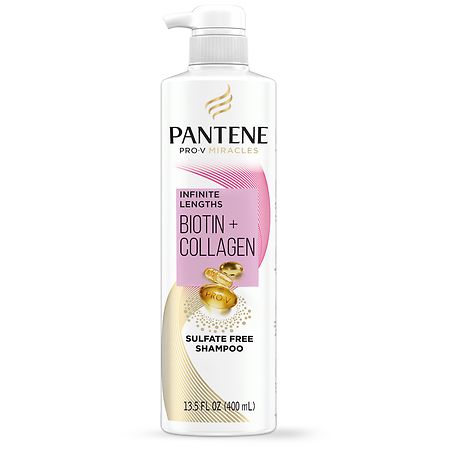

Pantene Pro-V Miracles Infinite Lengths Biotin + Collagen Shampoo Sulfate Free - 13.5 fl oz: Hair Regrowth, Basic Cleansing, Strengthening
Analysis updated July 2026 · How Scout scores
At a glance
Summary
This shampoo features a sulfate-free formula with gentle surfactants like sodium cocoyl isethionate and beneficial ingredients such as biotin, collagen, and panthenol, which support hair health and strength. However, the presence of synthetic fragrance and a few additives slightly detracts from its overall safety and cleanliness. Despite being processed, the product maintains a relatively clean ingredient list, contributing to a favorable score.
Key ingredients 17
sodium cocoyl isethionateVery Good
Sodium cocoyl isethionate is a gentle surfactant derived from coconut oil. It effectively cleanses the hair without stripping natural oils. It is favored for its mildness and ability to produce a rich lather.
Risks
There are minimal risks associated with sodium cocoyl isethionate, making it suitable for sensitive scalps.
Benefits
This ingredient helps maintain the hair's natural moisture balance while providing effective cleansing.
lauramidopropyl betaineGood
Lauramidopropyl betaine is a mild surfactant that enhances foam and improves the texture of shampoos. It is derived from coconut oil and is known for its conditioning properties. It helps to reduce irritation caused by other surfactants.
Risks
In rare cases, it may cause mild irritation if used in high concentrations.
Benefits
It provides a gentle cleansing action and helps to condition the hair, making it feel softer and more manageable.
biotin collagenGood
Biotin and collagen are known for their potential benefits in strengthening hair and promoting healthy growth. Biotin is a B-vitamin that supports keratin production, while collagen provides structural support. Together, they can improve hair elasticity and strength.
Risks
There are minimal risks associated with topical application of biotin and collagen.
Benefits
They help to strengthen and thicken hair, potentially reducing breakage and promoting healthier growth.
panthenolGood
Panthenol, also known as provitamin B5, is a moisturizing agent that penetrates the hair shaft to improve moisture retention. It enhances hair elasticity and shine. It is widely used for its conditioning and smoothing properties.
Risks
There are minimal risks associated with panthenol, making it safe for most users.
Benefits
It helps to moisturize and condition the hair, improving its texture and appearance.
panthenyl ethyl etherGood
Panthenyl ethyl ether is a derivative of panthenol that provides similar moisturizing and conditioning benefits. It enhances the hair's ability to retain moisture and improves its overall texture. It is often used to enhance the effects of panthenol.
Risks
There are minimal risks associated with this ingredient, making it suitable for most hair types.
Benefits
It helps to improve hair moisture and manageability, contributing to a smoother and shinier appearance.
tocopheryl acetateGood
Tocopheryl acetate is a form of vitamin E that acts as an antioxidant, protecting hair from environmental damage. It helps to maintain hair health by reducing oxidative stress. It is commonly used for its conditioning and protective properties.
Risks
There are minimal risks associated with tocopheryl acetate, making it safe for topical use.
Benefits
It helps to protect and condition the hair, enhancing its resilience and shine.
waterNeutral
Water is the primary solvent in most shampoos, providing a base for other ingredients. It helps to dissolve and distribute active components evenly. It does not have any direct benefits or risks in hair care products.
Risks
There are no known risks associated with water in hair care products.
Benefits
Water helps to hydrate the hair and scalp by acting as a carrier for other moisturizing ingredients.
cocamidopropyl betaineNeutral
Standard formulation ingredient — neither beneficial nor harmful at typical use.
Risks
Some individuals may experience allergic reactions or irritation, although this is uncommon.
Benefits
It helps to cleanse the hair gently while providing conditioning benefits, leaving hair soft and manageable.
histidineNeutral
Histidine is an amino acid that can help to protect hair from damage by chelating metal ions. It is used in hair care products for its potential protective benefits. However, its effects are not as pronounced as other conditioning agents.
Risks
There are minimal risks associated with histidine in hair care products.
Benefits
It may help to protect hair from oxidative damage and improve overall hair health.
polyquaternium-10Neutral
Polyquaternium-10 is a conditioning agent that helps to improve hair texture and manageability. It forms a film on the hair shaft, reducing static and enhancing smoothness. It is widely used for its conditioning properties.
Risks
There are minimal risks associated with polyquaternium-10, although buildup can occur with excessive use.
Benefits
It helps to condition and detangle hair, making it easier to manage and style.
citric acidNeutral
Citric acid is used to adjust the pH of hair care products, ensuring they are compatible with the scalp's natural acidity. It can also help to enhance the effectiveness of preservatives. It is generally considered safe in cosmetic formulations.
Risks
In high concentrations, citric acid can cause irritation, but it is typically used in safe amounts.
Benefits
It helps to maintain the stability and effectiveness of the product by balancing pH levels.
sodium citrateNeutral
Sodium citrate is a buffering agent that helps to maintain the pH balance of hair care products. It is used to enhance the stability and performance of formulations. It is generally considered safe and non-irritating.
Risks
There are minimal risks associated with sodium citrate in hair care products.
Benefits
It helps to stabilize the product and ensure compatibility with the scalp's natural pH.
sodium salicylateNeutral
Sodium salicylate is a salt of salicylic acid used for its preservative and anti-inflammatory properties. It can help to soothe the scalp and maintain product stability. It is generally considered safe in cosmetic formulations.
Risks
There are minimal risks associated with sodium salicylate, although it may cause irritation in sensitive individuals.
Benefits
It helps to preserve the product and may provide soothing benefits to the scalp.
tetrasodium edtaNeutral
Tetrasodium EDTA is a chelating agent that helps to bind metal ions, preventing them from affecting the stability and appearance of cosmetic products. It is used to enhance the effectiveness of preservatives. It is generally considered safe in cosmetic formulations.
Risks
There are minimal risks associated with tetrasodium EDTA, although it may cause irritation in some individuals.
Benefits
It helps to stabilize the product and improve its overall performance by binding metal ions.
sodium lauroyl sarcosinateBad
Processed additive flagged under Scout's ingredient doctrine.
Risks
There are minimal risks associated with this ingredient, making it suitable for sensitive skin.
Benefits
It helps to cleanse the hair effectively while maintaining moisture and softness.
sodium benzoateBad
Synthetic preservative that can form benzene in the presence of vitamin C.
Risks
In rare cases, it may cause irritation or allergic reactions, especially in sensitive individuals.
Benefits
It helps to preserve the product, ensuring it remains safe and effective over time.
fragranceVery Bad
Fragrance in hair care products can be a mix of various synthetic compounds. It is used to provide a pleasant scent but can cause allergic reactions or irritation in sensitive individuals. The exact composition is often undisclosed, leading to concerns about potential allergens.
Risks
Fragrance can cause skin irritation, allergic reactions, and may contain undisclosed harmful chemicals.
Benefits
It provides a pleasant scent to the product, enhancing the user experience.
Get the full breakdown in the Scout appTake Scout shopping
Scan any product to see lab results, healthy alternatives, and your personalized analysis.
Download on theApp Store GET IT ONGoogle PlayAmazon pricing & content
Amazon price as of . Product prices and availability are accurate as of the date/time indicated and are subject to change. Any price and availability information displayed on Amazon.com at the time of purchase will apply to the purchase of this product.
CERTAIN CONTENT THAT APPEARS ON THIS SITE COMES FROM AMAZON. THIS CONTENT IS PROVIDED “AS IS” AND IS SUBJECT TO CHANGE OR REMOVAL AT ANY TIME.