
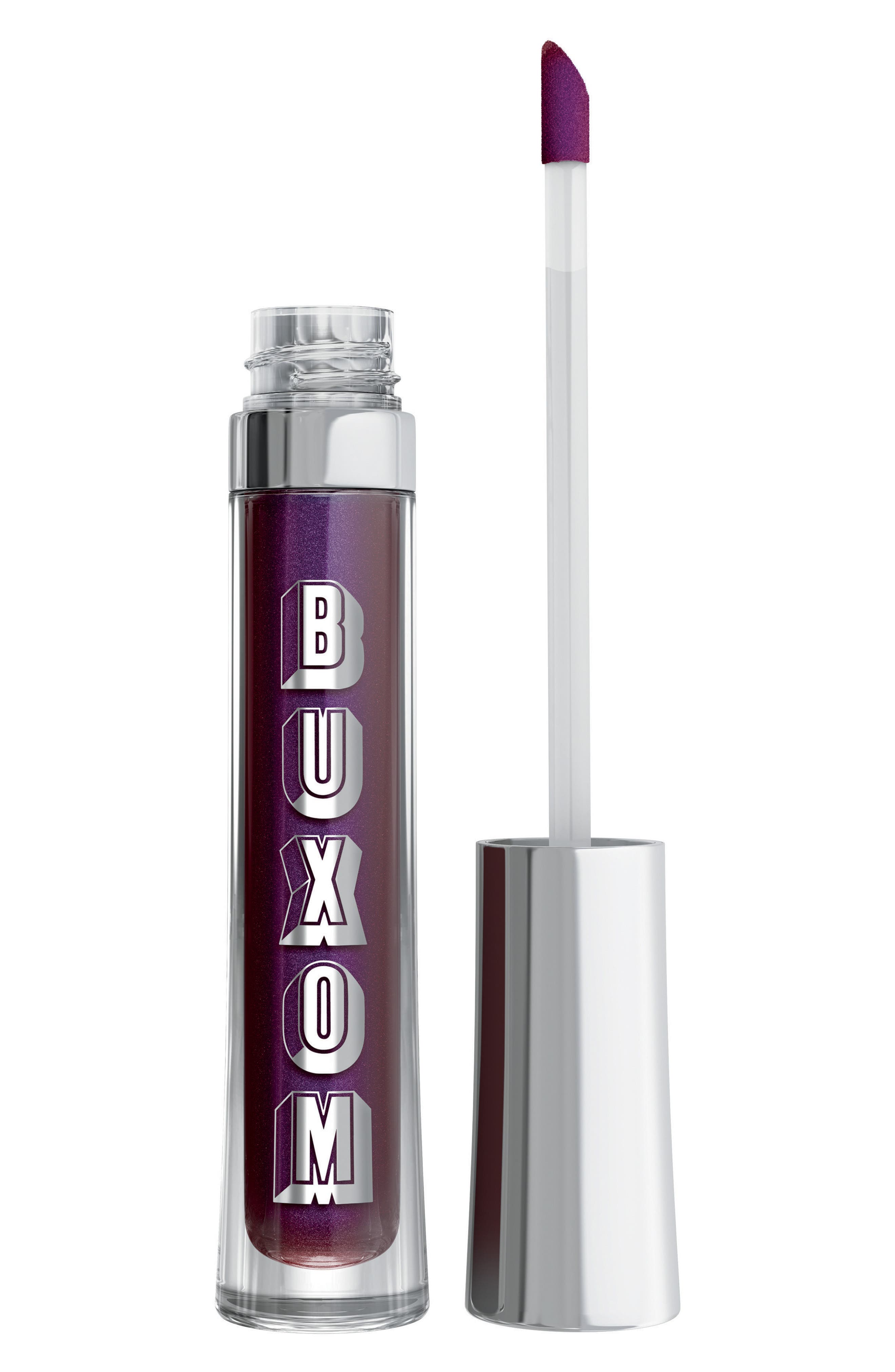

Buxom Full-On™ Plumping Lip Polish Gloss Jane
Analysis updated September 2026 · How Scout scores
At a glance
Summary
This lip gloss contains beneficial ingredients like Palmitoyl Oligopeptide, Retinyl Palmitate, and Tocopheryl Acetate, which offer anti-aging and antioxidant benefits. However, the presence of fragrance and limonene, which can cause skin irritation and allergic reactions, detracts from its overall safety profile. The product also includes synthetic colorants and other processed ingredients, which further impact its rating.
Key ingredients 32
Palmitoyl OligopeptideGood
Palmitoyl Oligopeptide is a peptide used for its anti-aging and skin-conditioning properties. It is believed to help stimulate collagen production and improve skin texture. It is considered beneficial in cosmetics.
Risks
There are minimal risks associated with this ingredient.
Benefits
It may help to improve skin texture and reduce the appearance of fine lines.
Retinyl PalmitateGood
Retinyl Palmitate is a form of Vitamin A used for its anti-aging properties. It is believed to help improve skin texture and reduce the appearance of fine lines. It is considered beneficial in cosmetics.
Risks
There are minimal risks, primarily related to potential skin irritation in sensitive individuals.
Benefits
It may help to improve skin texture and reduce the appearance of fine lines.
Tocopheryl AcetateGood
Tocopheryl Acetate is a form of Vitamin E used for its antioxidant properties. It helps to protect the skin from environmental damage and improve skin texture. It is considered beneficial in cosmetics.
Risks
There are minimal risks, primarily related to potential skin irritation in sensitive individuals.
Benefits
It provides antioxidant protection and helps to improve skin texture.
MicaGood
Beneficial ingredient — whole-food or functional value in this product class.
Risks
There are minimal risks, mainly related to potential skin irritation in sensitive individuals.
Benefits
It adds shimmer and shine to the product, enhancing its visual appeal.
Hydrogenated PolyisobuteneNeutral
Hydrogenated Polyisobutene is a synthetic polymer used as an emollient and lubricant. It helps to create a smooth application and provides a glossy finish. It is generally considered safe for use in cosmetics.
Risks
There are minimal risks associated with this ingredient, primarily related to potential skin irritation in sensitive individuals.
Benefits
It provides a non-greasy, smooth texture and enhances the glossiness of the product.
Tridecyl TrimellitateNeutral
Tridecyl Trimellitate is an ester used as a skin conditioning agent. It helps to improve the texture and feel of the product. It is considered safe for use in cosmetics.
Risks
There are no significant risks associated with this ingredient.
Benefits
It enhances the product's texture and provides a smooth application.
Polyglyceryl-2 DiisostearateNeutral
Polyglyceryl-2 Diisostearate is an emulsifier that helps to blend oil and water-based ingredients. It is commonly used in cosmetics for its stabilizing properties. It is generally regarded as safe.
Risks
There are minimal risks, mainly related to potential skin irritation in very sensitive individuals.
Benefits
It helps to stabilize the formulation and improve the consistency of the product.
Octyldodecyl Stearoyl StearateNeutral
Octyldodecyl Stearoyl Stearate is an ester used as an emollient and thickening agent. It provides a smooth application and enhances the product's texture. It is considered safe for use in cosmetics.
Risks
There are no significant risks associated with this ingredient.
Benefits
It improves the texture and feel of the product, providing a smooth application.
Menthone Glycerin AcetalNeutral
Menthone Glycerin Acetal is used for its cooling and refreshing properties. It provides a sensory effect that is often perceived as plumping. It is generally considered safe.
Risks
Potential risks include mild irritation or allergic reactions in sensitive individuals.
Benefits
It provides a cooling sensation and can enhance the plumping effect of lip products.
VP/Hexadecene CopolymerNeutral
VP/Hexadecene Copolymer is a film-forming agent that helps to create a long-lasting effect. It is used to improve the wear time of the product. It is considered safe for use in cosmetics.
Risks
There are minimal risks, primarily related to potential skin irritation.
Benefits
It enhances the longevity of the product on the lips.
Pentaerythrityl TetraisostearateNeutral
Pentaerythrityl Tetraisostearate is an emollient that provides a smooth application and enhances the texture of the product. It is generally regarded as safe.
Risks
There are no significant risks associated with this ingredient.
Benefits
It improves the texture and feel of the product, providing a smooth application.
Microcrystalline Wax (Cera Microcristallina)Neutral
Microcrystalline Wax is used as a thickening agent and to provide structure to the product. It is commonly used in cosmetics for its stabilizing properties. It is considered safe.
Risks
There are minimal risks, mainly related to potential skin irritation in sensitive individuals.
Benefits
It helps to stabilize the formulation and improve the consistency of the product.
OctyldodecanolNeutral
Octyldodecanol is a fatty alcohol used as an emollient and thickening agent. It provides a smooth application and enhances the product's texture. It is considered safe for use in cosmetics.
Risks
There are no significant risks associated with this ingredient.
Benefits
It improves the texture and feel of the product, providing a smooth application.
Trimethylolpropane TriisostearateNeutral
Trimethylolpropane Triisostearate is an ester used as an emollient and thickening agent. It provides a smooth application and enhances the product's texture. It is considered safe for use in cosmetics.
Risks
There are no significant risks associated with this ingredient.
Benefits
It improves the texture and feel of the product, providing a smooth application.
SilicaNeutral
Silica is used as a thickening agent and to provide a matte finish. It is commonly used in cosmetics for its oil-absorbing properties. It is considered safe.
Risks
There are minimal risks, mainly related to potential skin irritation in sensitive individuals.
Benefits
It helps to control shine and provides a matte finish.
Ethylhexyl PalmitateNeutral
Ethylhexyl Palmitate is an ester used as an emollient and thickening agent. It provides a smooth application and enhances the product's texture. It is considered safe for use in cosmetics.
Risks
There are no significant risks associated with this ingredient.
Benefits
It improves the texture and feel of the product, providing a smooth application.
TribeheninNeutral
Tribehenin is an emollient used to improve the texture and feel of the product. It provides a smooth application and enhances the product's texture. It is considered safe for use in cosmetics.
Risks
There are no significant risks associated with this ingredient.
Benefits
It improves the texture and feel of the product, providing a smooth application.
Sorbitan IsostearateNeutral
Sorbitan Isostearate is an emulsifier that helps to blend oil and water-based ingredients. It is commonly used in cosmetics for its stabilizing properties. It is generally regarded as safe.
Risks
There are minimal risks, mainly related to potential skin irritation in very sensitive individuals.
Benefits
It helps to stabilize the formulation and improve the consistency of the product.
Titanium Dioxide (CI 77891)Neutral
Titanium Dioxide is a mineral used as a pigment and UV filter. It is commonly used in cosmetics for its whitening and sun protection properties. It is considered safe for use in cosmetics.
Risks
There are minimal risks, mainly related to potential skin irritation in sensitive individuals.
Benefits
It provides sun protection and enhances the color of the product.
Iron Oxides (CI 77491, CI 77492, CI 77499)Neutral
Iron Oxides are pigments used to add color to cosmetics. They are commonly used for their stable and non-reactive properties. They are considered safe for use in cosmetics.
Risks
There are minimal risks, mainly related to potential skin irritation in sensitive individuals.
Benefits
They provide stable and vibrant color to the product.
Carmine (CI 75470)Neutral
Carmine is a natural pigment used to add red color to cosmetics. It is derived from cochineal insects and is commonly used for its vibrant color. It is considered safe for use in cosmetics.
Risks
There are minimal risks, mainly related to potential allergic reactions in sensitive individuals.
Benefits
It provides a vibrant red color to the product.
Yellow 5 Lake (CI 19140)Neutral
Yellow 5 Lake is a synthetic pigment used to add color to cosmetics. It is commonly used for its bright and stable color properties. It is considered safe for use in cosmetics.
Risks
There are minimal risks, mainly related to potential allergic reactions in sensitive individuals.
Benefits
It provides a bright and stable yellow color to the product.
Blue 1 Lake (CI 42090)Neutral
Blue 1 Lake is a synthetic pigment used to add color to cosmetics. It is commonly used for its vibrant and stable color properties. It is considered safe for use in cosmetics.
Risks
There are minimal risks, mainly related to potential allergic reactions in sensitive individuals.
Benefits
It provides a vibrant and stable blue color to the product.
Red 6 (CI 15850)Neutral
Red 6 is a synthetic pigment used to add color to cosmetics. It is commonly used for its vibrant and stable color properties. It is considered safe for use in cosmetics.
Risks
There are minimal risks, mainly related to potential allergic reactions in sensitive individuals.
Benefits
It provides a vibrant and stable red color to the product.
Red 7 Lake (CI 15850)Neutral
Red 7 Lake is a synthetic pigment used to add color to cosmetics. It is commonly used for its vibrant and stable color properties. It is considered safe for use in cosmetics.
Risks
There are minimal risks, mainly related to potential allergic reactions in sensitive individuals.
Benefits
It provides a vibrant and stable red color to the product.
Red 33 Lake (CI 17200)Neutral
Red 33 Lake is a synthetic pigment used to add color to cosmetics. It is commonly used for its vibrant and stable color properties. It is considered safe for use in cosmetics.
Risks
There are minimal risks, mainly related to potential allergic reactions in sensitive individuals.
Benefits
It provides a vibrant and stable red color to the product.
Red 30 Lake (CI 73360)Neutral
Red 30 Lake is a synthetic pigment used to add color to cosmetics. It is commonly used for its vibrant and stable color properties. It is considered safe for use in cosmetics.
Risks
There are minimal risks, mainly related to potential allergic reactions in sensitive individuals.
Benefits
It provides a vibrant and stable red color to the product.
Red 28 Lake (CI 45410)Neutral
Red 28 Lake is a synthetic pigment used to add color to cosmetics. It is commonly used for its vibrant and stable color properties. It is considered safe for use in cosmetics.
Risks
There are minimal risks, mainly related to potential allergic reactions in sensitive individuals.
Benefits
It provides a vibrant and stable red color to the product.
Sodium SaccharinBad
Processed additive flagged under Scout's ingredient doctrine.
Risks
There are minimal risks, mainly related to potential allergic reactions in sensitive individuals.
Benefits
It enhances the taste of the product, improving the user experience.
LimoneneBad
Limonene is a fragrance component that can cause skin irritation and allergic reactions in sensitive individuals. It is often criticized for its potential to cause skin irritation.
Risks
Limonene can cause allergic reactions and skin irritation, particularly in sensitive individuals.
Benefits
It provides a citrus scent to the product, enhancing the user experience.
BHTBad
Processed additive flagged under Scout's ingredient doctrine.
Risks
There are minimal risks, mainly related to potential skin irritation in sensitive individuals.
Benefits
It helps to preserve the product and extend its shelf life.
Fragrance (Parfum)Very Bad
Fragrance is used to impart a pleasant scent to the product. However, it can be a source of allergens and irritants, especially for sensitive individuals. It is often criticized for its potential to cause skin irritation.
Risks
Fragrance can cause allergic reactions and skin irritation, particularly in sensitive individuals.
Benefits
It provides a pleasant scent to the product, enhancing the user experience.
Get the full breakdown in the Scout appTake Scout shopping
Scan any product to see lab results, healthy alternatives, and your personalized analysis.
Download on theApp Store GET IT ONGoogle PlayAmazon pricing & content
Amazon price as of . Product prices and availability are accurate as of the date/time indicated and are subject to change. Any price and availability information displayed on Amazon.com at the time of purchase will apply to the purchase of this product.
CERTAIN CONTENT THAT APPEARS ON THIS SITE COMES FROM AMAZON. THIS CONTENT IS PROVIDED “AS IS” AND IS SUBJECT TO CHANGE OR REMOVAL AT ANY TIME.