
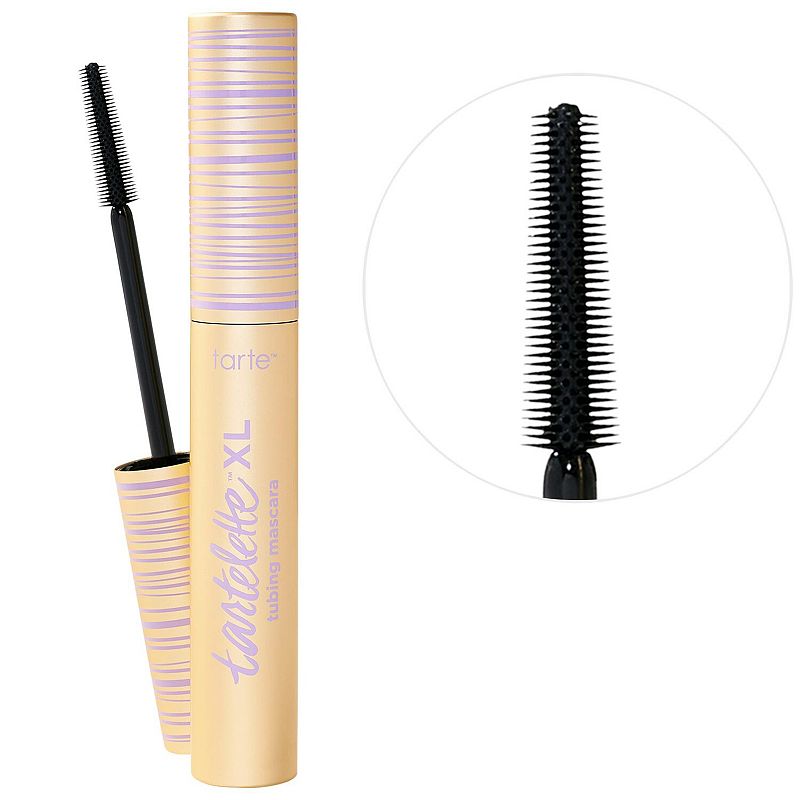
tarte Tartelette Tubing XL Mascara - 0.27 fl oz - Ulta Beauty: Thickening, Lengthening, Volumizing, Eyes
Analysis updated August 2026 · How Scout scores
At a glance
Summary
This mascara contains beneficial ingredients like shea butter, castor oil, and niacinamide, which provide moisturizing and conditioning benefits. However, the presence of denatured alcohol, which can be drying and irritating, especially as a top ingredient, lowers the overall safety profile. The product also includes synthetic polymers, which contribute to a moderate level of processing.
Key ingredients 27
Butyrospermum Parkii (Shea) ButterVery Good
Shea butter is a natural fat extracted from the nuts of the shea tree. It is known for its moisturizing and anti-inflammatory properties. It is beneficial for dry and sensitive skin.
Risks
Rarely, may cause allergic reactions in individuals with nut allergies.
Benefits
Highly moisturizing and soothing for the skin.
Ricinus Communis (Castor) Seed OilVery Good
Castor oil is a natural oil known for its moisturizing and conditioning properties. It is often used in cosmetics to enhance shine and smoothness. It is generally safe and beneficial for skin and hair.
Risks
Rarely, may cause allergic reactions.
Benefits
Excellent for moisturizing and conditioning.
Biotinoyl Tripeptide-1Very Good
This peptide is used in cosmetics for its potential to strengthen and condition hair. It is often included in formulations to promote healthy hair growth. It is generally considered safe and beneficial.
Risks
Minimal risk of irritation.
Benefits
Promotes healthy hair growth and strength.
PanthenolVery Good
Panthenol is a form of Vitamin B5 that acts as a moisturizer and skin conditioner. It helps to improve hydration and reduce inflammation. It is widely used in cosmetics for its soothing properties.
Risks
Minimal risk of irritation.
Benefits
Moisturizes and soothes the skin.
TocopherolVery Good
Tocopherol, or Vitamin E, is an antioxidant that helps to protect the skin from damage. It is widely used in cosmetics for its moisturizing and protective properties. It is generally considered safe and beneficial.
Risks
Minimal risk of irritation.
Benefits
Protects the skin and provides antioxidant benefits.
GlycerinGood
Glycerin is a humectant that attracts moisture to the skin, helping to keep it hydrated. It is widely used in cosmetics for its moisturizing properties. It is safe and beneficial for most skin types.
Risks
Rarely, may cause irritation in very sensitive skin.
Benefits
Excellent for moisturizing and maintaining skin hydration.
BiotinGood
Biotin is a B-vitamin that supports healthy hair and skin. It is often included in cosmetics for its potential to strengthen and condition. It is generally considered safe and beneficial.
Risks
Minimal risk of irritation.
Benefits
Supports healthy hair and skin.
NiacinamideGood
Niacinamide is a form of Vitamin B3 known for its anti-inflammatory and skin-soothing properties. It helps to improve skin texture and tone. It is widely used in cosmetics for its multiple skin benefits.
Risks
Rarely, may cause mild irritation.
Benefits
Improves skin texture and reduces inflammation.
Iron Oxides (CI 77499)Good
Beneficial ingredient — whole-food or functional value in this product class.
Risks
Minimal risk of irritation.
Benefits
Provides pigmentation and color to the product.
Water/Aqua/EauNeutral
Water is a common solvent used in cosmetics to dissolve other ingredients. It helps in forming the base of the product. It does not have any direct benefits or risks.
Benefits
Essential for dissolving and mixing other ingredients.
Acrylates/Ethylhexyl Acrylate CopolymerNeutral
This copolymer is used as a film-forming agent in cosmetics, providing a smooth application. It helps in enhancing the texture and wear of the product. It is generally considered safe for use in cosmetics.
Risks
May cause irritation in sensitive individuals.
Benefits
Improves product texture and longevity.
Glyceryl Stearate SENeutral
Glyceryl Stearate SE is an emulsifier that helps to blend water and oils in formulations. It provides a smooth texture to the product. It is generally considered safe and non-irritating.
Risks
Minimal risk of irritation.
Benefits
Improves product consistency and texture.
VP/Eicosene CopolymerNeutral
This copolymer is used as a film-forming agent to enhance the durability of the product. It helps in providing a long-lasting effect. It is generally considered safe for use in cosmetics.
Risks
May cause irritation in sensitive individuals.
Benefits
Improves product longevity and wear.
Copernicia Cerifera (Carnauba) Wax/Cera Carnauba/Cire De CarnaubaNeutral
Carnauba wax is used as a thickening agent and to provide structure to the product. It is derived from the leaves of the carnauba palm. It is generally considered safe and non-irritating.
Risks
Minimal risk of irritation.
Benefits
Provides structure and stability to the product.
Stearic AcidNeutral
Stearic acid is a fatty acid used as an emulsifier and thickener in cosmetics. It helps to stabilize formulations and improve texture. It is generally considered safe for use.
Risks
May cause irritation in sensitive skin.
Benefits
Improves product stability and texture.
TromethamineNeutral
Tromethamine is used as a pH adjuster in cosmetics to maintain product stability. It helps to ensure the product remains effective over time. It is generally considered safe for use.
Risks
May cause irritation in sensitive skin.
Benefits
Helps maintain product stability and effectiveness.
Palmitic AcidNeutral
Palmitic acid is a fatty acid used as an emollient and thickener in cosmetics. It helps to improve texture and provide a smooth application. It is generally considered safe for use.
Risks
May cause irritation in sensitive skin.
Benefits
Improves product texture and application.
Laureth-21Neutral
Laureth-21 is an emulsifier and surfactant used to improve texture and stability in cosmetics. It helps to blend ingredients and create a smooth application. It is generally considered safe for use.
Risks
May cause irritation in sensitive skin.
Benefits
Improves product texture and stability.
PVPNeutral
PVP is a film-forming agent used to enhance the hold and durability of cosmetics. It helps to provide a long-lasting effect. It is generally considered safe for use.
Risks
May cause irritation in sensitive skin.
Benefits
Enhances product hold and durability.
Xanthan GumNeutral
Xanthan gum is a thickening agent used to stabilize and improve the texture of cosmetics. It helps to create a smooth and consistent product. It is generally considered safe for use.
Risks
Minimal risk of irritation.
Benefits
Stabilizes and improves product texture.
Sodium DehydroacetateNeutral
Sodium dehydroacetate is a preservative used to prevent microbial growth in cosmetics. It helps to extend the shelf life of the product. It is generally considered safe for use.
Risks
May cause irritation in sensitive skin.
Benefits
Prevents microbial growth and extends shelf life.
MethylglucamineNeutral
Methylglucamine is used as a pH adjuster and stabilizer in cosmetics. It helps to maintain product stability and effectiveness. It is generally considered safe for use.
Risks
May cause irritation in sensitive skin.
Benefits
Helps maintain product stability and effectiveness.
EthylhexylglycerinNeutral
Ethylhexylglycerin is used as a preservative and skin conditioning agent in cosmetics. It helps to enhance the effectiveness of other preservatives. It is generally considered safe for use.
Risks
May cause irritation in sensitive skin.
Benefits
Enhances preservative effectiveness and conditions the skin.
Sodium PhytateNeutral
Sodium phytate is used as a chelating agent in cosmetics to stabilize formulations. It helps to prevent the degradation of the product. It is generally considered safe for use.
Risks
Minimal risk of irritation.
Benefits
Stabilizes formulations and prevents degradation.
DimethiconeBad
Occlusive silicone film-former — flagged under clean-beauty doctrine.
Risks
May cause breakouts in acne-prone skin.
Benefits
Provides a smooth, silky feel and helps retain moisture.
PhenoxyethanolBad
Processed additive flagged under Scout's ingredient doctrine.
Risks
May cause irritation in sensitive skin.
Benefits
Prevents microbial growth and extends shelf life.
Alcohol Denat.Very Bad
Denatured alcohol is used as a solvent and astringent in cosmetics. It can be drying and irritating to the skin, especially with prolonged use. It is often used to help other ingredients penetrate the skin.
Risks
Can cause dryness and irritation, especially in sensitive skin.
Benefits
Helps in quick drying of the product and enhances penetration of other ingredients.
Get the full breakdown in the Scout appTake Scout shopping
Scan any product to see lab results, healthy alternatives, and your personalized analysis.
Download on theApp Store GET IT ONGoogle PlayAmazon pricing & content
Amazon price as of . Product prices and availability are accurate as of the date/time indicated and are subject to change. Any price and availability information displayed on Amazon.com at the time of purchase will apply to the purchase of this product.
CERTAIN CONTENT THAT APPEARS ON THIS SITE COMES FROM AMAZON. THIS CONTENT IS PROVIDED “AS IS” AND IS SUBJECT TO CHANGE OR REMOVAL AT ANY TIME.