

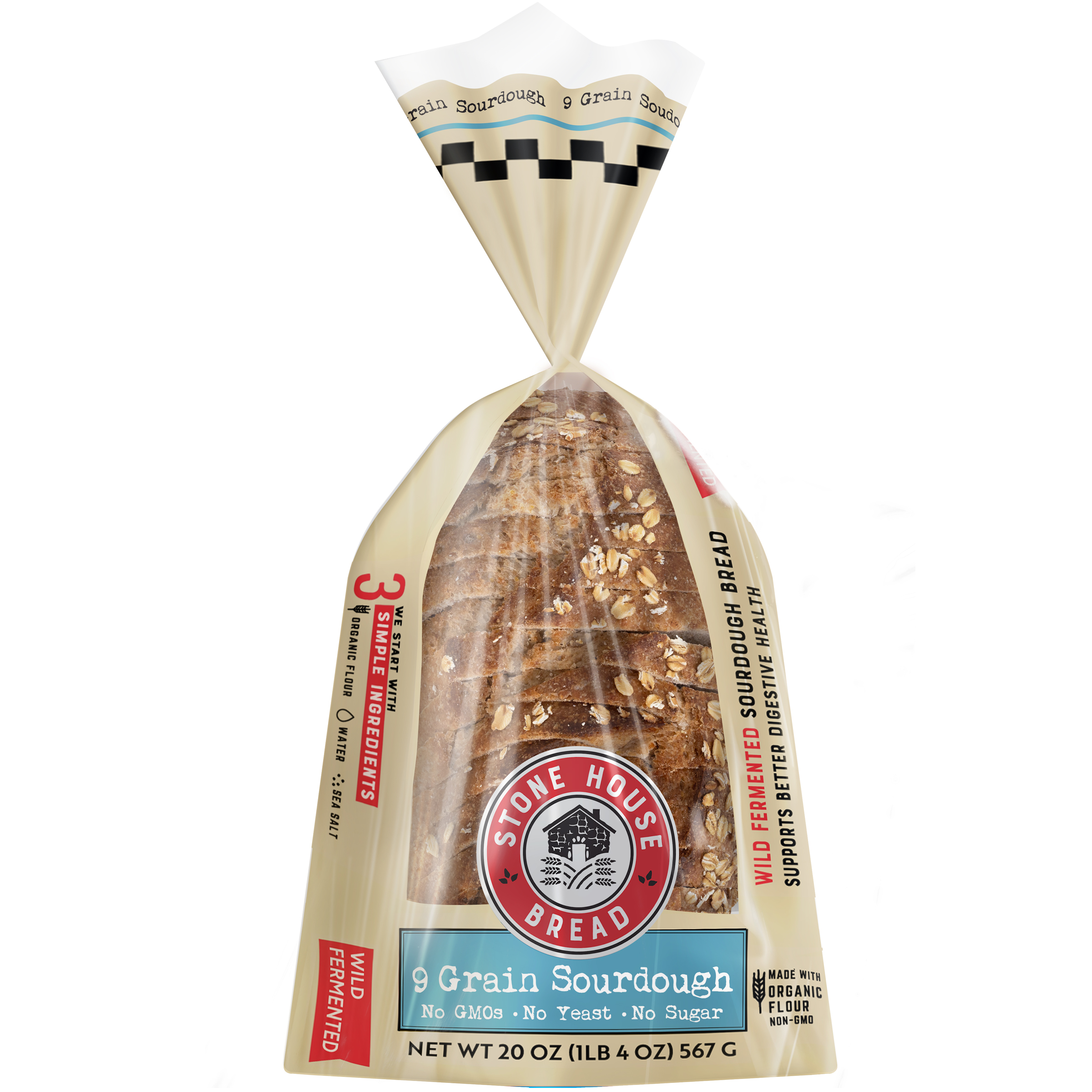


At a glance
Summary
This sourdough bread is made with enriched flour, which is refined and lacks the fiber and nutrients found in whole grains, leading to potential spikes in blood sugar levels. The product is moderately processed, which limits its score potential. However, it does not contain any artificial additives or harmful preservatives, which helps maintain a reasonable score.
Key ingredients 11
Ascorbic acidGood
Vitamin C — beneficial even when serving as a preservative.
Benefits
Helps improve bread quality and texture without significant nutritional benefits.
NiacinGood
Beneficial ingredient — whole-food or functional value in this product class.
Benefits
Supports energy metabolism and overall health as part of a balanced diet.
RiboflavinGood
Essential B vitamin — beneficial micronutrient.
Benefits
Contributes to energy production and overall health as part of a balanced diet.
Reduced ironNeutral
Reduced iron is added to enriched flour to compensate for iron lost during refining. It is important for oxygen transport in the blood. The bioavailability of iron in this form may be lower than in natural sources.
Risks
Excessive iron intake can lead to toxicity, but this is unlikely from bread consumption alone.
Benefits
Helps prevent iron deficiency anemia by contributing to daily iron intake.
Thiamine mononitrateNeutral
Thiamine mononitrate is a synthetic form of vitamin B1 used to fortify enriched flour. It is crucial for energy metabolism and nerve function. Its addition helps restore some nutritional value lost in flour refining.
Benefits
Supports energy metabolism and nerve function as part of a balanced diet.
Alpha amylaseNeutral
Alpha amylase is an enzyme used in bread making to break down starches into sugars, improving dough fermentation and texture. It is naturally occurring and widely used in baking. It does not pose significant health concerns in this context.
Benefits
Enhances dough fermentation and bread texture without significant nutritional benefits.
Folic acidNeutral
Folic acid is a synthetic form of vitamin B9 added to enriched flour to prevent deficiencies. It is important for DNA synthesis and cell division. Its addition helps restore some nutritional value lost in flour refining.
Risks
Excessive intake can mask vitamin B12 deficiency, but this is unlikely from bread consumption alone.
Benefits
Supports DNA synthesis and cell division, contributing to overall health.
WaterNeutral
Water is a fundamental ingredient in bread making, providing moisture and activating yeast. It is essential for dough formation and texture. It does not contribute any nutritional value beyond hydration.
Benefits
Essential for dough formation and hydration but does not provide nutritional benefits.
Rye flourNeutral
Rye flour is used in bread for its distinct flavor and texture. It contains more fiber than refined wheat flour but less than whole wheat flour. It can contribute to a more complex flavor profile in bread.
Risks
May cause gluten-related issues for individuals with celiac disease or gluten sensitivity.
Benefits
Provides a unique flavor and some fiber, enhancing the nutritional profile of bread.
Enriched flourBad
Enriched flour is refined and lacks the fiber and nutrients found in whole grains. It is often fortified with synthetic vitamins to replace lost nutrients. The refining process can lead to rapid spikes in blood sugar levels.
Risks
May contribute to blood sugar spikes and lacks the nutritional benefits of whole grains.
Benefits
Provides a source of carbohydrates for energy but lacks significant nutritional benefits.
Wheat flourBad
Refined grain flour stripped of bran and germ.
Risks
May cause gluten-related issues for individuals with celiac disease or gluten sensitivity.
Benefits
Provides energy through carbohydrates but lacks the fiber and nutrients of whole grain flour.
Processing
Processed Foods
Get the full breakdown in the Scout appTake Scout shopping
Scan any product to see lab results, healthy alternatives, and your personalized analysis.
Download on theApp Store GET IT ONGoogle Play