






Near you
Whole Foods is carried at Whole Foods stores. Find one within 25 miles.
At a glance
Summary
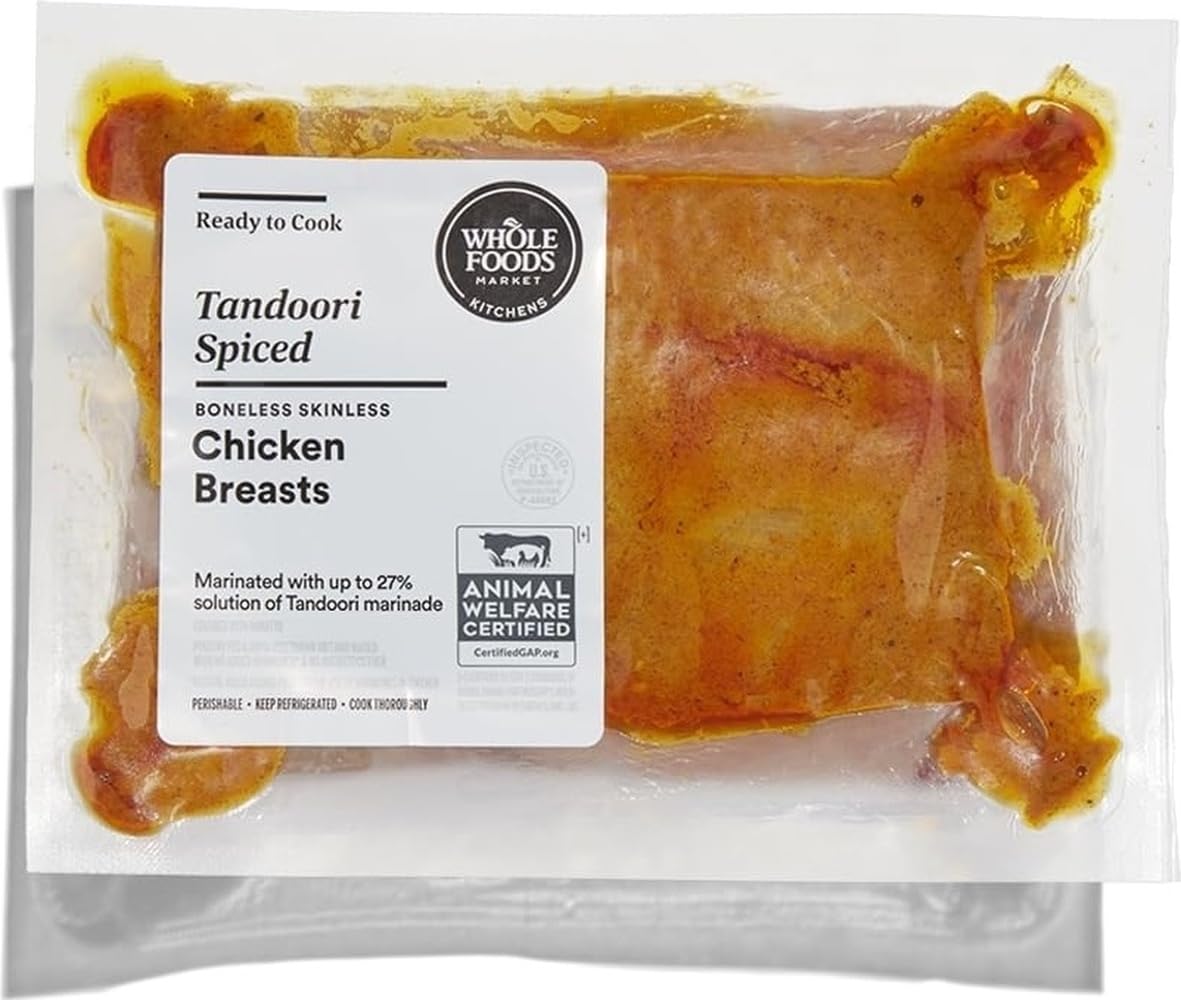
The Tandoori Chicken Breast features high-quality ingredients like boneless skinless chicken breast and coconut milk, which provide lean protein and healthy fats. However, the presence of soybean oil in the annatto oil and the use of 'natural flavor' introduce concerns due to potential processing and lack of transparency. While the product is processed, it maintains a relatively clean ingredient list, balancing the benefits and drawbacks.
Key ingredients 7
Boneless skinless chicken breastGood
Chicken breast is a high-quality source of lean protein, essential for muscle growth and repair. It is minimally processed and provides a rich source of vitamins and minerals. Compared to other meats, it is lower in fat and calories, making it a healthy choice.
Benefits
Provides essential amino acids and is a good source of B vitamins and minerals like phosphorus and selenium.
Coconut milkGood
Coconut milk is a source of healthy fats, particularly medium-chain triglycerides (MCTs), which are easily metabolized for energy. It is minimally processed and can add a creamy texture to dishes. Compared to dairy, it is a good alternative for those with lactose intolerance.
Risks
High in saturated fats, which may be a concern for individuals with specific dietary restrictions.
Benefits
Provides MCTs that can support energy levels and may have antimicrobial properties.
SeasoningGood
The seasoning blend includes spices like turmeric, coriander, and ginger, which have anti-inflammatory and antioxidant properties. These spices are minimally processed and can enhance the nutritional profile of the dish. The use of natural spices is beneficial compared to artificial flavorings.
Benefits
Contains spices that may support digestive health and provide antioxidant benefits.
Tandoori marinadeNeutral
Tandoori marinade typically includes a mix of spices and yogurt, which can enhance flavor and tenderize meat. The health impact depends on the specific ingredients used in the marinade. It is generally considered neutral unless specific harmful additives are present.
Risks
Potential for high sodium content depending on the specific recipe used.
Benefits
Enhances flavor and may provide some antioxidant benefits from spices like turmeric and ginger.
Vinegar powderNeutral
Vinegar powder is a dehydrated form of vinegar used for flavoring. It is generally considered neutral as it is a natural product with minimal processing. It can add tanginess to dishes without significant health impacts.
Benefits
Provides flavor enhancement without adding liquid, useful in dry seasoning blends.
Annatto oilBad
Annatto oil is used for coloring and is derived from annatto seeds mixed with soybean oil. The presence of soybean oil, a seed oil, is concerning due to its high omega-6 content and potential for promoting inflammation. Annatto itself is natural, but the oil base is problematic.
Risks
High omega-6 content may promote inflammation when consumed in excess.
Benefits
Annatto seeds provide natural color without synthetic additives.
Natural flavorBad
Natural flavor is a catch-all term that can include a wide range of substances, some of which may be highly processed. The lack of transparency in its composition is concerning. It is often used to enhance flavor without providing nutritional benefits.
Risks
Potential for undisclosed additives or allergens, and lack of transparency in ingredient sourcing.
Processing
Processed Foods
Get the full breakdown in the Scout appTake Scout shopping
Scan any product to see lab results, healthy alternatives, and your personalized analysis.
Download on theApp Store GET IT ONGoogle Play