
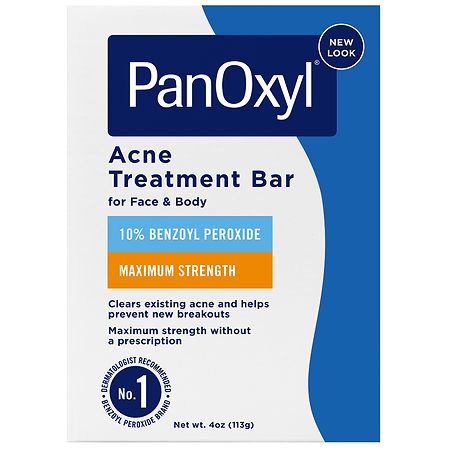

PanOxyl Acne Treatment Bar with 10% Benzoyl Peroxide - 4oz: No Fragrance Added, Dye-Free, Vegan, For Acne-Prone Skin
Analysis updated September 2026 · How Scout scores
At a glance
Summary
This acne treatment bar contains benzoyl peroxide, a common and effective ingredient for treating acne, but it can be irritating for some skin types. The formula is free from fragrance and dyes, which reduces the risk of irritation and allergic reactions. The inclusion of glycerin and cetearyl alcohol provides moisturizing benefits, but the presence of benzoyl peroxide as a primary ingredient requires careful use to avoid skin dryness.
Key ingredients 9
Decyl GlucosideGood
Beneficial ingredient — whole-food or functional value in this product class.
Risks
There are minimal risks, but it may cause mild irritation in very sensitive individuals.
Benefits
It provides gentle cleansing without stripping the skin's natural oils.
GlycerinGood
Glycerin is a humectant that attracts moisture to the skin. It is widely used in skincare for its hydrating properties. It helps to maintain the skin's moisture balance.
Risks
There are minimal risks, though overuse can lead to a sticky feeling on the skin.
Benefits
It provides excellent hydration and helps to keep the skin soft and supple.
Benzoyl PeroxideNeutral
Benzoyl Peroxide is a common acne treatment known for its antibacterial properties. It helps reduce acne-causing bacteria and can decrease inflammation. However, it may cause dryness or irritation in some users.
Risks
Potential risks include skin dryness, irritation, and peeling, especially for sensitive skin types.
Benefits
It effectively reduces acne by killing bacteria and decreasing oil production.
AquaNeutral
Aqua, or water, is used as a solvent in cosmetic formulations. It helps dissolve other ingredients and provides a base for the product. It is generally considered safe and non-irritating.
Risks
There are no significant risks associated with water in cosmetic products.
Benefits
Water hydrates the skin and helps in the even distribution of other ingredients.
Cetearyl AlcoholNeutral
Standard formulation ingredient — neither beneficial nor harmful at typical use.
Risks
There are minimal risks, though very sensitive skin might experience mild irritation.
Benefits
It provides moisturizing properties and improves the texture of the product.
DextrinNeutral
Dextrin is used as a binding agent in cosmetics. It helps to stabilize formulations and improve texture. It is generally considered safe for use in skincare products.
Risks
There are no significant risks associated with dextrin in cosmetics.
Benefits
It helps maintain the consistency and stability of the product.
Sodium ChlorideNeutral
Sodium Chloride, or salt, is used as a thickening agent in cosmetics. It helps to improve the texture and consistency of products. It is generally safe for use in skincare.
Risks
Excessive use can lead to dryness or irritation, especially in sensitive skin.
Benefits
It helps to thicken formulations and improve product stability.
Sodium Cocoyl IsethionateNeutral
Sodium Cocoyl Isethionate is a mild surfactant derived from coconut oil. It is used for its gentle cleansing properties and is suitable for sensitive skin. It helps to create a creamy lather without irritation.
Risks
There are minimal risks, but it may cause mild irritation in very sensitive individuals.
Benefits
It provides gentle cleansing and helps maintain the skin's natural moisture barrier.
Tetrasodium Glutamate DiacetateNeutral
Tetrasodium Glutamate Diacetate is a chelating agent used to improve the stability and efficacy of cosmetic formulations. It helps to bind metal ions and prevent product degradation. It is considered safe for use in skincare products.
Risks
There are no significant risks associated with this ingredient in cosmetics.
Benefits
It enhances product stability and prolongs shelf life.
Get the full breakdown in the Scout appTake Scout shopping
Scan any product to see lab results, healthy alternatives, and your personalized analysis.
Download on theApp Store GET IT ONGoogle PlayAmazon pricing & content
Amazon price as of . Product prices and availability are accurate as of the date/time indicated and are subject to change. Any price and availability information displayed on Amazon.com at the time of purchase will apply to the purchase of this product.
CERTAIN CONTENT THAT APPEARS ON THIS SITE COMES FROM AMAZON. THIS CONTENT IS PROVIDED “AS IS” AND IS SUBJECT TO CHANGE OR REMOVAL AT ANY TIME.