
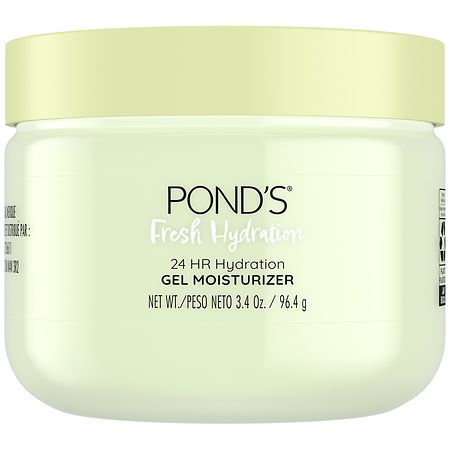
POND'S Gel Fruity HYDRA Aloe Face Moisturizer - 3.4oz: Paraben-Free, Alcohol-Free, For Normal/Dry Skin
Summary
This moisturizer is free from parabens and alcohol, which are often concerning in skincare products. It contains beneficial ingredients like aloe vera, known for its soothing properties, but may include some synthetic emulsifiers or preservatives typical in processed cosmetics. The absence of harsh surfactants and synthetic fragrances contributes positively to its safety profile.
At a glance
Key ingredients 11
Water
Water is a universal solvent and is used as a base in many cosmetic formulations. It helps dissolve other ingredients and provides hydration. It is essential for maintaining skin moisture balance.
Risks
There are no significant risks associated with water in cosmetics.
Benefits
Water hydrates the skin and helps in the absorption of other beneficial ingredients.
Glycerin
Glycerin is a humectant that attracts moisture to the skin, helping to keep it hydrated. It is commonly used in skincare products for its moisturizing properties. It also helps to improve skin barrier function.
Risks
Glycerin is generally safe, but in rare cases, it can cause irritation if used in high concentrations.
Benefits
Glycerin helps to maintain skin hydration and improve skin texture.
Niacinamide
Niacinamide is a form of Vitamin B3 that is known for its anti-inflammatory and skin-brightening properties. It helps to improve skin elasticity and reduce redness. It is also effective in reducing the appearance of enlarged pores.
Risks
Niacinamide is generally well-tolerated, but it can cause mild irritation in sensitive skin.
Benefits
Niacinamide improves skin tone, reduces inflammation, and enhances skin barrier function.
Sodium Hyaluronate
Sodium Hyaluronate is a salt form of Hyaluronic Acid, known for its ability to retain moisture. It penetrates the skin easily and provides deep hydration. It helps to plump the skin and reduce the appearance of fine lines.
Risks
There are minimal risks associated with Sodium Hyaluronate, though it can cause irritation in very sensitive skin.
Benefits
Sodium Hyaluronate provides intense hydration and helps to maintain skin elasticity.
Panthenol
Panthenol is a provitamin of B5 that acts as a moisturizer and skin conditioner. It helps to improve skin hydration and reduce inflammation. It also aids in wound healing and skin repair.
Risks
Panthenol is generally safe, but it can cause mild irritation in some individuals.
Benefits
Panthenol enhances skin hydration, reduces inflammation, and supports skin healing.
Parfum
Parfum is a term used for fragrance in cosmetic products. It is added to provide a pleasant scent to the product. However, it can be a mixture of various chemicals.
Risks
Fragrances can cause allergic reactions and skin irritation, especially in sensitive individuals.
Benefits
Parfum enhances the sensory experience of using the product.
Methylparaben
Methylparaben is a type of paraben used as a preservative in cosmetics. It helps to prevent the growth of harmful bacteria and mold. However, it is controversial due to potential health concerns.
Risks
Parabens have been linked to hormone disruption and allergic reactions.
Benefits
Methylparaben extends the shelf life of products by preventing microbial growth.
Ethylparaben
Ethylparaben is another paraben used as a preservative in cosmetics. It is effective in preventing microbial growth. Like other parabens, it is under scrutiny for potential health risks.
Risks
Ethylparaben may disrupt endocrine function and cause skin irritation.
Benefits
Ethylparaben helps maintain product safety by inhibiting microbial contamination.
Propylparaben
Propylparaben is used as a preservative to prevent the growth of bacteria and mold in cosmetics. It is effective in extending the shelf life of products. However, it is controversial due to potential health concerns.
Risks
Propylparaben is associated with hormone disruption and allergic reactions.
Benefits
Propylparaben ensures product safety by preventing microbial growth.
Phenoxyethanol
Phenoxyethanol is a preservative used in cosmetics to prevent bacterial growth. It is considered a safer alternative to parabens. However, it can cause skin irritation in some individuals.
Risks
Phenoxyethanol can cause allergic reactions and irritation, particularly in sensitive skin.
Benefits
Phenoxyethanol helps to maintain product integrity by preventing microbial contamination.
Polyacrylamide
Polyacrylamide is used as a thickening agent in cosmetics. It helps to improve the texture and consistency of products. However, it can break down into acrylamide, a potentially harmful substance.
Risks
Polyacrylamide may release acrylamide, which is a potential carcinogen.
Benefits
Polyacrylamide enhances the texture and application of cosmetic products.
Processing
Processed Foods
Get the full breakdown in the Scout app
Scan any product to see lab results, healthy alternatives, and your personalized analysis.
Download on theApp Store