
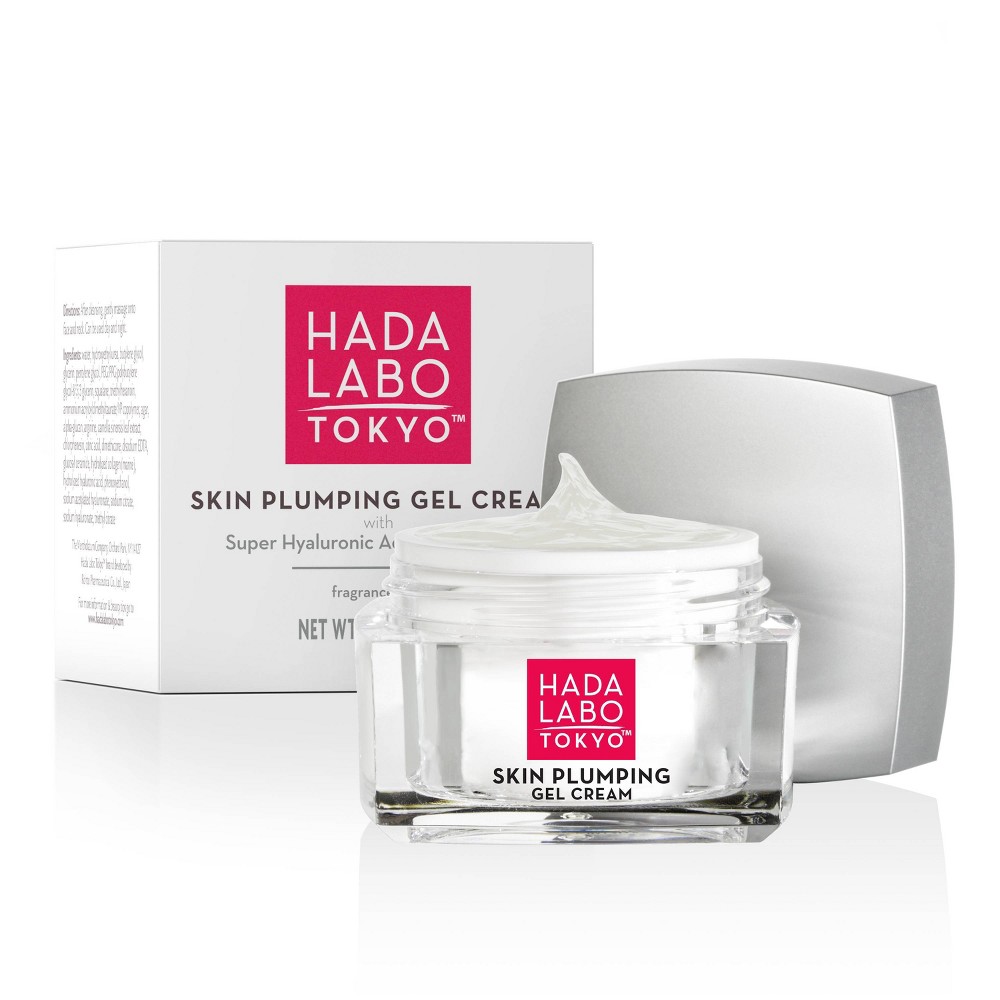
Hada Labo Tokyo Plumping Gel Cream Facial Moisturizer with Super Hyaluronic Acid - 1.76oz: For Oily, Combination, Sensitive, Mature, Dry Skin Types

78 Good
$50.28
View on Amazon
Verified Amazon match

Summary

This moisturizer contains beneficial ingredients like squalane, hyaluronic acid, and ceramides, which are known for their hydrating and skin-repairing properties. However, the presence of synthetic compounds such as dimethicone and PEG/PPG derivatives indicates a moderate level of processing. While these ingredients are generally considered safe, they do not align with a completely natural formulation, which affects the overall score.

At a glance

Beneficial ingredients 0
Harmful ingredients 0
Category Moisturizer

Key ingredients 16

Water

Water is a universal solvent and is used as a base in many cosmetic formulations. It helps dissolve other ingredients and provides hydration to the skin. It is essential for the formulation of the gel cream.

Risks

There are no significant risks associated with water in cosmetic formulations.

Benefits

Water hydrates the skin and helps in the absorption of other beneficial ingredients.

See more about Water →
Hydroxyethyl Urea

Hydroxyethyl Urea is a humectant that helps retain moisture in the skin. It improves skin hydration and texture. It is often used in skincare products for its moisturizing properties.

Risks

There are minimal risks associated with Hydroxyethyl Urea, though it may cause irritation in very sensitive skin.

Benefits

It enhances skin moisture levels and improves the overall feel of the skin.

See more about Hydroxyethyl Urea →
Butylene Glycol

Butylene Glycol is a common ingredient used to improve the texture and spreadability of skincare products. It acts as a solvent and a conditioning agent. It also helps in the penetration of other ingredients into the skin.

Risks

In rare cases, it may cause irritation or allergic reactions in sensitive individuals.

Benefits

It enhances the absorption of active ingredients and provides a smooth application.

See more about Butylene Glycol →
Glycerin

Glycerin is a well-known humectant that attracts moisture to the skin. It is used in many skincare products for its ability to hydrate and maintain the skin's moisture barrier. It is derived from natural sources and is considered safe for most skin types.

Risks

Glycerin is generally safe, but in high concentrations, it may cause a sticky feeling on the skin.

Benefits

It helps keep the skin hydrated and soft, improving its overall appearance.

See more about Glycerin →
Pentylene Glycol

Pentylene Glycol is used as a moisturizer and a solvent in cosmetic formulations. It helps improve the texture of the product and enhances the penetration of other ingredients. It also has antimicrobial properties that can help preserve the product.

Risks

It is generally considered safe, but may cause irritation in very sensitive skin.

Benefits

It provides moisturizing benefits and helps maintain the stability of the formulation.

See more about Pentylene Glycol →
Squalane

Squalane is a highly effective emollient and natural antioxidant. It mimics the skin's natural oils, making it an excellent moisturizer. It is non-comedogenic and suitable for all skin types.

Risks

There are minimal risks associated with squalane, making it safe for most users.

Benefits

It hydrates the skin, reduces the appearance of fine lines, and improves skin elasticity.

See more about Squalane →
Triethylhexanoin

Triethylhexanoin is an emollient that helps improve the texture and spreadability of skincare products. It provides a silky feel and helps lock in moisture. It is often used in formulations to enhance the sensory experience.

Risks

It is generally safe, but may cause mild irritation in sensitive skin.

Benefits

It enhances the texture of the product and provides a smooth, non-greasy finish.

See more about Triethylhexanoin →
Ammonium Acryloyldimethyltaurate/VP Copolymer

This ingredient is used as a thickening agent and stabilizer in cosmetic formulations. It helps create a gel-like texture and improves the product's stability. It is commonly used in gel creams for its ability to provide a smooth application.

Risks

There are minimal risks, though it may cause irritation in very sensitive skin.

Benefits

It enhances the texture and stability of the product, ensuring a consistent application.

Agar

Agar is a natural thickening agent derived from seaweed. It is used to improve the texture and consistency of skincare products. It also provides a gel-like structure to formulations.

Risks

Agar is generally safe, but may cause mild irritation in sensitive individuals.

Benefits

It provides a natural thickening effect and helps stabilize the formulation.

See more about Agar →
Alpha-Glucan

Alpha-Glucan is a polysaccharide that acts as a skin-conditioning agent. It helps improve the skin's moisture retention and provides a protective barrier. It is often used in skincare products for its hydrating properties.

Risks

There are minimal risks associated with alpha-glucan, making it safe for most users.

Benefits

It enhances skin hydration and provides a protective barrier against environmental stressors.

Arginine

Arginine is an amino acid that helps improve skin hydration and elasticity. It is used in skincare products for its moisturizing and anti-aging properties. It also supports the skin's natural repair processes.

Risks

Arginine is generally safe, but may cause irritation in very sensitive skin.

Benefits

It enhances skin hydration and supports the skin's natural repair mechanisms.

See more about Arginine →
Citric Acid

Citric Acid is used to adjust the pH of cosmetic formulations. It also acts as an exfoliant and helps improve skin texture. It is derived from citrus fruits and is commonly used in skincare products.

Risks

In high concentrations, it may cause irritation or sensitivity, especially in sensitive skin.

Benefits

It helps balance the pH of the product and provides mild exfoliation benefits.

See more about Citric Acid →
Dimethicone

Dimethicone is a silicone-based polymer used as an emollient and skin protectant. It provides a smooth, silky feel and helps lock in moisture. It is commonly used in skincare products for its ability to improve texture and spreadability.

Risks

It is generally safe, but may cause breakouts in acne-prone skin due to its occlusive nature.

Benefits

It provides a smooth application and helps retain moisture in the skin.

See more about Dimethicone →
Super Hyaluronic Acid

Super Hyaluronic Acid is a powerful humectant that attracts and retains moisture in the skin. It is known for its ability to hold up to 1000 times its weight in water. It is a key ingredient in many moisturizing products for its hydrating properties.

Risks

There are minimal risks associated with hyaluronic acid, making it safe for most users.

Benefits

It provides intense hydration and helps plump the skin, reducing the appearance of fine lines.

Ceramides

Ceramides are lipids that help restore the skin's natural barrier. They are essential for maintaining skin hydration and protecting against environmental damage. They are commonly used in skincare products for their barrier-repairing properties.

Risks

Ceramides are generally safe, with minimal risk of irritation.

Benefits

They help strengthen the skin's barrier and improve moisture retention.

Collagen

Collagen is a protein that provides structure and elasticity to the skin. It is used in skincare products for its anti-aging and moisturizing benefits. It helps improve skin firmness and reduce the appearance of wrinkles.

Risks

Collagen is generally safe, but its effectiveness in topical applications is debated.

Benefits

It helps improve skin elasticity and reduces the appearance of fine lines and wrinkles.

See more about Collagen →

Processing

Group 3 · Processed

Processed Foods

Get the full breakdown in the Scout app

Scan any product to see lab results, healthy alternatives, and your personalized analysis.

Download on theApp Store