
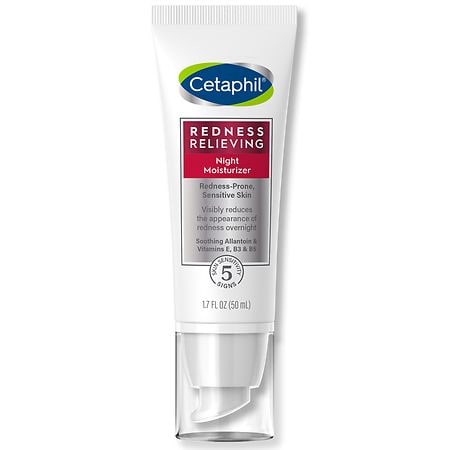

Cetaphil Redness Relieving Night Face Moisturizer - Fragrance Free - 1.7 fl oz: Sensitive Skin, Hypoallergenic, Noncomedogenic, Paraben-Free
Analysis updated August 2026 · How Scout scores
At a glance
Summary
This moisturizer contains several beneficial ingredients such as glycerin, sunflower seed oil, and shea butter, which are known for their moisturizing and soothing properties. However, the presence of BHT, a synthetic antioxidant with potential health concerns, slightly lowers the score. The product is processed, which also impacts the overall rating, but it remains a mostly safe choice for sensitive skin.
Key ingredients 31
Helianthus Annuus (Sunflower) Seed OilVery Good
Sunflower Seed Oil is a natural oil rich in fatty acids and vitamins. It is known for its emollient properties, which help to soften and soothe the skin. It is suitable for all skin types and is non-comedogenic.
Risks
There are minimal risks; it is generally well-tolerated.
Benefits
Sunflower Seed Oil helps maintain the skin's natural barrier and provides antioxidant protection.
Butyrospermum Parkii (Shea) ButterVery Good
Shea Butter is a natural fat extracted from the nuts of the shea tree. It is highly moisturizing and nourishing for the skin. It is rich in vitamins and fatty acids, making it beneficial for dry and sensitive skin.
Risks
There are minimal risks; it is generally well-tolerated.
Benefits
Shea Butter helps to deeply moisturize and soothe the skin, improving elasticity.
PanthenolVery Good
Panthenol, also known as provitamin B5, is a humectant that helps to hydrate and soothe the skin. It promotes healing and improves skin elasticity. It is suitable for all skin types and is generally well-tolerated.
Risks
There are minimal risks; it is generally safe for use.
Benefits
Panthenol helps to moisturize and repair the skin, enhancing its softness and smoothness.
Caprylic/Capric TriglycerideGood
Caprylic/Capric Triglyceride is an emollient derived from coconut oil and glycerin. It helps to smooth and soften the skin. It is well-tolerated by most skin types.
Risks
Rarely, it may cause mild irritation in sensitive individuals.
Benefits
It provides a lightweight, non-greasy barrier that helps retain moisture in the skin.
GlycerinGood
Glycerin is a humectant that attracts moisture to the skin, improving hydration. It is widely used in skincare for its moisturizing properties. It is generally safe and effective for all skin types.
Risks
There are minimal risks associated with glycerin; it is well-tolerated.
Benefits
Glycerin helps maintain the skin's moisture balance, keeping it soft and supple.
Tocopheryl AcetateGood
Tocopheryl Acetate is a form of Vitamin E, known for its antioxidant properties. It helps protect the skin from free radical damage. It is widely used in skincare for its moisturizing and healing benefits.
Risks
In rare cases, it may cause skin irritation or allergic reactions.
Benefits
Tocopheryl Acetate helps to nourish and protect the skin, promoting a healthy complexion.
AllantoinGood
Allantoin is a compound known for its soothing and healing properties. It helps to calm irritated skin and promote cell regeneration. It is suitable for sensitive skin and is generally well-tolerated.
Risks
There are minimal risks; it is generally safe for use.
Benefits
Allantoin helps to soothe and protect the skin, reducing redness and irritation.
Dipotassium GlycyrrhizateGood
Dipotassium Glycyrrhizate is derived from licorice root and is known for its anti-inflammatory properties. It helps to reduce redness and irritation in the skin. It is suitable for sensitive skin and is generally well-tolerated.
Risks
There are minimal risks; it is generally safe for use.
Benefits
Dipotassium Glycyrrhizate helps to soothe and calm the skin, improving its appearance.
Sodium HyaluronateGood
Sodium Hyaluronate is a form of hyaluronic acid, known for its excellent moisture-retaining properties. It helps to hydrate and plump the skin, reducing the appearance of fine lines. It is suitable for all skin types and is generally well-tolerated.
Risks
There are minimal risks; it is generally safe for use.
Benefits
Sodium Hyaluronate helps to deeply hydrate the skin, improving its texture and elasticity.
Ceramide NPGood
Ceramide NP is a lipid that helps to restore the skin's natural barrier. It is essential for maintaining skin hydration and protecting against environmental damage. It is suitable for all skin types and is generally well-tolerated.
Risks
There are minimal risks; it is generally safe for use.
Benefits
Ceramide NP helps to strengthen the skin's barrier, improving moisture retention and resilience.
NiacinamideGood
Niacinamide, also known as Vitamin B3, is a versatile skincare ingredient known for its anti-inflammatory and brightening properties. It helps to improve skin texture, reduce redness, and minimize pores. It is suitable for all skin types and is generally well-tolerated.
Risks
There are minimal risks; it is generally safe for use.
Benefits
Niacinamide helps to improve skin tone and texture, providing a more even complexion.
WaterNeutral
Water is a common solvent in cosmetics, used to dissolve other ingredients. It does not provide direct skin benefits but is essential for formulation. It is generally safe and non-irritating.
Risks
There are no significant risks associated with water in cosmetics.
Benefits
Water helps in the even distribution of other ingredients in the product.
PropanediolNeutral
Propanediol is a glycol that acts as a solvent and humectant in skincare products. It helps improve the texture and spreadability of formulations. It is considered safe for use in cosmetics.
Risks
In rare cases, it may cause skin irritation or allergic reactions.
Benefits
Propanediol enhances the absorption of other ingredients and provides a smooth application.
Pentylene GlycolNeutral
Pentylene Glycol is a synthetic humectant and solvent that helps retain moisture in the skin. It also has antimicrobial properties that can enhance product preservation. It is generally considered safe for use in cosmetics.
Risks
It may cause mild irritation in sensitive skin types.
Benefits
Pentylene Glycol improves skin hydration and enhances the efficacy of other active ingredients.
SorbitolNeutral
Sorbitol is a sugar alcohol used as a humectant in skincare products. It helps to retain moisture in the skin. It is considered safe for use in cosmetics.
Risks
There are no significant risks associated with sorbitol in topical applications.
Benefits
Sorbitol helps improve skin hydration and texture.
Cetearyl AlcoholNeutral
Cetearyl Alcohol is a fatty alcohol used as an emollient and thickener in cosmetics. It helps to stabilize formulations and improve texture. It is considered safe and non-irritating for most skin types.
Risks
There are no significant risks associated with cetearyl alcohol.
Benefits
Cetearyl Alcohol helps to soften and smooth the skin, enhancing the product's feel.
Behenyl AlcoholNeutral
Behenyl Alcohol is a fatty alcohol used as an emollient and thickener in skincare products. It helps to improve the texture and stability of formulations. It is generally considered safe for use in cosmetics.
Risks
There are no significant risks associated with behenyl alcohol.
Benefits
Behenyl Alcohol provides a smooth, velvety feel and helps to condition the skin.
Glyceryl StearateNeutral
Glyceryl Stearate is an emulsifier that helps blend water and oil components in formulations. It also acts as a lubricant on the skin's surface, giving it a soft and smooth appearance. It is considered safe for use in cosmetics.
Risks
There are no significant risks associated with glyceryl stearate.
Benefits
Glyceryl Stearate helps to maintain the stability and consistency of the product.
CaffeineNeutral
Standard formulation ingredient — neither beneficial nor harmful at typical use.
Risks
In rare cases, it may cause mild irritation.
Benefits
Caffeine helps to energize and refresh the skin, reducing signs of fatigue.
Citric AcidNeutral
Citric Acid is used to adjust the pH of skincare products. It also has mild exfoliating properties that can help improve skin texture. It is generally considered safe for use in cosmetics.
Risks
In high concentrations, it may cause skin irritation.
Benefits
Citric Acid helps to maintain the stability and effectiveness of the product.
Cetyl AlcoholNeutral
Cetyl Alcohol is a fatty alcohol used as an emollient and thickener in skincare products. It helps to improve the texture and consistency of formulations. It is considered safe and non-irritating for most skin types.
Risks
There are no significant risks associated with cetyl alcohol.
Benefits
Cetyl Alcohol helps to soften and smooth the skin, enhancing the product's feel.
Ceteareth-20Neutral
Ceteareth-20 is an emulsifier that helps blend water and oil components in formulations. It improves the texture and spreadability of products. It is generally considered safe for use in cosmetics.
Risks
There is a potential risk of contamination with 1,4-dioxane, a byproduct of ethoxylation.
Benefits
Ceteareth-20 helps to maintain the stability and consistency of the product.
Glyceryl Stearate CitrateNeutral
Glyceryl Stearate Citrate is an emulsifier that helps blend water and oil components in formulations. It also acts as a lubricant on the skin's surface, giving it a soft and smooth appearance. It is considered safe for use in cosmetics.
Risks
There are no significant risks associated with glyceryl stearate citrate.
Benefits
Glyceryl Stearate Citrate helps to maintain the stability and consistency of the product.
Disodium Ethylene Dicocamide PEG-15 DisulfateNeutral
Disodium Ethylene Dicocamide PEG-15 Disulfate is a surfactant used to improve the texture and spreadability of formulations. It helps to stabilize emulsions and enhance product performance. It is generally considered safe for use in cosmetics.
Risks
There is a potential risk of contamination with 1,4-dioxane, a byproduct of ethoxylation.
Benefits
It helps to improve the texture and stability of the product.
Caprylyl GlycolNeutral
Caprylyl Glycol is a humectant and skin conditioning agent that helps to retain moisture in the skin. It also has antimicrobial properties that can enhance product preservation. It is generally considered safe for use in cosmetics.
Risks
There are no significant risks associated with caprylyl glycol.
Benefits
Caprylyl Glycol helps to improve skin hydration and enhance the efficacy of other active ingredients.
Xanthan GumNeutral
Xanthan Gum is a natural thickening agent used to stabilize and thicken cosmetic formulations. It helps to improve the texture and consistency of products. It is generally considered safe for use in cosmetics.
Risks
There are no significant risks associated with xanthan gum.
Benefits
Xanthan Gum helps to improve the texture and stability of the product.
Sodium HydroxideNeutral
Sodium Hydroxide is used to adjust the pH of cosmetic formulations. It is a strong alkaline compound that can be irritating in high concentrations. It is generally considered safe when used in small amounts to balance pH.
Risks
In high concentrations, it can cause skin irritation and burns.
Benefits
Sodium Hydroxide helps to maintain the desired pH level of the product.
DimethiconeBad
Occlusive silicone film-former — flagged under clean-beauty doctrine.
Risks
It may cause breakouts in acne-prone skin due to its occlusive nature.
Benefits
Dimethicone provides a silky, smooth feel and helps improve the appearance of fine lines.
Acrylates/C10-30 Alkyl Acrylate CrosspolymerBad
Processed additive flagged under Scout's ingredient doctrine.
Risks
There are no significant risks associated with this ingredient.
Benefits
It helps to improve the texture and stability of the product.
Disodium EDTABad
Processed additive flagged under Scout's ingredient doctrine.
Risks
There are no significant risks associated with disodium EDTA.
Benefits
Disodium EDTA helps to maintain the stability and effectiveness of the product.
BHTBad
BHT is a synthetic antioxidant used to prevent product spoilage. It has been associated with potential health concerns, including skin irritation and endocrine disruption. It is used in low concentrations in cosmetics.
Risks
BHT may cause skin irritation and has potential endocrine-disrupting effects.
Benefits
BHT helps to extend the shelf life of the product by preventing oxidation.
Get the full breakdown in the Scout appTake Scout shopping
Scan any product to see lab results, healthy alternatives, and your personalized analysis.
Download on theApp Store GET IT ONGoogle PlayAmazon pricing & content
Amazon price as of . Product prices and availability are accurate as of the date/time indicated and are subject to change. Any price and availability information displayed on Amazon.com at the time of purchase will apply to the purchase of this product.
CERTAIN CONTENT THAT APPEARS ON THIS SITE COMES FROM AMAZON. THIS CONTENT IS PROVIDED “AS IS” AND IS SUBJECT TO CHANGE OR REMOVAL AT ANY TIME.