
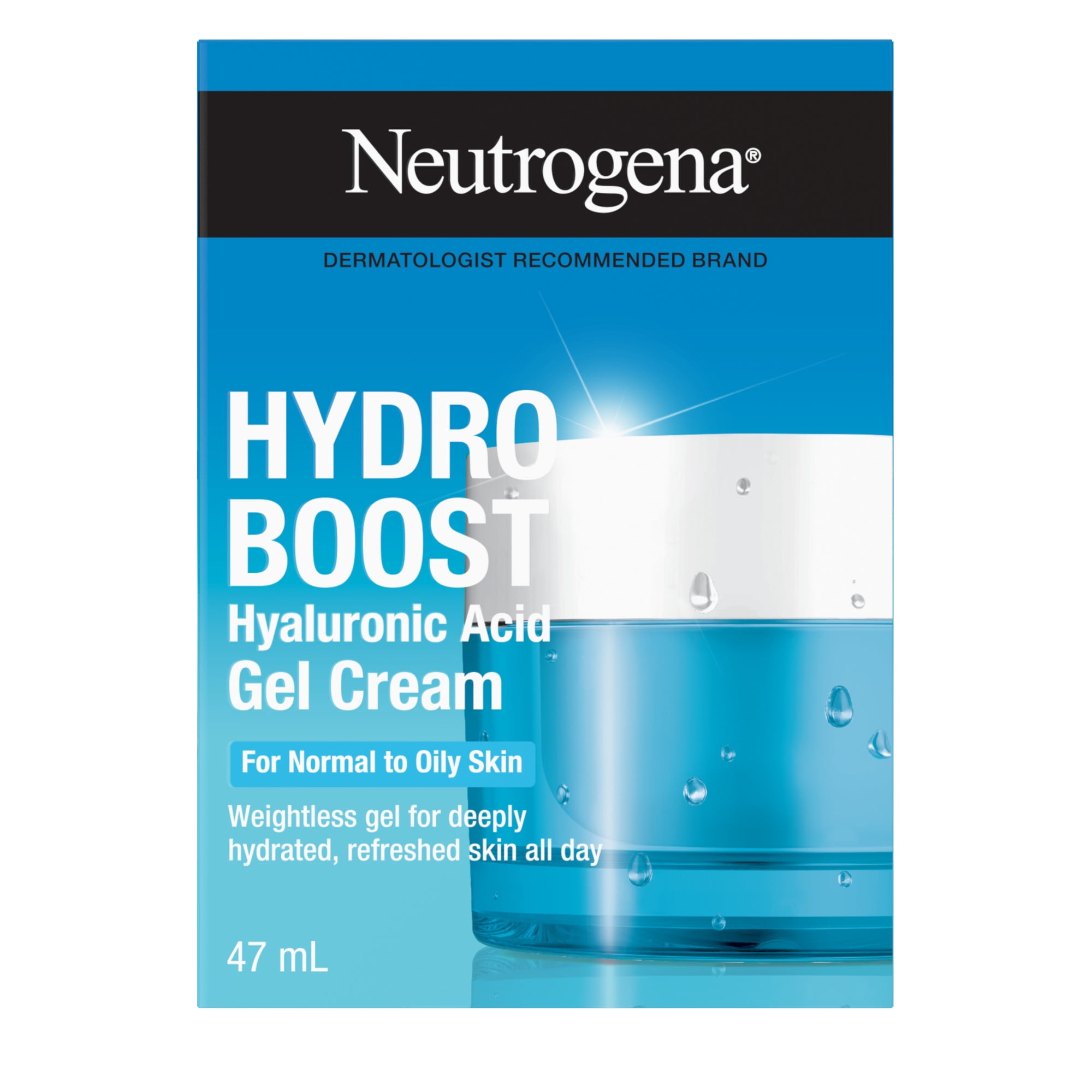



Neutrogena Hydroboost Facial Gel-Cream With Hyaluronic Acid, Hydrating Face Moisturizer, Dermatologist Recommended One Size
Analysis updated August 2026 · How Scout scores
At a glance
Summary
This moisturizer contains beneficial ingredients like glycerin and sodium hyaluronate, which are excellent for hydrating and retaining moisture in the skin. The presence of olive-derived emulsifiers, cetearyl olivate and sorbitan olivate, adds to its skin-conditioning properties. However, the inclusion of synthetic components like polyacrylate crosspolymer-6 and dimethicone, while generally safe, slightly lowers the score due to their synthetic nature and potential environmental concerns.
Key ingredients 34
GlycerinGood
Glycerin is a humectant that attracts moisture to the skin, helping to keep it hydrated. It is widely used in skincare products for its moisturizing properties. It is considered safe and beneficial for most skin types.
Risks
There are minimal risks associated with glycerin, though it may cause irritation in very sensitive skin.
Benefits
Glycerin helps to maintain skin hydration and improve skin barrier function.
Cetearyl OlivateGood
Cetearyl Olivate is an emulsifier derived from olive oil, used to blend water and oil components. It is known for its moisturizing and skin-conditioning properties. It is considered safe and beneficial for the skin.
Risks
There are minimal risks associated with Cetearyl Olivate, though it may cause irritation in very sensitive skin.
Benefits
Cetearyl Olivate helps to hydrate and soften the skin.
Sorbitan OlivateGood
Sorbitan Olivate is an emulsifier derived from olive oil, used to stabilize formulations. It is known for its skin-conditioning properties and is considered safe for use in cosmetics. It helps to improve the texture and feel of the product.
Risks
There are minimal risks associated with Sorbitan Olivate, though it may cause irritation in very sensitive skin.
Benefits
Sorbitan Olivate helps to moisturize and condition the skin.
Sodium HyaluronateGood
Sodium Hyaluronate is a salt form of hyaluronic acid, known for its ability to retain moisture and hydrate the skin. It is a popular ingredient in skincare for its anti-aging and moisturizing benefits. It is considered safe and highly beneficial for all skin types.
Risks
There are no significant risks associated with Sodium Hyaluronate.
Benefits
Sodium Hyaluronate helps to deeply hydrate the skin and reduce the appearance of fine lines.
GlycineGood
Beneficial ingredient — whole-food or functional value in this product class.
Risks
There are minimal risks associated with Glycine.
Benefits
Glycine helps to condition the skin and improve its texture.
WaterNeutral
Water is a common solvent used in cosmetics to dissolve other ingredients. It helps in the application and absorption of the product. It is generally considered safe and non-irritating.
Risks
There are no significant risks associated with water in cosmetics.
Benefits
Water helps to hydrate the skin and improve the texture of the product.
SerineNeutral
Serine is an amino acid used in cosmetics for its moisturizing properties. It helps to improve skin hydration and texture. It is generally considered safe for use in skincare products.
Risks
There are minimal risks associated with Serine.
Benefits
Serine helps to maintain skin hydration and improve skin texture.
AlanineNeutral
Alanine is an amino acid used in cosmetics for its skin-conditioning properties. It helps to improve skin hydration and texture. It is generally considered safe for use in skincare products.
Risks
There are minimal risks associated with Alanine.
Benefits
Alanine helps to maintain skin hydration and improve skin texture.
ThreonineNeutral
Threonine is an amino acid that acts as a skin-conditioning agent. It helps to improve skin texture and hydration. It is considered safe for use in cosmetics.
Risks
There are minimal risks associated with Threonine.
Benefits
Threonine helps to condition the skin and improve its texture.
ArginineNeutral
Arginine is an amino acid used in cosmetics for its skin-conditioning properties. It helps to improve skin hydration and texture. It is generally considered safe for use in skincare products.
Risks
There are minimal risks associated with Arginine.
Benefits
Arginine helps to maintain skin hydration and improve skin texture.
ProlineNeutral
Proline is an amino acid that acts as a skin-conditioning agent. It helps to improve skin texture and hydration. It is considered safe for use in cosmetics.
Risks
There are minimal risks associated with Proline.
Benefits
Proline helps to condition the skin and improve its texture.
Lysine HClNeutral
Lysine HCl is an amino acid used in cosmetics for its skin-conditioning properties. It helps to improve skin hydration and texture. It is generally considered safe for use in skincare products.
Risks
There are minimal risks associated with Lysine HCl.
Benefits
Lysine HCl helps to maintain skin hydration and improve skin texture.
Glutamic AcidNeutral
Glutamic Acid is an amino acid that acts as a skin-conditioning agent. It helps to improve skin texture and hydration. It is considered safe for use in cosmetics.
Risks
There are minimal risks associated with Glutamic Acid.
Benefits
Glutamic Acid helps to condition the skin and improve its texture.
Sodium PCANeutral
Sodium PCA is a humectant that helps to attract moisture to the skin. It is used in skincare products for its hydrating properties. It is generally considered safe and beneficial for most skin types.
Risks
There are minimal risks associated with Sodium PCA.
Benefits
Sodium PCA helps to maintain skin hydration and improve skin texture.
PCANeutral
PCA is a component of the skin's natural moisturizing factor, used in cosmetics for its hydrating properties. It helps to improve skin texture and hydration. It is considered safe for use in skincare products.
Risks
There are minimal risks associated with PCA.
Benefits
PCA helps to maintain skin hydration and improve skin texture.
Sodium LactateNeutral
Sodium Lactate is a humectant and buffering agent used in cosmetics for its moisturizing properties. It helps to improve skin hydration and texture. It is generally considered safe for use in skincare products.
Risks
There are minimal risks associated with Sodium Lactate.
Benefits
Sodium Lactate helps to maintain skin hydration and improve skin texture.
UreaNeutral
Urea is a humectant and exfoliant used in cosmetics for its moisturizing and skin-softening properties. It helps to improve skin texture and hydration. It is generally considered safe for use in skincare products.
Risks
There are minimal risks associated with Urea.
Benefits
Urea helps to maintain skin hydration and improve skin texture.
Sodium ChlorideNeutral
Sodium Chloride is used as a thickening agent in cosmetics. It helps to improve the texture and stability of the product. It is generally considered safe for use in skincare products.
Risks
There are minimal risks associated with Sodium Chloride.
Benefits
Sodium Chloride helps to improve product texture and stability.
Citric AcidNeutral
Citric Acid is used as a pH adjuster and exfoliant in cosmetics. It helps to improve skin texture and product stability. It is generally considered safe for use in skincare products.
Risks
Citric Acid may cause irritation in sensitive skin.
Benefits
Citric Acid helps to exfoliate the skin and maintain product stability.
BetaineNeutral
Betaine is a humectant and anti-irritant used in cosmetics for its moisturizing properties. It helps to improve skin hydration and texture. It is generally considered safe for use in skincare products.
Risks
There are minimal risks associated with Betaine.
Benefits
Betaine helps to maintain skin hydration and reduce irritation.
AllantoinNeutral
Allantoin is used in cosmetics for its soothing and skin-conditioning properties. It helps to improve skin texture and reduce irritation. It is generally considered safe for use in skincare products.
Risks
There are minimal risks associated with Allantoin.
Benefits
Allantoin helps to soothe the skin and improve its texture.
MaltoseNeutral
Maltose is a sugar used in cosmetics for its humectant properties. It helps to improve skin hydration and texture. It is generally considered safe for use in skincare products.
Risks
There are minimal risks associated with Maltose.
Benefits
Maltose helps to maintain skin hydration and improve skin texture.
TrehaloseNeutral
Trehalose is a sugar used in cosmetics for its humectant properties. It helps to improve skin hydration and texture. It is generally considered safe for use in skincare products.
Risks
There are minimal risks associated with Trehalose.
Benefits
Trehalose helps to maintain skin hydration and improve skin texture.
Pentylene GlycolNeutral
Pentylene Glycol is used in cosmetics as a solvent and humectant. It helps to improve skin hydration and product stability. It is generally considered safe for use in skincare products.
Risks
There are minimal risks associated with Pentylene Glycol.
Benefits
Pentylene Glycol helps to maintain skin hydration and improve product stability.
Polyacrylate Crosspolymer-6Neutral
Polyacrylate Crosspolymer-6 is used in cosmetics as a thickening agent and film-former. It helps to improve product texture and stability. It is generally considered safe for use in skincare products.
Risks
There are minimal risks associated with Polyacrylate Crosspolymer-6.
Benefits
Polyacrylate Crosspolymer-6 helps to improve product texture and stability.
Dimethicone CrosspolymerNeutral
Dimethicone Crosspolymer is used in cosmetics as a thickening agent and emollient. It helps to improve product texture and provide a smooth application. It is generally considered safe for use in skincare products.
Risks
There are minimal risks associated with Dimethicone Crosspolymer.
Benefits
Dimethicone Crosspolymer helps to improve product texture and provide a smooth application.
DimethiconolNeutral
Dimethiconol is a silicone-based polymer used in cosmetics for its emollient properties. It helps to improve skin texture and provide a smooth application. It is generally considered safe for use in skincare products.
Risks
There are minimal risks associated with Dimethiconol.
Benefits
Dimethiconol helps to improve skin texture and provide a smooth application.
EthylhexylglycerinNeutral
Ethylhexylglycerin is used in cosmetics as a preservative and skin-conditioning agent. It helps to improve product stability and skin texture. It is generally considered safe for use in skincare products.
Risks
There are minimal risks associated with Ethylhexylglycerin.
Benefits
Ethylhexylglycerin helps to improve product stability and skin texture.
Caprylyl GlycolNeutral
Caprylyl Glycol is used in cosmetics as a preservative and skin-conditioning agent. It helps to improve product stability and skin texture. It is generally considered safe for use in skincare products.
Risks
There are minimal risks associated with Caprylyl Glycol.
Benefits
Caprylyl Glycol helps to improve product stability and skin texture.
Sodium HydroxideNeutral
Sodium Hydroxide is used in cosmetics as a pH adjuster. It helps to maintain the stability and effectiveness of the product. It is generally considered safe for use in skincare products when used in low concentrations.
Risks
Sodium Hydroxide can be irritating in high concentrations.
Benefits
Sodium Hydroxide helps to maintain product stability and effectiveness.
DimethiconeBad
Occlusive silicone film-former — flagged under clean-beauty doctrine.
Risks
Dimethicone may cause breakouts in acne-prone skin due to its occlusive nature.
Benefits
Dimethicone helps to smooth the skin and lock in moisture.
FructoseBad
Processed additive flagged under Scout's ingredient doctrine.
Risks
There are minimal risks associated with Fructose.
Benefits
Fructose helps to maintain skin hydration and improve skin texture.
GlucoseBad
Processed additive flagged under Scout's ingredient doctrine.
Risks
There are minimal risks associated with Glucose.
Benefits
Glucose helps to maintain skin hydration and improve skin texture.
Synthetic BeeswaxBad
Processed additive flagged under Scout's ingredient doctrine.
Risks
There are minimal risks associated with Synthetic Beeswax.
Benefits
Synthetic Beeswax helps to improve product texture and protect the skin.
Get the full breakdown in the Scout appTake Scout shopping
Scan any product to see lab results, healthy alternatives, and your personalized analysis.
Download on theApp Store GET IT ONGoogle PlayAmazon pricing & content
Amazon price as of . Product prices and availability are accurate as of the date/time indicated and are subject to change. Any price and availability information displayed on Amazon.com at the time of purchase will apply to the purchase of this product.
CERTAIN CONTENT THAT APPEARS ON THIS SITE COMES FROM AMAZON. THIS CONTENT IS PROVIDED “AS IS” AND IS SUBJECT TO CHANGE OR REMOVAL AT ANY TIME.