
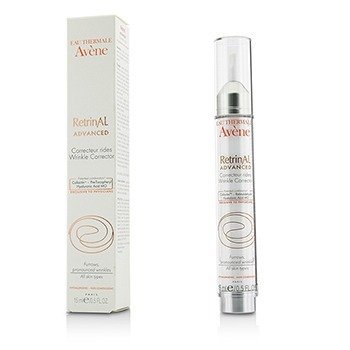


Avene Retrinal Advanced Wrinkle Corrector, 0.5 Fl Oz
Analysis updated September 2026 · How Scout scores
At a glance
Summary
This product contains beneficial ingredients such as Avène Thermal Spring Water, Retinal, and Sodium Hyaluronate, which are known for their soothing, anti-aging, and hydrating properties. However, the presence of synthetic ingredients like Dimethicone and PEG compounds, along with the inclusion of synthetic colorant Red 33, slightly lowers its overall safety profile. The formulation balances effective skin actives with some processed components, resulting in a moderate processing level.
Key ingredients 23
RetinalVery Good
Retinal is a form of Vitamin A known for its anti-aging and skin-renewing properties. It helps to improve skin texture, reduce wrinkles, and promote cell turnover.
Risks
Retinal can cause irritation, redness, or peeling, especially in sensitive skin.
Benefits
It effectively reduces signs of aging and improves skin texture.
Avène Thermal Spring WaterGood
Avène Thermal Spring Water is known for its soothing and anti-irritating properties, making it beneficial for sensitive skin. It helps to calm and soften the skin, providing a refreshing base for skincare products.
Risks
There are minimal risks associated with thermal spring water, though individual reactions can vary.
Benefits
It is beneficial for calming irritated skin and providing hydration.
Caprylic/Capric TriglycerideGood
Caprylic/Capric Triglyceride is derived from coconut oil and glycerin, known for its skin-replenishing and moisturizing properties. It is an excellent emollient that helps to smooth and soften the skin.
Risks
Generally considered safe, but may cause mild irritation in sensitive individuals.
Benefits
It enhances skin hydration and provides a lightweight, non-greasy feel.
GlycerinGood
Glycerin is a humectant that attracts moisture to the skin, helping to maintain hydration levels. It is widely used in skincare for its ability to improve skin barrier function and elasticity.
Risks
Rarely, glycerin can cause irritation or allergic reactions.
Benefits
It effectively hydrates the skin and enhances its smoothness.
Ascophyllum Nodosum ExtractGood
Ascophyllum Nodosum Extract is derived from seaweed and is rich in antioxidants and minerals. It is known for its anti-aging and skin-soothing properties.
Risks
There is a low risk of irritation, but it is generally considered safe.
Benefits
It provides antioxidant protection and helps to soothe and rejuvenate the skin.
MicaGood
Beneficial ingredient — whole-food or functional value in this product class.
Risks
Inhalation of mica particles can be harmful, but topical use is generally safe.
Benefits
It adds a natural shimmer and enhances the visual appeal of products.
Sodium HyaluronateGood
Sodium Hyaluronate is a form of hyaluronic acid known for its excellent hydrating properties. It helps to retain moisture in the skin, improving elasticity and reducing the appearance of fine lines.
Risks
There is a low risk of irritation, but it is generally considered safe.
Benefits
It provides deep hydration and improves skin elasticity.
Tocopheryl AcetateGood
Tocopheryl Acetate is a form of Vitamin E known for its antioxidant properties. It helps to protect the skin from free radical damage and improve skin health.
Risks
There is a low risk of irritation, but it is generally considered safe.
Benefits
It provides antioxidant protection and improves skin health.
Tribehenin PEG-20 EstersNeutral
Tribehenin PEG-20 Esters are used as emulsifiers and conditioning agents in cosmetics. They help to stabilize formulations and improve texture.
Risks
PEG compounds can sometimes be contaminated with harmful impurities.
Benefits
They improve the texture and stability of cosmetic formulations.
Sodium PolyacrylateNeutral
Sodium Polyacrylate is a thickening agent that helps to improve the texture and consistency of products. It is known for its ability to absorb water and create a gel-like consistency.
Risks
There is a potential for skin irritation, especially in sensitive individuals.
Benefits
It enhances the texture and stability of skincare formulations.
Behenyl AlcoholNeutral
Behenyl Alcohol is a fatty alcohol used as an emollient and thickener in cosmetics. It helps to improve the texture and spreadability of products.
Risks
Fatty alcohols are generally safe, but can cause irritation in some individuals.
Benefits
It provides a creamy texture and helps to soften the skin.
1,2-HexanediolNeutral
1,2-Hexanediol is a synthetic preservative and moisture-binding agent. It helps to improve the shelf life of products and enhance skin hydration.
Risks
There is a low risk of irritation or allergic reactions.
Benefits
It acts as a preservative and helps to retain moisture in the skin.
Behenic AcidNeutral
Behenic Acid is a fatty acid used as an emollient and thickening agent in cosmetics. It helps to improve the texture and consistency of products.
Risks
Generally safe, but can cause mild irritation in sensitive individuals.
Benefits
It enhances the texture and provides a smooth application.
Caprylyl GlycolNeutral
Caprylyl Glycol is a skin-conditioning agent and preservative. It helps to improve the moisture content of the skin and extend the shelf life of products.
Risks
There is a low risk of irritation or allergic reactions.
Benefits
It enhances skin hydration and acts as a preservative.
Dimethicone CrosspolymerNeutral
Dimethicone Crosspolymer is a silicone-based ingredient used to improve the texture and spreadability of products. It provides a silky, smooth feel on the skin.
Risks
Some individuals may experience clogged pores or irritation with silicones.
Benefits
It enhances the texture and provides a smooth application.
Red 33 (Ci 17200)Neutral
Red 33 is a synthetic dye used to add color to cosmetics. It is commonly used in a variety of personal care products.
Risks
There is a potential for allergic reactions or irritation in sensitive individuals.
Benefits
It provides vibrant color to cosmetic formulations.
Sclerotium GumNeutral
Sclerotium Gum is a natural thickening agent used to improve the texture and stability of cosmetic formulations. It provides a smooth, gel-like consistency.
Risks
There is a low risk of irritation, but it is generally considered safe.
Benefits
It enhances the texture and stability of products.
SilicaNeutral
Silica is a mineral used to improve the texture and absorb excess oil in cosmetics. It provides a matte finish and enhances the feel of products.
Risks
Inhalation of silica particles can be harmful, but topical use is generally safe.
Benefits
It provides a matte finish and improves the texture of products.
Titanium Dioxide (Ci 77891)Neutral
Titanium Dioxide is a mineral used as a sunscreen agent and pigment in cosmetics. It provides UV protection and enhances the opacity of products.
Risks
Inhalation of titanium dioxide particles can be harmful, but topical use is generally safe.
Benefits
It provides UV protection and enhances product opacity.
TribeheninNeutral
Tribehenin is an emollient and conditioning agent used to improve the texture and feel of cosmetic products. It helps to soften and smooth the skin.
Risks
Generally considered safe, but may cause mild irritation in sensitive individuals.
Benefits
It enhances the texture and provides a smooth application.
WaterNeutral
Water is used as a solvent and base in many cosmetic formulations. It helps to dissolve other ingredients and provides hydration to the skin.
Risks
There are minimal risks associated with water in cosmetics.
Benefits
It acts as a solvent and provides hydration to the skin.
DimethiconeBad
Occlusive silicone film-former — flagged under clean-beauty doctrine.
Risks
Some individuals may experience clogged pores or irritation with silicones.
Benefits
It provides a silky texture and helps to retain moisture in the skin.
Disodium EDTABad
Processed additive flagged under Scout's ingredient doctrine.
Risks
There is a low risk of irritation, but it is generally considered safe.
Benefits
It enhances product stability and efficacy.
Get the full breakdown in the Scout appTake Scout shopping
Scan any product to see lab results, healthy alternatives, and your personalized analysis.
Download on theApp Store GET IT ONGoogle Play