
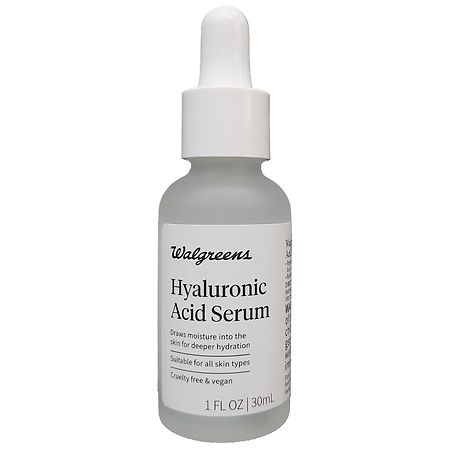

Walgreens Hyaluronic Acid Serum - 1.0 fl oz
Analysis updated September 2026 · How Scout scores
At a glance
Summary
This serum contains several beneficial ingredients such as glycerin, sodium hyaluronate, and allantoin, which are known for their hydrating and soothing properties. However, the presence of phenoxyethanol, a preservative that can cause irritation in some individuals, slightly lowers the overall safety profile. The product is moderately processed with a mix of natural and synthetic ingredients, but it lacks major harmful chemicals, making it a generally safe choice for skincare.
Key ingredients 15
GlycerinGood
Glycerin is a humectant that attracts moisture to the skin, helping to keep it hydrated. It is widely used in skincare products for its moisturizing properties. It is considered safe and effective for most skin types.
Risks
There are minimal risks, though excessive use can lead to a sticky feeling on the skin.
Benefits
Glycerin helps maintain skin hydration and improves skin barrier function.
PropanediolGood
Propanediol is a glycol that acts as a solvent and humectant in skincare products. It enhances the absorption of other ingredients and provides moisture to the skin. It is generally considered safe and non-irritating.
Risks
Some individuals may experience mild irritation or allergic reactions.
Benefits
Propanediol helps improve skin hydration and enhances the efficacy of active ingredients.
BetaineGood
Betaine is a natural amino acid derivative that acts as a humectant and anti-irritant. It helps maintain skin moisture and soothes the skin. It is considered safe and beneficial for sensitive skin.
Risks
There are minimal risks, though it may cause irritation in very sensitive individuals.
Benefits
Betaine provides hydration and reduces skin irritation, making it suitable for sensitive skin.
Sodium HyaluronateGood
Sodium Hyaluronate is a salt form of Hyaluronic Acid, known for its excellent moisture-retaining properties. It helps plump the skin and reduce the appearance of fine lines. It is highly regarded in skincare for its hydrating benefits.
Risks
There are minimal risks, though it may cause irritation in rare cases.
Benefits
Sodium Hyaluronate provides deep hydration and improves skin elasticity.
AllantoinGood
Allantoin is a skin-soothing agent known for its ability to promote skin healing and reduce irritation. It is widely used in skincare for its calming properties. It is considered safe and beneficial for sensitive skin.
Risks
There are minimal risks, though it may cause irritation in very sensitive individuals.
Benefits
Allantoin soothes the skin and promotes healing, making it ideal for sensitive or irritated skin.
Tocopheryl AcetateGood
Tocopheryl Acetate is a form of Vitamin E, known for its antioxidant properties. It helps protect the skin from oxidative damage and supports skin health. It is widely used in skincare for its nourishing benefits.
Risks
There are minimal risks, though it may cause irritation in very sensitive individuals.
Benefits
Tocopheryl Acetate provides antioxidant protection and supports skin health.
WaterNeutral
Water is a common solvent used in cosmetic formulations. It helps dissolve other ingredients and provides a base for the serum. It is generally considered safe and non-irritating.
Risks
There are no significant risks associated with water in cosmetics.
Benefits
Water helps in hydrating the skin and acts as a carrier for other beneficial ingredients.
HydroxyacetophenoneNeutral
Hydroxyacetophenone is an antioxidant and preservative booster used in cosmetics. It helps stabilize formulations and protect against oxidative damage. It is generally considered safe for use in skincare products.
Risks
There are minimal risks, though it may cause irritation in sensitive individuals.
Benefits
Hydroxyacetophenone enhances the stability and efficacy of cosmetic formulations.
CarbomerNeutral
Carbomer is a thickening agent used to create gel-like textures in cosmetics. It helps stabilize emulsions and provides a smooth application. It is considered safe for use in skincare products.
Risks
There are minimal risks, though it may cause irritation in sensitive individuals.
Benefits
Carbomer improves the texture and consistency of cosmetic products.
PEG-40 Hydrogenated Castor OilNeutral
PEG-40 Hydrogenated Castor Oil is an emulsifier and surfactant used in cosmetics. It helps blend oil and water-based ingredients and improves product texture. It is generally considered safe, though it may contain impurities from the ethoxylation process.
Risks
Potential risks include skin irritation and contamination with impurities.
Benefits
PEG-40 Hydrogenated Castor Oil enhances product texture and stability.
EthylhexylglycerinNeutral
Ethylhexylglycerin is a preservative and skin conditioning agent used in cosmetics. It enhances the efficacy of other preservatives and provides mild moisturizing benefits. It is generally considered safe for use in skincare products.
Risks
There are minimal risks, though it may cause irritation in sensitive individuals.
Benefits
Ethylhexylglycerin helps maintain product integrity and provides mild skin conditioning.
Xanthan GumNeutral
Xanthan Gum is a natural thickening agent used to stabilize and thicken cosmetic formulations. It provides a smooth texture and enhances product consistency. It is considered safe and non-irritating.
Risks
There are minimal risks, though it may cause irritation in sensitive individuals.
Benefits
Xanthan Gum improves the texture and stability of cosmetic products.
Sodium HydroxideNeutral
Sodium Hydroxide is used to adjust the pH of cosmetic formulations. It is effective in small amounts but can be irritating in higher concentrations. It is considered safe when used appropriately in skincare products.
Risks
Potential risks include skin irritation and chemical burns if used in high concentrations.
Benefits
Sodium Hydroxide helps maintain the desired pH level in cosmetic formulations.
PhenoxyethanolBad
Phenoxyethanol is a preservative used to prevent microbial growth in cosmetics. It is effective but can cause irritation and allergic reactions in some individuals. It is considered a moderate risk ingredient in skincare.
Risks
Potential risks include skin irritation and allergic reactions, especially in sensitive individuals.
Benefits
Phenoxyethanol helps maintain product integrity by preventing microbial contamination.
Disodium EDTABad
Processed additive flagged under Scout's ingredient doctrine.
Risks
Potential risks include skin irritation and environmental concerns.
Benefits
Disodium EDTA enhances product stability and prevents degradation.
Get the full breakdown in the Scout appTake Scout shopping
Scan any product to see lab results, healthy alternatives, and your personalized analysis.
Download on theApp Store GET IT ONGoogle Play