
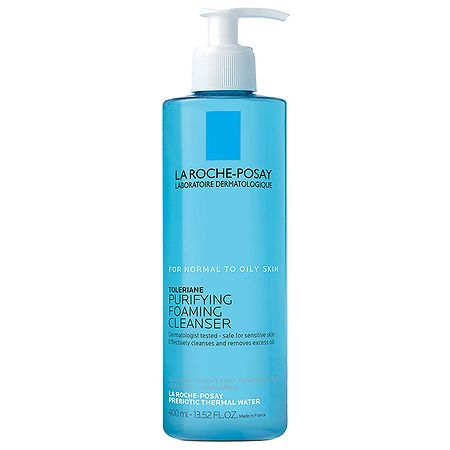

La Roche Posay Toleriane Purifying Facial Cleanser - 13.52 fl oz: Sensitive Skin, Sulfate-Free, Oil-Free, Noncomedogenic
Analysis updated August 2026 · How Scout scores
At a glance
Summary
This facial cleanser contains beneficial ingredients like glycerin, sodium cocoyl glycinate, ceramide NP, and niacinamide, which are known for their moisturizing and skin-soothing properties. However, the presence of PEG-120 methyl glucose dioleate and acrylates copolymer indicates a moderate level of processing, which slightly impacts the overall score. The product is free from harsh sulfates and is suitable for sensitive skin, contributing positively to its rating.
Key ingredients 15
GlycerinGood
Glycerin is a humectant that attracts moisture to the skin, helping to keep it hydrated. It is widely used in skincare for its ability to improve skin barrier function. It is considered safe and effective for all skin types.
Risks
There are minimal risks associated with glycerin, though it can be sticky in high concentrations.
Benefits
It helps maintain skin hydration and improves skin smoothness.
Sodium Cocoyl GlycinateGood
Sodium Cocoyl Glycinate is a mild surfactant derived from coconut oil and amino acids. It is known for its gentle cleansing properties and is suitable for sensitive skin. It helps in maintaining the skin's natural pH balance.
Risks
There are minimal risks associated with this ingredient.
Benefits
It provides gentle cleansing without disrupting the skin's natural barrier.
Ceramide NpGood
Ceramide NP is a lipid molecule that helps restore the skin's natural barrier. It is essential for maintaining skin hydration and protecting against environmental damage. It is highly beneficial for dry and sensitive skin types.
Risks
There are no significant risks associated with ceramides.
Benefits
It strengthens the skin barrier and improves moisture retention.
NiacinamideGood
Niacinamide is a form of Vitamin B3 that offers multiple skin benefits, including improving skin tone and texture. It is known for its anti-inflammatory properties and ability to reduce redness and irritation. It is suitable for all skin types and is highly regarded in skincare.
Risks
There are minimal risks, though some may experience mild irritation.
Benefits
It enhances skin barrier function and reduces signs of aging.
Water (La Roche-Posay Prebiotic Thermal Water)Neutral
Water is a common solvent in skincare products, providing a base for other ingredients. It helps in dissolving and distributing other components evenly. The prebiotic thermal water may offer additional soothing properties.
Risks
There are no significant risks associated with water in skincare.
Benefits
It hydrates the skin and can help soothe irritation due to its prebiotic properties.
Coco-BetaineNeutral
Coco-Betaine is a mild surfactant derived from coconut oil, used to cleanse the skin without stripping natural oils. It is considered gentle and suitable for sensitive skin. It helps in creating a lather in cleansing products.
Risks
In rare cases, it may cause irritation in very sensitive individuals.
Benefits
It effectively cleanses the skin while maintaining its natural moisture balance.
Peg-120 Methyl Glucose DioleateNeutral
Peg-120 Methyl Glucose Dioleate is an emulsifier and thickening agent used to stabilize formulations. It helps in improving the texture and consistency of skincare products. It is generally considered safe for use in cosmetics.
Risks
There is a potential for irritation in sensitive individuals.
Benefits
It enhances the texture and stability of the product.
Sodium ChlorideNeutral
Sodium Chloride, or table salt, is used as a thickening agent in skincare products. It helps in adjusting the viscosity of formulations. It is generally safe for use in cosmetics.
Risks
In high concentrations, it may cause dryness or irritation.
Benefits
It helps in improving the texture and consistency of the product.
Sodium HydroxideNeutral
Sodium Hydroxide is used to adjust the pH of skincare products. It is a strong base that helps in maintaining the stability of formulations. It is used in very low concentrations to ensure safety.
Risks
In high concentrations, it can be irritating or corrosive.
Benefits
It helps in maintaining the desired pH level of the product.
Capryloyl GlycineNeutral
Capryloyl Glycine is an amino acid derivative used for its antimicrobial properties. It helps in maintaining skin health by reducing the growth of harmful bacteria. It is suitable for use in skincare products.
Risks
There are minimal risks associated with this ingredient.
Benefits
It supports skin health by controlling bacterial growth.
Caprylyl GlycolNeutral
Caprylyl Glycol is a skin conditioning agent that also acts as a preservative booster. It helps in improving the texture and feel of skincare products. It is generally considered safe for use in cosmetics.
Risks
There is a low risk of irritation for sensitive skin.
Benefits
It enhances skin hydration and product preservation.
Citric AcidNeutral
Citric Acid is used to adjust the pH of skincare products and as an exfoliant. It helps in maintaining the stability and efficacy of formulations. It is generally safe for use in cosmetics when used in appropriate concentrations.
Risks
In high concentrations, it may cause irritation or sensitivity.
Benefits
It helps in maintaining product stability and can gently exfoliate the skin.
Propylene GlycolBad
Processed additive flagged under Scout's ingredient doctrine.
Risks
Some individuals may experience irritation or allergic reactions.
Benefits
It aids in skin hydration and improves the texture of skincare formulations.
Disodium EdtaBad
Processed additive flagged under Scout's ingredient doctrine.
Risks
There is a potential for irritation in sensitive individuals.
Benefits
It improves product stability and prevents degradation.
Acrylates CopolymerBad
Processed additive flagged under Scout's ingredient doctrine.
Risks
There is a potential for irritation in sensitive individuals.
Benefits
It enhances the texture and application of the product.
Processing
Processed Foods
Get the full breakdown in the Scout appTake Scout shopping
Scan any product to see lab results, healthy alternatives, and your personalized analysis.
Download on theApp Store GET IT ONGoogle PlayAmazon pricing & content
Amazon price as of . Product prices and availability are accurate as of the date/time indicated and are subject to change. Any price and availability information displayed on Amazon.com at the time of purchase will apply to the purchase of this product.
CERTAIN CONTENT THAT APPEARS ON THIS SITE COMES FROM AMAZON. THIS CONTENT IS PROVIDED “AS IS” AND IS SUBJECT TO CHANGE OR REMOVAL AT ANY TIME.