
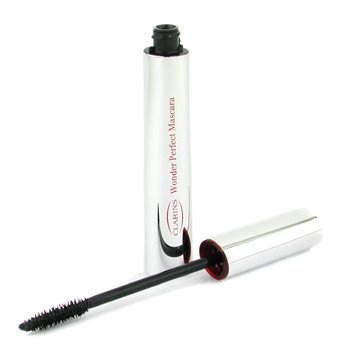

Clarins Wonder Perfect Mascara, Black 0.25 oz
Analysis updated September 2026 · How Scout scores
At a glance
Summary
This mascara contains several beneficial ingredients such as carnauba wax, rice bran wax, panthenol, and tocopherol, which contribute to its moisturizing and protective properties. However, the presence of phenoxyethanol, a preservative that can cause irritation in some individuals, slightly lowers its safety profile. The product is moderately processed with a mix of natural and synthetic components, which affects its overall rating.
Key ingredients 27
Copernicia Cerifera Cera/Copernicia Cerifera (Carnauba) Wax/Cire De CarnaubaVery Good
Carnauba wax is a natural wax derived from the leaves of the carnauba palm. It is used as a thickening agent and provides a glossy finish. It is hypoallergenic and safe for use in cosmetics.
Risks
There are minimal risks associated with carnauba wax.
Benefits
It provides a glossy finish and helps to thicken and stabilize the product.
PanthenolVery Good
Panthenol is a form of vitamin B5 used as a moisturizer and skin conditioning agent. It helps to improve hydration and reduce inflammation. It is considered safe and beneficial for skin and hair.
Risks
There are minimal risks associated with panthenol.
Benefits
It helps to moisturize and condition lashes, improving their appearance.
TocopherolVery Good
Tocopherol, or vitamin E, is an antioxidant used in cosmetics to protect the product and improve skin health. It helps to moisturize and protect skin from environmental damage. It is considered safe and beneficial for skin.
Risks
There are minimal risks associated with tocopherol.
Benefits
It helps to moisturize and protect skin from environmental damage.
Ci 77499/Iron OxidesGood
Beneficial ingredient — whole-food or functional value in this product class.
Risks
There are minimal risks, primarily related to contamination if not properly purified.
Benefits
Iron oxides provide rich, stable color without the use of synthetic dyes.
Oryza Sativa (Rice) Bran WaxGood
Rice bran wax is a natural wax used as a thickening agent in cosmetics. It provides a smooth texture and helps to stabilize formulations. It is considered safe and non-irritating.
Risks
There are minimal risks associated with rice bran wax.
Benefits
It helps to thicken the product and improve texture.
Rosa Centifolia Flower WaxGood
Rosa centifolia flower wax is a natural wax used as an emollient and fragrance in cosmetics. It provides a pleasant scent and smooth texture. It is considered safe and non-irritating.
Risks
There are minimal risks associated with rosa centifolia flower wax.
Benefits
It provides a pleasant scent and smooth texture to the product.
Rosa Damascena Flower WaxGood
Rosa damascena flower wax is a natural wax used as an emollient and fragrance in cosmetics. It provides a pleasant scent and smooth texture. It is considered safe and non-irritating.
Risks
There are minimal risks associated with rosa damascena flower wax.
Benefits
It provides a pleasant scent and smooth texture to the product.
Ascorbyl PalmitateGood
Ascorbyl palmitate is a form of vitamin C used as an antioxidant in cosmetics. It helps to protect the product from oxidation and improve skin appearance. It is considered safe and beneficial for skin.
Risks
There are minimal risks associated with ascorbyl palmitate.
Benefits
It helps to protect the product from oxidation and improve skin appearance.
Aqua/Water/EauNeutral
Water is a common solvent in cosmetics, used to dissolve other ingredients. It does not provide any direct benefits or risks in this formulation. It serves as a base for the product.
Risks
There are no significant risks associated with water in cosmetics.
Benefits
Water helps to blend ingredients and provides a smooth application.
Acrylates/Ethylhexyl Acrylate CopolymerNeutral
This copolymer is used as a film-forming agent in cosmetics, providing water resistance and durability. It helps the mascara adhere to lashes. It is generally considered safe for use in cosmetics.
Risks
There is a potential for mild irritation in sensitive individuals.
Benefits
It enhances the longevity and water resistance of the mascara.
Glyceryl StearateNeutral
Glyceryl stearate is an emulsifier that helps to blend water and oil components in cosmetics. It is derived from glycerin and stearic acid. It is generally considered safe and non-irritating.
Risks
There are minimal risks associated with glyceryl stearate.
Benefits
It helps to stabilize the formulation and improve texture.
Stearic AcidNeutral
Stearic acid is a fatty acid used as an emulsifier and thickener in cosmetics. It helps to stabilize formulations and improve texture. It is generally considered safe for use in cosmetics.
Risks
There are minimal risks associated with stearic acid.
Benefits
It helps to create a smooth, creamy texture and stabilize the product.
PVPNeutral
PVP is a synthetic polymer used as a film-forming agent in cosmetics. It helps to provide hold and durability to the product. It is generally considered safe for use in cosmetics.
Risks
There is a potential for mild irritation in sensitive individuals.
Benefits
It enhances the hold and longevity of the mascara.
Aminomethyl PropanediolNeutral
Aminomethyl propanediol is used as a pH adjuster in cosmetics. It helps to maintain the stability and efficacy of the product. It is generally considered safe for use in cosmetics.
Risks
There are minimal risks associated with aminomethyl propanediol.
Benefits
It helps to maintain the pH balance and stability of the product.
Butylene GlycolNeutral
Butylene glycol is a solvent and humectant used in cosmetics. It helps to improve texture and moisture retention. It is generally considered safe for use in cosmetics.
Risks
There is a potential for mild irritation in sensitive individuals.
Benefits
It helps to improve texture and retain moisture in the product.
Sorbitan SesquioleateNeutral
Sorbitan sesquioleate is an emulsifier used to blend oil and water components in cosmetics. It helps to stabilize formulations and improve texture. It is generally considered safe for use in cosmetics.
Risks
There are minimal risks associated with sorbitan sesquioleate.
Benefits
It helps to stabilize the formulation and improve texture.
Cera Microcristallina/Microcrystalline Wax/Cire MicrocristallineNeutral
Microcrystalline wax is used as a thickening agent and emollient in cosmetics. It helps to provide structure and consistency to the product. It is generally considered safe for use in cosmetics.
Risks
There are minimal risks associated with microcrystalline wax.
Benefits
It helps to create a smooth application and enhances the texture of the product.
HydroxyethylcelluloseNeutral
Hydroxyethylcellulose is a thickening agent used in cosmetics to improve texture and stability. It is derived from cellulose and is considered safe for use. It helps to provide a smooth, consistent application.
Risks
There are minimal risks associated with hydroxyethylcellulose.
Benefits
It helps to thicken the product and improve texture.
Sucrose StearateNeutral
Sucrose stearate is an emulsifier used to blend oil and water components in cosmetics. It helps to stabilize formulations and improve texture. It is generally considered safe for use in cosmetics.
Risks
There are minimal risks associated with sucrose stearate.
Benefits
It helps to stabilize the formulation and improve texture.
SphinganineNeutral
Sphinganine is a lipid used in cosmetics for its skin conditioning properties. It helps to improve skin barrier function and hydration. It is considered safe for use in cosmetics.
Risks
There are minimal risks associated with sphinganine.
Benefits
It helps to improve skin barrier function and hydration.
Caprylyl GlycolNeutral
Caprylyl glycol is a humectant and skin conditioning agent used in cosmetics. It helps to improve moisture retention and texture. It is generally considered safe for use in cosmetics.
Risks
There are minimal risks associated with caprylyl glycol.
Benefits
It helps to improve moisture retention and texture.
Laureth-21Neutral
Laureth-21 is an emulsifier and surfactant used in cosmetics to blend ingredients and improve texture. It helps to stabilize formulations and provide a smooth application. It is generally considered safe for use in cosmetics.
Risks
There is a potential for mild irritation in sensitive individuals.
Benefits
It helps to stabilize the formulation and provide a smooth application.
Synthetic BeeswaxBad
Processed additive flagged under Scout's ingredient doctrine.
Risks
There are minimal risks associated with synthetic beeswax.
Benefits
It provides a smooth application and helps to lock in moisture.
ParaffinBad
Processed additive flagged under Scout's ingredient doctrine.
Risks
There is a potential for mild irritation or allergic reactions in sensitive individuals.
Benefits
It helps to create a smooth application and enhances the texture of the product.
PhenoxyethanolBad
Phenoxyethanol is a preservative used to prevent microbial growth in cosmetics. It is effective but can cause irritation in some individuals. It is considered safe in low concentrations but has potential for allergic reactions.
Risks
There is a risk of skin irritation and allergic reactions, especially in sensitive individuals.
Benefits
It helps to preserve the product and extend its shelf life.
DimethiconeBad
Occlusive silicone film-former — flagged under clean-beauty doctrine.
Risks
There is a potential for mild irritation in sensitive individuals.
Benefits
It provides a smooth, silky texture and helps to lock in moisture.
Potassium SorbateBad
Synthetic preservative — flagged in daily-use products.
Risks
There is a potential for mild irritation in sensitive individuals.
Benefits
It helps to preserve the product and extend its shelf life.
Get the full breakdown in the Scout appTake Scout shopping
Scan any product to see lab results, healthy alternatives, and your personalized analysis.
Download on theApp Store GET IT ONGoogle Play