
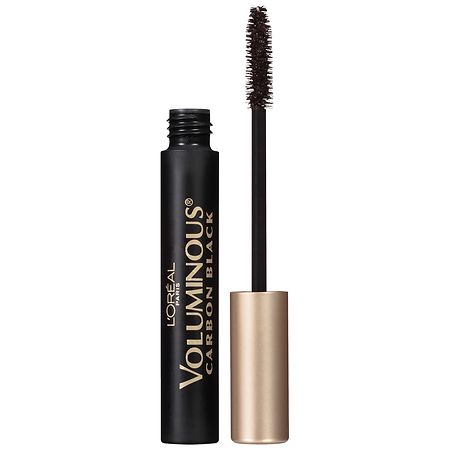

L'Oreal Paris Voluminous Mascara - 335 Carbon Black - 0.28 fl oz
Analysis updated September 2026 · How Scout scores
At a glance
Summary
This mascara contains beneficial natural ingredients like beeswax, carnauba wax, glycerin, and jojoba oil, which contribute to skin hydration and protection. However, the presence of phenoxyethanol, a preservative that can cause irritation, and PEG/PPG compounds, which are synthetic, slightly lowers the overall safety profile. The product is mostly safe but includes some synthetic components that affect its rating.
Key ingredients 35
Cera Alba/Beeswax/Cire DabeilleVery Good
Beeswax is a natural wax produced by honey bees and is used as a thickening agent. It provides a protective barrier on the skin. It is well-tolerated and beneficial for skin hydration.
Risks
May cause allergic reactions in individuals allergic to bee products.
Benefits
Provides a protective barrier and helps in moisturizing the skin.
Hydrogenated Jojoba OilVery Good
Hydrogenated Jojoba Oil is a natural oil used as an emollient. It helps in moisturizing and protecting the skin. It is well-tolerated and beneficial for all skin types.
Benefits
Provides moisturizing and protective benefits to the skin.
GlycerinGood
Glycerin is a humectant that attracts moisture to the skin. It helps in keeping the skin hydrated. It is well-tolerated and beneficial for all skin types.
Benefits
Helps in maintaining skin hydration and improving skin barrier function.
PanthenolGood
Panthenol is a form of Vitamin B5 used as a moisturizer and skin conditioner. It helps in improving skin hydration and elasticity. It is well-tolerated and beneficial for all skin types.
Benefits
Improves skin hydration and provides soothing benefits.
CI 77491, CI 77492, CI 77499 / Iron OxidesGood
Beneficial ingredient — whole-food or functional value in this product class.
Benefits
Provides color and enhances the appearance of the product.
MicaGood
Beneficial ingredient — whole-food or functional value in this product class.
Risks
Concerns about ethical sourcing and inhalation risks in powder form.
Benefits
Provides shimmer and enhances the appearance of the product.
Aqua/Water/EauNeutral
Water is a common solvent used in cosmetics to dissolve other ingredients. It helps in forming the base of the product. It does not provide any direct benefits or risks.
Benefits
Acts as a solvent and helps in the application of the product.
Potassium Cetyl PhosphateNeutral
Potassium Cetyl Phosphate is an emulsifying agent that helps blend oil and water components. It stabilizes the formulation. It is generally considered safe for use in cosmetics.
Benefits
Helps in stabilizing the product and improving texture.
Copernicia Cerifera Cera/Carnauba Wax/Cire De CarnaubaNeutral
Standard formulation ingredient — neither beneficial nor harmful at typical use.
Benefits
Increases product stability and provides a glossy finish.
Acacia Senegal GumNeutral
Acacia Senegal Gum is a natural gum used as a thickening agent. It helps in stabilizing emulsions. It is generally considered safe for use in cosmetics.
Risks
May cause irritation in sensitive individuals.
Benefits
Helps in stabilizing the product and improving texture.
Cetyl AlcoholNeutral
Cetyl Alcohol is a fatty alcohol used as an emollient and thickener. It helps in softening the skin. It is generally considered safe for use in cosmetics.
Risks
May cause irritation in sensitive individuals.
Benefits
Acts as an emollient and helps in moisturizing the skin.
SilicaNeutral
Silica is used as an absorbent and anti-caking agent in cosmetics. It helps in improving the texture of the product. It is generally considered safe for use in cosmetics.
Risks
Inhalation of silica dust can be harmful, but this is not a concern in liquid formulations.
Benefits
Improves product texture and provides a matte finish.
HydroxyethylcelluloseNeutral
Hydroxyethylcellulose is a thickening agent derived from cellulose. It helps in stabilizing emulsions. It is generally considered safe for use in cosmetics.
Benefits
Helps in stabilizing the product and improving texture.
PEG/PPG-17/18 DimethiconeNeutral
PEG/PPG-17/18 Dimethicone is a silicone-based polymer used as an emollient and conditioning agent. It provides a smooth application. It is generally considered safe for use in cosmetics.
Risks
May cause irritation in sensitive individuals.
Benefits
Provides a smooth application and improves product texture.
Steareth-20Neutral
Steareth-20 is an emulsifier used to blend oil and water components. It stabilizes the formulation. It is generally considered safe for use in cosmetics.
Risks
May cause irritation in sensitive individuals.
Benefits
Helps in stabilizing the product and improving texture.
Phenethyl AlcoholNeutral
Phenethyl Alcohol is used as a fragrance and preservative. It has antimicrobial properties. It is generally considered safe for use in cosmetics.
Risks
May cause irritation in sensitive individuals.
Benefits
Provides antimicrobial properties and a pleasant scent.
Sodium PolymethacrylateNeutral
Sodium Polymethacrylate is a thickening agent used to improve the texture of the product. It helps in stabilizing emulsions. It is generally considered safe for use in cosmetics.
Benefits
Improves product texture and stability.
Hydrogenated Palm OilNeutral
Hydrogenated Palm Oil is used as an emollient and thickening agent. It helps in improving the texture of the product. It is generally considered safe for use in cosmetics.
Risks
Concerns about sustainability and environmental impact.
Benefits
Provides moisturizing benefits and improves product texture.
Polyquaternium-10Neutral
Polyquaternium-10 is a conditioning agent used to improve the texture of the product. It provides a smooth application. It is generally considered safe for use in cosmetics.
Risks
May cause irritation in sensitive individuals.
Benefits
Improves product texture and provides conditioning benefits.
Sodium HydroxideNeutral
Sodium Hydroxide is used to adjust the pH of the product. It is effective in small concentrations. It is generally considered safe for use in cosmetics.
Risks
Can be irritating in high concentrations.
Benefits
Helps in maintaining the desired pH of the product.
Stearyl AlcoholNeutral
Stearyl Alcohol is a fatty alcohol used as an emollient and thickener. It helps in softening the skin. It is generally considered safe for use in cosmetics.
Risks
May cause irritation in sensitive individuals.
Benefits
Acts as an emollient and helps in moisturizing the skin.
Myristyl AlcoholNeutral
Myristyl Alcohol is a fatty alcohol used as an emollient and thickener. It helps in improving the texture of the product. It is generally considered safe for use in cosmetics.
Risks
May cause irritation in sensitive individuals.
Benefits
Improves product texture and provides moisturizing benefits.
Sodium AcetateNeutral
Sodium Acetate is used as a buffering agent to maintain the pH of the product. It is effective in small concentrations. It is generally considered safe for use in cosmetics.
Benefits
Helps in maintaining the desired pH of the product.
Sodium ChlorideNeutral
Sodium Chloride is used as a thickening agent and to adjust the viscosity of the product. It is commonly used in cosmetics. It is generally considered safe for use in cosmetics.
Risks
May cause irritation in sensitive individuals.
Benefits
Improves product texture and stability.
Isopropyl AlcoholNeutral
Isopropyl Alcohol is used as a solvent and to improve the drying time of the product. It is effective in small concentrations. It is generally considered safe for use in cosmetics.
Risks
Can be drying and irritating to the skin in high concentrations.
Benefits
Improves drying time and acts as a solvent.
CI 77007 / UltramarinesNeutral
Ultramarines are pigments used to provide color to the product. They are stable and non-toxic. They are generally considered safe for use in cosmetics.
Benefits
Provides color and enhances the appearance of the product.
CI 75470 / CarmineNeutral
Carmine is a natural pigment derived from insects used to provide color. It is stable and non-toxic. It is generally considered safe for use in cosmetics.
Risks
May cause allergic reactions in sensitive individuals.
Benefits
Provides color and enhances the appearance of the product.
CI 77288 / Chromium Oxide GreensNeutral
Chromium Oxide Greens are pigments used to provide color to the product. They are stable and non-toxic. They are generally considered safe for use in cosmetics.
Benefits
Provides color and enhances the appearance of the product.
CI 77289 / Chromium Hydroxide GreenNeutral
Chromium Hydroxide Green is a pigment used to provide color to the product. It is stable and non-toxic. It is generally considered safe for use in cosmetics.
Benefits
Provides color and enhances the appearance of the product.
CI 77891 / Titanium DioxideNeutral
Titanium Dioxide is a pigment used to provide opacity and color to the product. It is stable and non-toxic. It is generally considered safe for use in cosmetics.
Risks
Concerns about inhalation risks in powder form.
Benefits
Provides opacity and enhances the appearance of the product.
CI 77510 / Ferric FerrocyanideNeutral
Ferric Ferrocyanide is a pigment used to provide color to the product. It is stable and non-toxic. It is generally considered safe for use in cosmetics.
Benefits
Provides color and enhances the appearance of the product.
ParaffinBad
Processed additive flagged under Scout's ingredient doctrine.
Risks
May cause skin irritation in sensitive individuals.
Benefits
Provides a smooth texture and helps in moisturizing the skin.
PhenoxyethanolBad
Phenoxyethanol is a preservative used to prevent microbial growth. It is effective but can cause irritation in some individuals. It is considered safe in low concentrations.
Risks
May cause skin irritation and allergic reactions in sensitive individuals.
Benefits
Prevents microbial growth and extends the shelf life of the product.
Disodium EDTABad
Processed additive flagged under Scout's ingredient doctrine.
Risks
May cause irritation in sensitive individuals.
Benefits
Improves product stability and extends shelf life.
BHTBad
Processed additive flagged under Scout's ingredient doctrine.
Risks
Concerns about potential skin irritation and long-term effects.
Benefits
Prevents oxidation and extends the shelf life of the product.
Get the full breakdown in the Scout appTake Scout shopping
Scan any product to see lab results, healthy alternatives, and your personalized analysis.
Download on theApp Store GET IT ONGoogle Play