
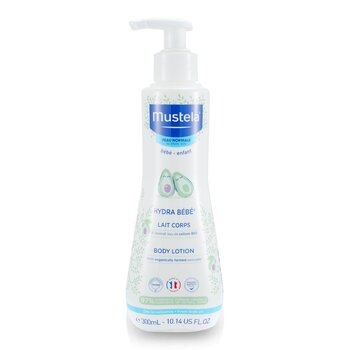
MustelaHydra-Bebe Body Lotion With Organic Avocado - Normal Skin 300ml/10.14oz
Analysis updated July 2026 · How Scout scores
At a glance
Summary
This body lotion contains beneficial ingredients such as sunflower seed oil, beeswax, and avocado extract, which are known for their moisturizing properties. However, the presence of synthetic fragrance and certain emulsifiers contributes to a moderate level of processing, which slightly lowers its overall safety profile. The product is generally safe but not entirely free from synthetic additives, which affects its rating.
Key ingredients 18
Helianthus Annuus (Sunflower) Seed OilVery Good
Sunflower seed oil is a natural oil rich in essential fatty acids and vitamin E. It is known for its moisturizing and skin barrier-repairing properties. It is well-tolerated by most skin types and provides nourishment.
Risks
Rarely, it may cause allergic reactions in sensitive individuals.
Benefits
It helps in moisturizing the skin and improving skin barrier function.
Cera Alba/Beeswax/Cire D’AbeilleVery Good
Beeswax is a natural wax produced by honeybees, used as an emollient and thickening agent. It forms a protective barrier on the skin, helping to lock in moisture. It is well-tolerated and provides a natural source of hydration.
Risks
Rare allergic reactions in individuals sensitive to bee products.
Benefits
Beeswax helps retain skin moisture and provides a protective barrier.
Jojoba EstersVery Good
Jojoba esters are derived from jojoba oil and are used as emollients in skincare products. They mimic the skin's natural oils, providing hydration and improving skin texture. They are well-tolerated and beneficial for most skin types.
Risks
Generally considered safe with minimal risk of irritation.
Benefits
They help moisturize the skin and improve its texture.
Persea Gratissima (Avocado) Fruit ExtractVery Good
Avocado fruit extract is rich in vitamins and fatty acids, providing nourishment and hydration to the skin. It is known for its moisturizing and skin-repairing properties. It is well-tolerated and beneficial for most skin types.
Risks
Rare allergic reactions in individuals sensitive to avocado.
Benefits
It helps moisturize and nourish the skin, improving its overall health.
GlycerinGood
Glycerin is a humectant that attracts moisture to the skin, helping to keep it hydrated. It is widely used in skincare products for its ability to improve skin smoothness and suppleness. It is generally considered safe and effective for all skin types.
Benefits
Glycerin helps maintain skin hydration and improves skin texture.
Tocopheryl AcetateGood
Tocopheryl Acetate is a form of Vitamin E, known for its antioxidant properties. It helps protect the skin from free radical damage and supports skin health. It is widely used in skincare for its protective benefits.
Risks
Rarely, it may cause irritation in sensitive skin.
Benefits
It provides antioxidant protection and supports skin health.
Aqua/Water/EauNeutral
Water is a common solvent used in cosmetic formulations. It helps dissolve other ingredients and provides a base for the lotion. It does not have any direct benefits or risks associated with its use.
Benefits
Water acts as a solvent and hydrates the skin by providing moisture.
Polyglyceryl-6 DistearateNeutral
Polyglyceryl-6 Distearate is an emulsifier that helps blend oil and water components in formulations. It is derived from natural sources and is considered safe for use in cosmetics. It does not provide direct skin benefits but aids in product stability.
Benefits
It helps stabilize formulations and ensures even distribution of ingredients.
Cetyl AlcoholNeutral
Cetyl Alcohol is a fatty alcohol used as an emollient and thickening agent in cosmetics. It helps improve the texture and feel of products. It is generally considered safe and non-irritating for most skin types.
Risks
May cause mild irritation in very sensitive skin.
Benefits
It provides a smooth texture and helps soften the skin.
1, 2-HexanediolNeutral
1, 2-Hexanediol is a synthetic preservative and moisture-binding agent. It helps prevent microbial growth in products and enhances skin hydration. It is considered safe for use in cosmetics at low concentrations.
Risks
Potential for mild irritation in sensitive individuals.
Benefits
It acts as a preservative and helps retain moisture in the skin.
Hydroxyethyl Acrylate/Sodium Acryloyldimethyl Taurate CopolymerNeutral
This copolymer is used as a thickening and stabilizing agent in cosmetics. It helps improve the texture and consistency of products. It does not have direct skin benefits but aids in product formulation.
Benefits
It stabilizes formulations and enhances product texture.
Caprylyl GlycolNeutral
Caprylyl Glycol is a skin-conditioning agent and preservative. It helps improve the moisture content of the skin and enhances the efficacy of other preservatives. It is considered safe for use in cosmetics.
Risks
Potential for mild irritation in sensitive skin.
Benefits
It conditions the skin and supports preservative systems.
Sodium Stearoyl GlutamateNeutral
Sodium Stearoyl Glutamate is an emulsifier used to stabilize formulations. It is derived from natural sources and is considered safe for use in cosmetics. It does not provide direct skin benefits but aids in product stability.
Benefits
It helps stabilize formulations and ensures even distribution of ingredients.
Polyglyceryl-3 Beeswax/Polyglyceryl-3 Cire D’AbeilleNeutral
This ingredient is an emulsifier and stabilizer derived from beeswax. It helps blend oil and water components in formulations. It is considered safe and does not provide direct skin benefits.
Benefits
It stabilizes formulations and enhances product texture.
Sorbitan IsostearateNeutral
Sorbitan Isostearate is an emulsifier used to stabilize formulations. It is derived from natural sources and is considered safe for use in cosmetics. It does not provide direct skin benefits but aids in product stability.
Benefits
It helps stabilize formulations and ensures even distribution of ingredients.
Citric AcidNeutral
Citric Acid is used to adjust the pH of cosmetic formulations. It is derived from citrus fruits and is considered safe for use in cosmetics. It does not provide direct skin benefits but helps maintain product stability.
Risks
Potential for mild irritation in sensitive skin.
Benefits
It helps maintain the pH balance of formulations.
Polysorbate 60Bad
Processed additive flagged under Scout's ingredient doctrine.
Benefits
It helps stabilize formulations and ensures even distribution of ingredients.
Parfum (Fragrance)Very Bad
Fragrance is added to cosmetics to provide a pleasant scent but can be a common irritant. It may cause allergic reactions or sensitivities, especially in those with sensitive skin. It is often criticized for its potential to cause skin irritation.
Risks
Potential for allergic reactions and skin irritation.
Benefits
Provides a pleasant scent to the product.
Get the full breakdown in the Scout appTake Scout shopping
Scan any product to see lab results, healthy alternatives, and your personalized analysis.
Download on theApp Store GET IT ONGoogle Play