
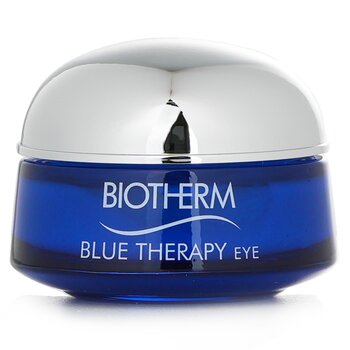


Blue Therapy Eye - Visible Signs of Aging Repair by Biotherm for Unisex - 0.5 oz Cream
Summary
This eye cream contains beneficial ingredients like glycerin, beeswax, and vitamin E, which are known for their moisturizing and protective properties. However, the presence of alcohol denat and phenoxyethanol, which can be irritating and potentially harmful, affects the overall ingredient quality. The product is moderately processed, which further impacts its rating, despite the inclusion of some natural components.
At a glance
Key ingredients 27
AquaNeutral
Aqua, or water, is used as a solvent in cosmetic formulations. It helps dissolve other ingredients and provides a base for the cream. No significant processing concerns are associated with its use in this product.
See more about Aqua →GlycerinGood
Glycerin is a humectant that attracts moisture to the skin, helping to maintain hydration. It is typically derived from plant oils and is considered safe and effective for skin care. Its ability to improve skin barrier function makes it a beneficial ingredient.
Benefits
Helps to keep the skin hydrated and improve its barrier function.
CyclohexasiloxaneNeutral
Cyclohexasiloxane is a silicone used to improve the texture and spreadability of products. It is a volatile silicone, meaning it evaporates quickly and leaves a smooth feel. While it is generally considered safe, its environmental impact is a concern.
Risks
Potential environmental concerns due to its persistence and bioaccumulation.
Benefits
Improves product texture and provides a smooth application.
Butylene GlycolNeutral
Butylene Glycol is a solvent and conditioning agent that helps to improve the texture of the product. It is synthetically derived and widely used in cosmetics. While generally safe, it can cause irritation in sensitive individuals.
Risks
May cause skin irritation in sensitive individuals.
Benefits
Improves product texture and enhances skin conditioning.
Alcohol DenatBad
Alcohol Denat is used as a solvent and astringent in cosmetic products. It can be drying and irritating to the skin, especially in high concentrations. Its use is often criticized due to potential skin barrier disruption.
Risks
Can cause skin dryness and irritation, potentially disrupting the skin barrier.
Stearic AcidNeutral
Stearic Acid is a fatty acid used as an emulsifier and thickener in cosmetics. It is derived from animal or plant fats and is generally considered safe. Its role in stabilizing formulations makes it a common ingredient.
Benefits
Helps to stabilize and thicken cosmetic formulations.
Stearyl AlcoholNeutral
Stearyl Alcohol is a fatty alcohol used as an emollient and thickener. It is derived from natural fats and oils and is considered safe for use in cosmetics. It helps to improve the texture and consistency of products.
Benefits
Acts as an emollient and thickener, improving product texture.
Cetyl AlcoholNeutral
Cetyl Alcohol is a fatty alcohol used as an emollient and emulsifier in cosmetics. It is derived from natural sources and is considered safe for use. It helps to stabilize formulations and improve texture.
Benefits
Improves product stability and texture as an emollient and emulsifier.
Palmitic AcidNeutral
Palmitic Acid is a fatty acid used as an emollient and surfactant in cosmetics. It is derived from palm oil and is generally considered safe. Its role in enhancing skin feel and product stability is well-regarded.
Benefits
Enhances skin feel and product stability.
PEG-100 StearateNeutral
PEG-100 Stearate is an emulsifier used to blend water and oil components in cosmetics. It is synthetically derived and widely used for its effectiveness. While generally safe, concerns about impurities in PEG compounds exist.
Risks
Potential contamination with impurities during manufacturing.
Benefits
Effective emulsifier that stabilizes cosmetic formulations.
Glyceryl StearateNeutral
Glyceryl Stearate is an emulsifier and emollient used in cosmetics to improve texture and moisture retention. It is derived from glycerin and stearic acid and is considered safe. Its ability to enhance skin hydration is beneficial.
Benefits
Enhances skin hydration and improves product texture.
SorbitolNeutral
Sorbitol is a sugar alcohol used as a humectant and thickener in cosmetics. It is derived from glucose and is considered safe for use. Its role in retaining moisture and improving texture is beneficial.
Benefits
Retains moisture and improves product texture.
Cera AlbaGood
Cera Alba, or beeswax, is used as an emollient and thickener in cosmetics. It is a natural ingredient that helps to form a protective barrier on the skin. Its ability to lock in moisture and provide a smooth texture is beneficial.
Benefits
Forms a protective barrier and locks in moisture, enhancing skin hydration.
Sodium Stearoyl GlutamateNeutral
Sodium Stearoyl Glutamate is an emulsifier used to stabilize cosmetic formulations. It is derived from plant-based sources and is considered safe. Its role in improving product stability and texture is beneficial.
Benefits
Improves product stability and texture as an emulsifier.
Nylon-66Neutral
Nylon-66 is a synthetic polymer used to enhance the texture and feel of cosmetic products. It provides a smooth, silky finish and is considered safe for use. Its role in improving product aesthetics is beneficial.
Benefits
Enhances product texture and provides a smooth finish.
Dimethyl IsosorbideNeutral
Dimethyl Isosorbide is a solvent used to enhance the delivery of active ingredients in cosmetics. It is synthetically derived and considered safe for use. Its ability to improve ingredient penetration is beneficial.
Benefits
Enhances the delivery and penetration of active ingredients.
OctyldodecanolNeutral
Octyldodecanol is a fatty alcohol used as an emollient and thickener in cosmetics. It is derived from natural fats and is considered safe for use. Its role in improving product texture and skin feel is beneficial.
Benefits
Improves product texture and enhances skin feel.
Hydroxypropyl TetrahydropyrantriolNeutral
Hydroxypropyl Tetrahydropyrantriol is a synthetic ingredient used for its anti-aging properties. It is designed to improve skin firmness and elasticity. While promising, more research is needed to fully understand its efficacy.
Benefits
Potentially improves skin firmness and elasticity.
Aluminum Starch OctenylsuccinateNeutral
Aluminum Starch Octenylsuccinate is used as an absorbent and anti-caking agent in cosmetics. It is derived from starch and is considered safe for use. Its role in improving product texture and reducing greasiness is beneficial.
Benefits
Improves product texture and reduces greasiness.
PEG-20 StearateNeutral
PEG-20 Stearate is an emulsifier used to blend water and oil components in cosmetics. It is synthetically derived and widely used for its effectiveness. While generally safe, concerns about impurities in PEG compounds exist.
Risks
Potential contamination with impurities during manufacturing.
Benefits
Effective emulsifier that stabilizes cosmetic formulations.
Caprylic/Capric TriglycerideGood
Caprylic/Capric Triglyceride is an emollient derived from coconut oil and glycerin. It is used to improve the spreadability and absorption of products. Its natural origin and skin-conditioning properties make it a beneficial ingredient.
Benefits
Enhances skin conditioning and improves product absorption.
PhenoxyethanolBad
Phenoxyethanol is a preservative used to prevent microbial growth in cosmetics. It is synthetically derived and can cause irritation in some individuals. Concerns about its potential neurotoxicity have been raised, although it is generally considered safe in low concentrations.
Risks
May cause skin irritation and potential neurotoxicity concerns.
Methyl Methacrylate CrosspolymerNeutral
Methyl Methacrylate Crosspolymer is a synthetic polymer used to enhance the texture and feel of cosmetic products. It provides a smooth, matte finish and is considered safe for use. Its role in improving product aesthetics is beneficial.
Benefits
Enhances product texture and provides a smooth, matte finish.
Capryloyl Salicylic AcidNeutral
Capryloyl Salicylic Acid is a derivative of salicylic acid used for its exfoliating properties. It is designed to improve skin texture and clarity. While effective, it can cause irritation in sensitive individuals.
Risks
May cause skin irritation, especially in sensitive individuals.
Benefits
Improves skin texture and clarity through exfoliation.
Tocopheryl AcetateGood
Tocopheryl Acetate is a form of Vitamin E used for its antioxidant properties. It helps to protect the skin from free radical damage and improve moisture retention. Its role in enhancing skin health and appearance is well-regarded.
Benefits
Provides antioxidant protection and improves skin moisture retention.
Acrylamide/Sodium Acryloyldimethyltaurate CopolymerNeutral
Acrylamide/Sodium Acryloyldimethyltaurate Copolymer is a synthetic polymer used to enhance the texture and stability of cosmetic products. It provides a smooth, gel-like consistency and is considered safe for use. Its role in improving product aesthetics is beneficial.
Benefits
Enhances product texture and provides a smooth, gel-like consistency.
Hydrogenated Vegetable OilNeutral
Hydrogenated Vegetable Oil is used as an emollient and thickener in cosmetics. It is derived from vegetable oils and is considered safe for use. Its role in improving product texture and skin feel is beneficial.
Benefits
Improves product texture and enhances skin feel.
Processing
Processed Foods
Get the full breakdown in the Scout app
Scan any product to see lab results, healthy alternatives, and your personalized analysis.
Download on theApp Store