
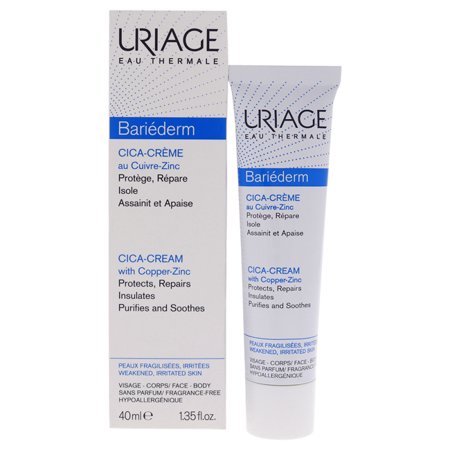


Bariederm Cica-Creme by Uriage for Unisex - 1.35 oz Cream
Analysis updated September 2026 · How Scout scores
At a glance
Summary
This moisturizer contains beneficial ingredients like zinc oxide, panthenol, glycerin, and hyaluronic acid, which provide moisturizing and protective benefits to the skin. However, the presence of mineral oil, a petroleum-derived ingredient, and PEG/PPG compounds, which are synthetic emulsifiers, contribute to a moderate processing level and potential contamination concerns. The combination of these factors results in a mixed evaluation, balancing beneficial skin actives with some less desirable components.
Key ingredients 26
PanthenolVery Good
Panthenol is a provitamin of B5 known for its moisturizing and soothing properties. It helps to improve skin hydration and reduce inflammation. It is widely used in skincare for its beneficial effects on skin health.
Risks
Rarely, it can cause skin irritation in sensitive individuals.
Benefits
Enhances skin hydration and soothes irritation.
Zinc OxideGood
Zinc oxide is a mineral used for its protective and soothing properties. It acts as a physical barrier against irritants and has anti-inflammatory effects. It is beneficial in creams for its skin-protective qualities.
Risks
Rarely, it can cause skin irritation in sensitive individuals.
Benefits
Provides a protective barrier and soothes irritated skin.
GlycerinGood
Glycerin is a humectant that attracts moisture to the skin, helping to keep it hydrated. It is a common ingredient in skincare products for its moisturizing properties. It is safe and effective for improving skin hydration.
Risks
Generally safe with minimal risk of irritation.
Benefits
Improves skin hydration and maintains moisture balance.
Tocopheryl AcetateGood
Tocopheryl acetate is a form of vitamin E used for its antioxidant properties. It helps to protect the skin from free radical damage and improve skin health. It is widely used in skincare for its beneficial effects.
Risks
Rarely, it can cause skin irritation in sensitive individuals.
Benefits
Provides antioxidant protection and supports skin health.
Hyaluronic AcidGood
Hyaluronic acid is a powerful humectant known for its ability to retain moisture in the skin. It helps to improve skin hydration and elasticity. It is widely used in skincare for its excellent moisturizing properties.
Risks
Generally safe with minimal risk of irritation.
Benefits
Enhances skin hydration and improves elasticity.
Borage Seed Oil Aminopropanediol AmidesGood
Borage seed oil is rich in gamma-linolenic acid, which helps to nourish and moisturize the skin. It is used for its skin-conditioning properties and to improve skin barrier function. It is beneficial in skincare for its nourishing effects.
Risks
Rarely, it can cause skin irritation in sensitive individuals.
Benefits
Nourishes and moisturizes the skin, improving barrier function.
Aqua (Water, Eau)Neutral
Water is a common solvent used in cosmetics to dissolve other ingredients. It helps in the application and absorption of the product. It does not provide direct benefits or risks.
Benefits
Essential for dissolving and mixing other ingredients.
Sodium ChlorideNeutral
Sodium chloride is used as a thickening agent in creams and lotions. It helps to improve the texture and consistency of the product. It is generally considered safe in cosmetic formulations.
Risks
Excessive use can lead to skin dryness.
Benefits
Improves product texture and stability.
Cetyl PEG/PPG-10/1 DimethiconeNeutral
This ingredient is a silicone-based compound used to improve the spreadability of the product. It provides a smooth, silky feel on the skin. It is generally considered safe for use in cosmetics.
Risks
May cause build-up on the skin with prolonged use.
Benefits
Enhances product texture and application.
Propylheptyl CaprylateNeutral
Propylheptyl caprylate is an emollient that helps to soften and smooth the skin. It is used to improve the texture of cosmetic products. It is considered safe for use in skincare formulations.
Risks
Minimal risk of skin irritation.
Benefits
Improves skin feel and product texture.
Butylene GlycolNeutral
Butylene glycol is a common solvent and conditioning agent in cosmetics. It helps to retain moisture and improve the spreadability of products. It is generally recognized as safe for use in cosmetics.
Risks
Potential for mild irritation in sensitive skin.
Benefits
Enhances moisture retention and product application.
Hydrogenated PolydeceneNeutral
Hydrogenated polydecene is used as an emollient to provide a smooth, non-greasy feel. It helps to improve the texture and spreadability of the product. It is considered safe for use in cosmetics.
Risks
May cause mild irritation in sensitive individuals.
Benefits
Improves product texture and provides a silky feel.
Disteardimonium HectoriteNeutral
Disteardimonium hectorite is used as a thickening agent and stabilizer in cosmetic formulations. It helps to improve the consistency and stability of the product. It is generally considered safe for use in cosmetics.
Risks
Minimal risk of skin irritation.
Benefits
Improves product stability and texture.
Polyglyceryl-3 DiisostearateNeutral
Polyglyceryl-3 diisostearate is an emulsifier used to blend oil and water components in cosmetics. It helps to maintain product consistency and stability. It is considered safe for use in skincare formulations.
Risks
Minimal risk of skin irritation.
Benefits
Enhances product stability and consistency.
Magnesium SulfateNeutral
Magnesium sulfate is used as a thickening agent and to improve the texture of cosmetic products. It is generally considered safe for use in skincare formulations. It does not provide direct benefits or risks.
Benefits
Improves product texture and consistency.
MethylpropanediolNeutral
Methylpropanediol is used as a solvent and skin-conditioning agent in cosmetics. It helps to improve the texture and spreadability of products. It is considered safe for use in skincare formulations.
Risks
Minimal risk of skin irritation.
Benefits
Enhances product texture and application.
Triacontanyl PvpNeutral
Triacontanyl PVP is used as a film-forming agent in cosmetics to provide a smooth application. It helps to improve the texture and feel of the product. It is considered safe for use in skincare formulations.
Risks
Minimal risk of skin irritation.
Benefits
Enhances product texture and application.
Copper GluconateNeutral
Copper gluconate is used for its potential skin-conditioning properties. It may help to support skin health and improve texture. It is generally considered safe for use in cosmetics.
Risks
Minimal risk of skin irritation.
Benefits
May support skin health and improve texture.
PropanediolNeutral
Propanediol is used as a solvent and skin-conditioning agent in cosmetics. It helps to improve the texture and spreadability of products. It is considered safe for use in skincare formulations.
Risks
Minimal risk of skin irritation.
Benefits
Enhances product texture and application.
Propylene CarbonateNeutral
Propylene carbonate is used as a solvent and viscosity regulator in cosmetics. It helps to improve the texture and consistency of the product. It is generally considered safe for use in skincare formulations.
Risks
Minimal risk of skin irritation.
Benefits
Improves product texture and consistency.
Citric AcidNeutral
Citric acid is used to adjust the pH of cosmetic formulations. It helps to maintain product stability and improve skin texture. It is generally considered safe for use in cosmetics.
Risks
May cause irritation in sensitive skin if used in high concentrations.
Benefits
Helps to maintain product stability and improve skin texture.
Glutamylamidoethyl IndoleNeutral
Glutamylamidoethyl indole is used for its potential skin-conditioning properties. It may help to support skin health and improve texture. It is generally considered safe for use in cosmetics.
Risks
Minimal risk of skin irritation.
Benefits
May support skin health and improve texture.
Polyquaternium-61Neutral
Polyquaternium-61 is used as a conditioning agent in cosmetics to improve texture and feel. It helps to enhance the spreadability and application of the product. It is considered safe for use in skincare formulations.
Risks
Minimal risk of skin irritation.
Benefits
Improves product texture and application.
SilanetriolNeutral
Silanetriol is used as a conditioning agent in cosmetics to improve texture and feel. It helps to enhance the spreadability and application of the product. It is considered safe for use in skincare formulations.
Risks
Minimal risk of skin irritation.
Benefits
Improves product texture and application.
Paraffinum Liquidum (Mineral Oil)Bad
Processed additive flagged under Scout's ingredient doctrine.
Risks
May cause breakouts in acne-prone skin due to its occlusive nature.
Benefits
Helps to prevent moisture loss from the skin surface.
DimethiconeBad
Occlusive silicone film-former — flagged under clean-beauty doctrine.
Risks
May cause build-up on the skin with prolonged use.
Benefits
Enhances product texture and protects the skin barrier.
Get the full breakdown in the Scout appTake Scout shopping
Scan any product to see lab results, healthy alternatives, and your personalized analysis.
Download on theApp Store GET IT ONGoogle PlayAmazon pricing & content
Amazon price as of . Product prices and availability are accurate as of the date/time indicated and are subject to change. Any price and availability information displayed on Amazon.com at the time of purchase will apply to the purchase of this product.
CERTAIN CONTENT THAT APPEARS ON THIS SITE COMES FROM AMAZON. THIS CONTENT IS PROVIDED “AS IS” AND IS SUBJECT TO CHANGE OR REMOVAL AT ANY TIME.