
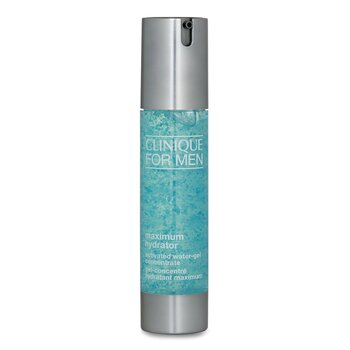


Clinique Maximum Hydrator Activated Water-Gel Concentrate 1.6 oz
Analysis updated August 2026 · How Scout scores
At a glance
Summary
This moisturizer contains several beneficial ingredients like glycerin, aloe vera, and sodium hyaluronate, which provide hydration and soothing properties. However, the presence of potentially harmful ingredients such as Benzophenone-4, BHT, and Chlorphenesin raises concerns due to their links to endocrine disruption and skin irritation. The product's processing level and inclusion of synthetic additives further impact its overall rating.
Key ingredients 35
Aloe Barbadensis Leaf WaterVery Good
Aloe Barbadensis Leaf Water is derived from aloe vera and is known for its soothing and hydrating properties. It helps in calming irritated skin and provides moisture. It is suitable for all skin types, especially sensitive skin.
Risks
There are minimal risks, though some individuals may experience allergic reactions.
Benefits
It soothes and hydrates the skin, reducing redness and irritation.
GlycerinGood
Glycerin is a humectant that attracts moisture to the skin, improving hydration. It is well-tolerated and suitable for all skin types. It enhances the skin's natural barrier function.
Risks
There are minimal risks, though overuse can lead to a sticky feeling.
Benefits
Glycerin helps maintain skin hydration and smoothness.
Alteromonas Ferment ExtractGood
Alteromonas Ferment Extract is derived from marine bacteria and is known for its moisturizing and soothing properties. It helps in protecting the skin from environmental stressors. It is beneficial for sensitive and dry skin.
Risks
There are no significant risks associated with this ingredient.
Benefits
It provides hydration and protection against environmental damage.
Algae ExtractGood
Algae Extract is rich in vitamins and minerals that nourish the skin. It helps in improving skin texture and hydration. It is beneficial for anti-aging and skin rejuvenation.
Risks
There are minimal risks, though it may cause irritation in sensitive individuals.
Benefits
It provides nourishment and improves skin elasticity.
Hydrolyzed Rice ExtractGood
Hydrolyzed Rice Extract is known for its moisturizing and soothing properties. It helps in improving skin texture and elasticity. It is beneficial for sensitive and dry skin.
Risks
There are minimal risks, though it may cause irritation in some individuals.
Benefits
It provides hydration and improves skin smoothness.
Acetyl GlucosamineGood
Acetyl Glucosamine is a skin-conditioning agent that helps in improving skin hydration and texture. It is beneficial for reducing the appearance of fine lines and wrinkles. It is suitable for all skin types.
Risks
There are minimal risks, though it may cause irritation in sensitive individuals.
Benefits
It enhances skin hydration and reduces signs of aging.
Sodium HyaluronateGood
Sodium Hyaluronate is a form of hyaluronic acid that provides intense hydration to the skin. It helps in retaining moisture and improving skin elasticity. It is suitable for all skin types and is highly effective in reducing dryness.
Risks
There are minimal risks, though it may cause irritation in rare cases.
Benefits
It provides deep hydration and plumps the skin, reducing fine lines.
Tocopheryl AcetateGood
Tocopheryl Acetate is a form of Vitamin E that provides antioxidant protection to the skin. It helps in reducing the effects of environmental damage and improving skin texture. It is suitable for all skin types.
Risks
There are minimal risks, though it may cause irritation in rare cases.
Benefits
It provides antioxidant protection and improves skin health.
Tetrahexyldecyl AscorbateGood
Tetrahexyldecyl Ascorbate is a stable form of Vitamin C that provides antioxidant protection and brightens the skin. It helps in reducing the appearance of fine lines and improving skin tone. It is suitable for all skin types.
Risks
There are minimal risks, though it may cause irritation in sensitive individuals.
Benefits
It provides antioxidant protection and improves skin radiance.
WaterNeutral
Water is a common solvent used in cosmetics to dissolve other ingredients. It is essential for hydration but does not provide active benefits on its own. It serves as a base for the formulation.
Risks
There are no significant risks associated with water in cosmetics.
Benefits
Water helps in hydrating the skin by providing moisture.
Butylene GlycolNeutral
Butylene Glycol is a solvent and conditioning agent that helps improve the texture of the product. It aids in the penetration of other ingredients. It is generally considered safe for use in cosmetics.
Risks
In rare cases, it may cause irritation or allergic reactions.
Benefits
It helps in improving the spreadability and absorption of the product.
Phenyl TrimethiconeNeutral
Phenyl Trimethicone is a silicone that provides a smooth application and enhances the feel of the product. It forms a protective barrier on the skin. It is non-comedogenic and suitable for most skin types.
Risks
May cause build-up on the skin if not cleansed properly.
Benefits
It provides a silky texture and reduces moisture loss.
PropanediolNeutral
Propanediol is a glycol that acts as a solvent and skin-conditioning agent. It enhances the absorption of other ingredients. It is derived from corn sugar and is considered safe for use.
Risks
May cause irritation in sensitive individuals.
Benefits
It improves the texture and moisture retention of the product.
SucroseNeutral
Sucrose is a sugar that acts as a natural exfoliant and humectant. It helps in retaining moisture and improving skin texture. It is generally safe for topical use.
Risks
Overuse may lead to skin irritation.
Benefits
Sucrose helps in gentle exfoliation and hydration.
Hydroxyethyl UreaNeutral
Hydroxyethyl Urea is a moisturizing agent that helps in improving skin hydration. It is non-irritating and suitable for sensitive skin. It enhances the skin's moisture content.
Risks
There are minimal risks associated with its use.
Benefits
It provides effective hydration without a greasy feel.
CholesterolNeutral
Cholesterol is a lipid that helps in maintaining the skin's barrier function. It is essential for skin health and hydration. It is well-tolerated and suitable for most skin types.
Risks
There are minimal risks associated with its use.
Benefits
It helps in restoring the skin's natural barrier and retaining moisture.
TrehaloseNeutral
Trehalose is a sugar that acts as a humectant, helping to retain moisture in the skin. It protects the skin from dehydration and environmental stress. It is considered safe for use in cosmetics.
Risks
There are minimal risks associated with its use.
Benefits
It helps in maintaining skin hydration and resilience.
Pentaerythrityl TetraethylhexanoateNeutral
Pentaerythrityl Tetraethylhexanoate is an emollient that helps in improving the texture and feel of the product. It provides a smooth application and enhances skin softness. It is generally considered safe for use.
Risks
There are minimal risks associated with its use.
Benefits
It improves the spreadability and feel of the product.
SorbitolNeutral
Sorbitol is a sugar alcohol that acts as a humectant, helping to retain moisture in the skin. It is used to improve the texture and hydration of the product. It is generally safe for use in cosmetics.
Risks
There are minimal risks associated with its use.
Benefits
It helps in maintaining skin hydration and smoothness.
Sodium PolyaspartateNeutral
Sodium Polyaspartate is a conditioning agent that helps in improving skin texture and hydration. It is derived from aspartic acid and is considered safe for use. It enhances the moisture retention of the product.
Risks
There are minimal risks associated with its use.
Benefits
It helps in maintaining skin hydration and smoothness.
CaffeineNeutral
Standard formulation ingredient — neither beneficial nor harmful at typical use.
Risks
There are minimal risks, though it may cause irritation in sensitive individuals.
Benefits
It reduces puffiness and improves skin appearance.
Sodium HydroxideNeutral
Sodium Hydroxide is used to adjust the pH of cosmetic formulations. It is effective in small amounts and ensures product stability. It is generally considered safe when used appropriately.
Risks
In high concentrations, it can be irritating to the skin.
Benefits
It helps in maintaining the stability and effectiveness of the product.
CarbomerNeutral
Carbomer is a thickening agent that helps in stabilizing emulsions and providing a smooth texture. It is widely used in cosmetics for its ability to create gels. It is considered safe for use.
Risks
There are minimal risks associated with its use.
Benefits
It provides a smooth texture and stabilizes the product.
Dextrin PalmitateNeutral
Dextrin Palmitate is an emulsifier that helps in improving the texture and stability of the product. It provides a smooth application and enhances skin feel. It is generally considered safe for use.
Risks
There are minimal risks associated with its use.
Benefits
It improves the texture and stability of the product.
Dehydroxanthan GumNeutral
Dehydroxanthan Gum is a thickening agent that helps in stabilizing emulsions and providing a smooth texture. It is derived from xanthan gum and is considered safe for use. It enhances the viscosity of the product.
Risks
There are minimal risks associated with its use.
Benefits
It provides a smooth texture and stabilizes the product.
Citric AcidNeutral
Citric Acid is used to adjust the pH of cosmetic formulations and acts as an antioxidant. It helps in maintaining product stability and effectiveness. It is generally considered safe for use.
Risks
In high concentrations, it can be irritating to the skin.
Benefits
It helps in maintaining the stability and effectiveness of the product.
Pentaerythrityl Tetra-Di-T-Butyl HydroxyhydrocinnamateNeutral
This ingredient is an antioxidant that helps in protecting the product from oxidation. It enhances the stability and shelf life of the product. It is generally considered safe for use in cosmetics.
Risks
There are minimal risks associated with its use.
Benefits
It protects the product from oxidation and extends shelf life.
Sodium CitrateNeutral
Sodium Citrate is used to adjust the pH of cosmetic formulations and acts as a buffering agent. It helps in maintaining product stability and effectiveness. It is generally considered safe for use.
Risks
There are minimal risks associated with its use.
Benefits
It helps in maintaining the stability and effectiveness of the product.
Green 6 (CI 61565)Neutral
Green 6 is a synthetic colorant used to provide color to cosmetic products. It is approved for use in cosmetics and is considered safe when used within regulatory limits. It enhances the visual appeal of the product.
Risks
There are minimal risks associated with its use.
Benefits
It provides color to the product, enhancing its appearance.
Acrylates/C10-30 Alkyl Acrylate CrosspolymerBad
Processed additive flagged under Scout's ingredient doctrine.
Risks
There are minimal risks associated with its use.
Benefits
It enhances the texture and stability of the product.
Disodium EDTABad
Processed additive flagged under Scout's ingredient doctrine.
Risks
There are minimal risks associated with its use.
Benefits
It stabilizes the product and extends shelf life.
BHTBad
BHT is an antioxidant used to prevent product oxidation, but it is associated with potential health concerns. It may cause skin irritation and has been linked to endocrine disruption. It is considered a controversial ingredient in cosmetics.
Risks
It may cause skin irritation and has potential endocrine-disrupting effects.
Benefits
It prevents product oxidation and extends shelf life.
ChlorphenesinBad
Chlorphenesin is a preservative that helps in preventing microbial growth in cosmetics. However, it is associated with potential skin irritation and allergic reactions. It is considered a controversial ingredient in cosmetics.
Risks
It may cause skin irritation and allergic reactions.
Benefits
It prevents microbial growth and extends product shelf life.
PhenoxyethanolBad
Processed additive flagged under Scout's ingredient doctrine.
Risks
In high concentrations, it may cause skin irritation.
Benefits
It prevents microbial growth and extends product shelf life.
Benzophenone-4Very Bad
Benzophenone-4 is a UV filter that helps in protecting the product from degradation. However, it is associated with potential endocrine disruption and skin irritation. It is considered a harmful ingredient in cosmetics.
Risks
It may cause skin irritation and has potential endocrine-disrupting effects.
Benefits
It provides UV protection for the product, preventing degradation.
Get the full breakdown in the Scout appTake Scout shopping
Scan any product to see lab results, healthy alternatives, and your personalized analysis.
Download on theApp Store GET IT ONGoogle PlayAmazon pricing & content
Amazon price as of . Product prices and availability are accurate as of the date/time indicated and are subject to change. Any price and availability information displayed on Amazon.com at the time of purchase will apply to the purchase of this product.
CERTAIN CONTENT THAT APPEARS ON THIS SITE COMES FROM AMAZON. THIS CONTENT IS PROVIDED “AS IS” AND IS SUBJECT TO CHANGE OR REMOVAL AT ANY TIME.