
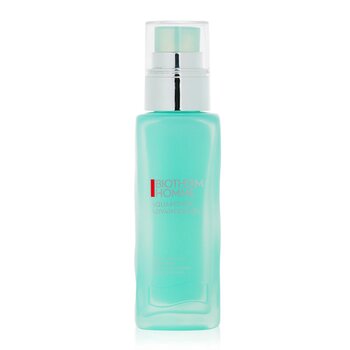


BiothermHomme Aquapower Advanced Gel 75ml/2.53oz
Analysis updated September 2026 · How Scout scores
At a glance
Summary
This moisturizer contains beneficial ingredients like shea butter, apricot kernel oil, and glycerin, which provide hydration and nourishment to the skin. However, the presence of denatured alcohol as a top ingredient can be drying and irritating, and the inclusion of fragrance adds potential for skin sensitivity. The product's formulation is a mix of natural and synthetic components, leading to a moderate processing level.
Key ingredients 47
Butyrospermum Parkii Butter / Shea ButterVery Good
Shea Butter is a natural fat extracted from the nuts of the shea tree. It is known for its moisturizing and anti-inflammatory properties. It is beneficial for dry and sensitive skin.
Risks
Rarely, it may cause allergic reactions in individuals with nut allergies.
Benefits
Highly moisturizing and soothing for the skin.
Prunus Armeniaca Kernel Oil / Apricot Kernel OilVery Good
Apricot Kernel Oil is a natural oil rich in fatty acids and vitamins. It is known for its moisturizing and nourishing properties. It is suitable for sensitive and dry skin types.
Risks
Generally safe, but may cause allergic reactions in some individuals.
Benefits
Moisturizes and nourishes the skin effectively.
Ascorbyl GlucosideVery Good
Ascorbyl Glucoside is a stable form of Vitamin C used for its antioxidant properties. It helps brighten the skin and reduce signs of aging. It is beneficial for improving skin tone and texture.
Risks
Generally safe, but may cause irritation in sensitive skin.
Benefits
Brightens skin and provides antioxidant protection.
PanthenolVery Good
Panthenol is a form of Vitamin B5 used for its moisturizing and soothing properties. It helps improve skin hydration and reduce irritation. It is beneficial for maintaining healthy skin.
Risks
Generally safe, but may cause irritation in very sensitive skin.
Benefits
Moisturizes and soothes the skin effectively.
TocopherolVery Good
Tocopherol, or Vitamin E, is used for its antioxidant properties in cosmetics. It helps protect the skin from oxidative stress and damage. It is beneficial for maintaining healthy skin.
Risks
Generally safe, but may cause irritation in very sensitive skin.
Benefits
Provides antioxidant protection and supports skin health.
GlycerinGood
Glycerin is a humectant that attracts moisture to the skin. It is widely used in skincare for its hydrating properties. It helps maintain the skin's moisture balance.
Risks
Generally considered safe with minimal risk.
Benefits
Excellent for hydrating and maintaining skin moisture.
Glycine Soja Oil / Soybean OilGood
Soybean Oil is a natural oil that contains essential fatty acids and vitamins. It is used for its moisturizing and antioxidant properties. It helps improve skin texture and elasticity.
Risks
May cause allergic reactions in individuals sensitive to soy.
Benefits
Moisturizes and provides antioxidant benefits.
Triticum Vulgare Seed Extract / Wheat Seed ExtractGood
Wheat Seed Extract is rich in vitamins and minerals beneficial for the skin. It is used for its moisturizing and antioxidant properties. It helps improve skin texture and hydration.
Risks
May cause allergic reactions in individuals with wheat allergies.
Benefits
Moisturizes and provides antioxidant benefits.
UreaGood
Urea is a humectant that helps retain moisture in the skin. It is used for its hydrating and exfoliating properties. It helps improve skin texture and hydration.
Risks
Generally safe, but high concentrations may cause irritation.
Benefits
Hydrates and gently exfoliates the skin.
Tocopheryl AcetateGood
Tocopheryl Acetate is a stable form of Vitamin E used for its antioxidant properties. It helps protect the skin from oxidative stress and damage. It is beneficial for maintaining healthy skin.
Risks
Generally safe, but may cause irritation in very sensitive skin.
Benefits
Provides antioxidant protection and supports skin health.
Aqua / Water / EauNeutral
Water is a common solvent used in cosmetics to dissolve other ingredients. It helps in the application and absorption of the product. It does not have any direct benefits or risks.
Benefits
Essential for dissolving and mixing other ingredients.
Butylene GlycolNeutral
Butylene Glycol is a conditioning agent that helps improve the texture of the product. It also acts as a solvent and can enhance the penetration of other ingredients. It is generally considered safe for use in cosmetics.
Risks
May cause irritation in very sensitive skin.
Benefits
Improves product texture and enhances ingredient penetration.
Ammonium Polyacryloyl Dimethyl TaurateNeutral
This ingredient is used as a thickening agent in cosmetics. It helps stabilize emulsions and improve product texture. It is generally considered safe for use in skincare products.
Benefits
Improves product texture and stability.
Aspartic AcidNeutral
Aspartic Acid is an amino acid used in cosmetics for its conditioning properties. It helps improve the texture and feel of the product. It is generally considered safe for use in skincare.
Benefits
Improves product texture and conditioning.
Manganese GluconateNeutral
Manganese Gluconate is a mineral salt used for its antioxidant properties. It helps protect the skin from oxidative stress. It is generally considered safe for use in cosmetics.
Benefits
Provides antioxidant protection for the skin.
2-Oleamido-1,3-OctadecanediolNeutral
This ingredient is used as a skin conditioning agent. It helps improve the texture and feel of the product. It is generally considered safe for use in cosmetics.
Benefits
Improves product texture and skin conditioning.
CholesterolNeutral
Cholesterol is used in cosmetics for its emollient properties. It helps maintain the skin's natural barrier. It is generally considered safe for use in skincare products.
Benefits
Helps maintain the skin's natural barrier.
AlanineNeutral
Alanine is an amino acid used in cosmetics for its conditioning properties. It helps improve the texture and feel of the product. It is generally considered safe for use in skincare.
Benefits
Improves product texture and conditioning.
Magnesium GluconateNeutral
Magnesium Gluconate is a mineral salt used for its conditioning properties. It helps improve the texture and feel of the product. It is generally considered safe for use in cosmetics.
Benefits
Improves product texture and conditioning.
Copper GluconateNeutral
Copper Gluconate is a mineral salt used for its conditioning properties. It helps improve the texture and feel of the product. It is generally considered safe for use in cosmetics.
Benefits
Improves product texture and conditioning.
SucroseNeutral
Sucrose is a sugar used as a humectant in cosmetics. It helps retain moisture in the skin. It is generally considered safe for use in skincare products.
Benefits
Helps retain moisture in the skin.
Vitreoscilla FermentNeutral
Vitreoscilla Ferment is used for its conditioning properties in cosmetics. It helps improve the texture and feel of the product. It is generally considered safe for use in skincare.
Benefits
Improves product texture and conditioning.
Citric AcidNeutral
Citric Acid is used to adjust the pH of cosmetics. It can also provide mild exfoliation. It is generally considered safe for use in skincare products.
Risks
May cause irritation in sensitive skin if used in high concentrations.
Benefits
Helps adjust pH and provides mild exfoliation.
Trisodium Ethylenediamine DisuccinateNeutral
This ingredient is used as a chelating agent in cosmetics. It helps stabilize the product by binding metal ions. It is generally considered safe for use in skincare.
Benefits
Stabilizes the product by binding metal ions.
Biosaccharide Gum-1Neutral
Biosaccharide Gum-1 is used for its moisturizing and soothing properties. It helps improve the texture and feel of the product. It is generally considered safe for use in cosmetics.
Benefits
Moisturizes and soothes the skin.
MaltodextrinNeutral
Maltodextrin is used as a binding and stabilizing agent in cosmetics. It helps improve the texture and feel of the product. It is generally considered safe for use in skincare.
Benefits
Improves product texture and stability.
MenthoxypropanediolNeutral
Menthoxypropanediol is used for its cooling and soothing properties in cosmetics. It helps improve the sensory experience of the product. It is generally considered safe for use in skincare.
Benefits
Provides a cooling and soothing effect on the skin.
Glutamic AcidNeutral
Glutamic Acid is an amino acid used for its conditioning properties in cosmetics. It helps improve the texture and feel of the product. It is generally considered safe for use in skincare.
Benefits
Improves product texture and conditioning.
DextrinNeutral
Dextrin is used as a binding and stabilizing agent in cosmetics. It helps improve the texture and feel of the product. It is generally considered safe for use in skincare.
Benefits
Improves product texture and stability.
Hexyl NicotinateNeutral
Hexyl Nicotinate is used for its warming and vasodilating properties in cosmetics. It helps improve the sensory experience of the product. It is generally considered safe for use in skincare.
Risks
May cause redness or irritation in sensitive skin.
Benefits
Provides a warming sensation and improves blood flow.
Hexylene GlycolNeutral
Hexylene Glycol is used as a solvent and viscosity agent in cosmetics. It helps improve the texture and feel of the product. It is generally considered safe for use in skincare.
Risks
May cause irritation in sensitive skin.
Benefits
Improves product texture and stability.
CI 42090 / Blue 1Neutral
Blue 1 is a synthetic dye used for coloring cosmetics. It helps provide a visually appealing product. It is generally considered safe for use in cosmetics.
Risks
May cause allergic reactions in sensitive individuals.
Benefits
Provides color to the product for aesthetic purposes.
CoumarinNeutral
Coumarin is a fragrance component used for its pleasant scent. It helps enhance the sensory experience of the product. It is generally considered safe for use in cosmetics.
Risks
May cause allergic reactions in sensitive individuals.
Benefits
Provides a pleasant scent to the product.
HydroxycitronellalNeutral
Hydroxycitronellal is a fragrance component used for its floral scent. It helps enhance the sensory experience of the product. It is generally considered safe for use in cosmetics.
Risks
May cause allergic reactions in sensitive individuals.
Benefits
Provides a floral scent to the product.
CitronellolNeutral
Citronellol is a fragrance component used for its rose scent. It helps enhance the sensory experience of the product. It is generally considered safe for use in cosmetics.
Risks
May cause allergic reactions in sensitive individuals.
Benefits
Provides a rose scent to the product.
Benzyl SalicylateNeutral
Benzyl Salicylate is a fragrance component used for its floral scent. It helps enhance the sensory experience of the product. It is generally considered safe for use in cosmetics.
Risks
May cause allergic reactions in sensitive individuals.
Benefits
Provides a floral scent to the product.
DimethiconeBad
Occlusive silicone film-former — flagged under clean-beauty doctrine.
Risks
May cause buildup on the skin, potentially leading to clogged pores.
Benefits
Provides a smooth application and helps retain moisture.
GlucoseBad
Processed additive flagged under Scout's ingredient doctrine.
Benefits
Helps retain moisture in the skin.
FructoseBad
Processed additive flagged under Scout's ingredient doctrine.
Benefits
Helps retain moisture in the skin.
PhenoxyethanolBad
Processed additive flagged under Scout's ingredient doctrine.
Risks
May cause irritation in sensitive skin.
Benefits
Prevents microbial growth and extends product shelf life.
LinaloolBad
Processed additive flagged under Scout's ingredient doctrine.
Risks
May cause allergic reactions in sensitive individuals.
Benefits
Provides a pleasant scent to the product.
LimoneneBad
Processed additive flagged under Scout's ingredient doctrine.
Risks
May cause allergic reactions in sensitive individuals.
Benefits
Provides a citrus scent to the product.
CitralBad
Processed additive flagged under Scout's ingredient doctrine.
Risks
May cause allergic reactions in sensitive individuals.
Benefits
Provides a lemon scent to the product.
Benzyl AlcoholBad
Processed additive flagged under Scout's ingredient doctrine.
Risks
May cause irritation in sensitive skin.
Benefits
Prevents microbial growth and improves product texture.
Alcohol Denat.Very Bad
Denatured alcohol is used as a solvent and astringent in cosmetics. It can be drying and irritating to the skin, especially in high concentrations. It is often used to help other ingredients penetrate the skin.
Risks
Can cause dryness and irritation, especially for sensitive skin.
Benefits
Helps other ingredients penetrate the skin more effectively.
CI 19140 / Yellow 5Very Bad
Heavily flagged ingredient class under Scout's doctrine.
Risks
May cause allergic reactions in sensitive individuals.
Benefits
Provides color to the product for aesthetic purposes.
Parfum / FragranceVery Bad
Fragrance is used to provide a pleasant scent to cosmetics. It can contain a mixture of various chemicals, some of which may cause irritation or allergic reactions. It is often criticized for its potential to cause skin sensitivity.
Risks
May cause irritation or allergic reactions, especially in sensitive skin.
Benefits
Enhances the sensory experience with a pleasant scent.
Get the full breakdown in the Scout appTake Scout shopping
Scan any product to see lab results, healthy alternatives, and your personalized analysis.
Download on theApp Store GET IT ONGoogle Play