
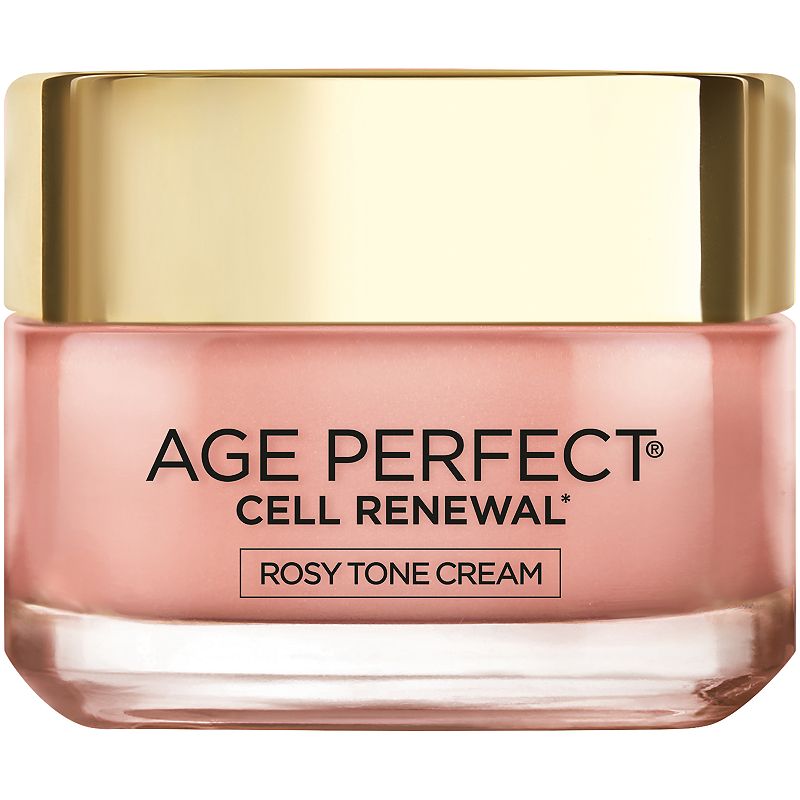


L Oreal Paris Age Perfect Rosy Tone Daily Face Moisturizer 1.7 oz
Analysis updated August 2026 · How Scout scores
At a glance
Summary
This moisturizer contains beneficial ingredients like squalane and glycerin, which are known for their hydrating and skin-protective properties. However, the presence of mineral oil and methylparaben raises concerns due to potential contamination and endocrine disruption risks. Additionally, the inclusion of synthetic fragrance can cause irritation and allergic reactions, impacting the overall safety profile of the product.
Key ingredients 34
SqualaneVery Good
Squalane is a highly effective emollient and natural antioxidant. It helps to hydrate and protect the skin barrier. It is well-tolerated by most skin types.
Risks
Generally considered safe with minimal risk of irritation.
Benefits
Provides excellent hydration and supports skin barrier function.
Ascorbyl GlucosideVery Good
Ascorbyl Glucoside is a stable form of Vitamin C used for its antioxidant properties. It helps to brighten the skin and reduce signs of aging. It is generally well-tolerated by most skin types.
Risks
Low risk of irritation; generally considered safe.
Benefits
Brightens skin and provides antioxidant protection.
GlycerinGood
Glycerin is a humectant that attracts moisture to the skin. It helps to maintain hydration and improve skin barrier function. It is widely used due to its effectiveness and safety.
Risks
Low risk of irritation; generally safe for all skin types.
Benefits
Enhances skin hydration and barrier function.
Capryloyl Salicylic AcidGood
Capryloyl Salicylic Acid is a derivative of salicylic acid used for its exfoliating properties. It helps to improve skin texture and clarity. It is generally well-tolerated by most skin types.
Risks
Potential for irritation in sensitive skin.
Benefits
Exfoliates and improves skin texture.
MicaGood
Beneficial ingredient — whole-food or functional value in this product class.
Risks
Low risk of irritation; generally considered safe.
Benefits
Adds shimmer and improves product texture.
CI 77491/Iron OxidesGood
Beneficial ingredient — whole-food or functional value in this product class.
Risks
Low risk of irritation; generally considered safe.
Benefits
Provides color and pigmentation.
Aqua/WaterNeutral
Water is a common solvent used in cosmetics to dissolve other ingredients. It helps in the application and absorption of the product. It does not provide direct benefits or risks.
Benefits
Essential for dissolving and mixing other ingredients.
CyclohexasiloxaneNeutral
Cyclohexasiloxane is a silicone used to improve the texture and spreadability of products. It evaporates quickly, leaving a silky feel. It does not penetrate the skin deeply.
Risks
Potential environmental concerns due to bioaccumulation.
Benefits
Improves product texture and application.
Cetyl AlcoholNeutral
Cetyl Alcohol is a fatty alcohol used as an emollient and thickener. It helps to soften the skin and stabilize formulations. It is not drying like other alcohols.
Risks
Low risk of irritation; generally safe for most skin types.
Benefits
Improves texture and provides emollient properties.
Glyceryl StearateNeutral
Glyceryl Stearate is an emulsifier that helps to blend oil and water components. It provides a smooth texture and enhances product stability. It is generally well-tolerated.
Risks
Low risk of irritation; generally considered safe.
Benefits
Improves product stability and texture.
PEG-40 StearateNeutral
PEG-40 Stearate is an emulsifier and surfactant used to stabilize formulations. It helps to mix oil and water components effectively. It is generally considered safe in cosmetics.
Risks
Potential contamination with ethylene oxide and 1,4-dioxane.
Benefits
Enhances product stability and texture.
Myristyl MyristateNeutral
Myristyl Myristate is an emollient that helps to soften and smooth the skin. It enhances the texture of formulations. It is generally well-tolerated by most skin types.
Risks
Low risk of irritation; generally considered safe.
Benefits
Improves skin texture and provides emollient properties.
Pentaerythrityl TetraethylhexanoateNeutral
This ingredient is an emollient that provides a smooth feel to the skin. It helps to improve the spreadability of the product. It is generally considered safe for use in cosmetics.
Risks
Low risk of irritation; generally considered safe.
Benefits
Enhances product texture and provides emollient properties.
OctyldodecanolNeutral
Octyldodecanol is a fatty alcohol used as an emollient and thickener. It helps to improve the texture and feel of the product. It is generally well-tolerated by most skin types.
Risks
Low risk of irritation; generally considered safe.
Benefits
Improves product texture and provides emollient properties.
Sorbitan TristearateNeutral
Sorbitan Tristearate is an emulsifier that helps to stabilize formulations. It allows oil and water components to mix effectively. It is generally considered safe for use in cosmetics.
Risks
Low risk of irritation; generally considered safe.
Benefits
Enhances product stability and texture.
Butylene GlycolNeutral
Butylene Glycol is a humectant that helps to retain moisture in the skin. It also improves the texture and spreadability of products. It is generally considered safe for use in cosmetics.
Risks
Low risk of irritation; generally considered safe.
Benefits
Enhances skin hydration and product texture.
Acrylamide/Sodium Acryloyldimethyltaurate CopolymerNeutral
This copolymer is used as a thickening agent to improve product texture. It helps to stabilize formulations and provide a smooth feel. It is generally considered safe for use in cosmetics.
Risks
Low risk of irritation; generally considered safe.
Benefits
Improves product texture and stability.
Synthetic FluorphlogopiteNeutral
Synthetic Fluorphlogopite is a synthetic mica used to add shimmer and improve texture. It is considered safe for use in cosmetics. It provides a smooth, silky feel to products.
Risks
Low risk of irritation; generally considered safe.
Benefits
Adds shimmer and improves product texture.
CI 77891/Titanium DioxideNeutral
Titanium Dioxide is used as a pigment and UV filter in cosmetics. It provides opacity and sun protection. It is generally considered safe for use in cosmetics.
Risks
Inhalation of fine particles may pose a risk; generally safe in creams.
Benefits
Provides sun protection and opacity.
IsohexadecaneNeutral
Isohexadecane is a lightweight emollient used to improve texture and spreadability. It provides a silky feel and is non-greasy. It is generally considered safe for use in cosmetics.
Risks
Low risk of irritation; generally considered safe.
Benefits
Improves product texture and provides a silky feel.
Acrylonitrile/Methyl Methacrylate/Vinylidene Chloride CopolymerNeutral
This copolymer is used as a film-forming agent to improve product texture. It helps to provide a smooth, even application. It is generally considered safe for use in cosmetics.
Risks
Low risk of irritation; generally considered safe.
Benefits
Improves product texture and application.
MannitolNeutral
Mannitol is a sugar alcohol used as a humectant and texturizer. It helps to retain moisture and improve product feel. It is generally considered safe for use in cosmetics.
Risks
Low risk of irritation; generally considered safe.
Benefits
Enhances skin hydration and product texture.
ChlorphenesinNeutral
Chlorphenesin is a preservative used to prevent microbial growth in cosmetics. It is effective at low concentrations and is widely used. It is generally considered safe in small amounts.
Risks
Potential for irritation in sensitive individuals.
Benefits
Prevents microbial growth and extends product shelf life.
Stearyl AlcoholNeutral
Stearyl Alcohol is a fatty alcohol used as an emollient and thickener. It helps to soften the skin and stabilize formulations. It is not drying like other alcohols.
Risks
Low risk of irritation; generally safe for most skin types.
Benefits
Improves texture and provides emollient properties.
Myristyl AlcoholNeutral
Myristyl Alcohol is a fatty alcohol used as an emollient and thickener. It helps to improve the texture and feel of the product. It is generally well-tolerated by most skin types.
Risks
Low risk of irritation; generally considered safe.
Benefits
Improves product texture and provides emollient properties.
Paeonia Albiflora Root ExtractNeutral
Paeonia Albiflora Root Extract is a botanical extract used for its soothing properties. It may help to calm and condition the skin. It is generally considered safe for use in cosmetics.
Risks
Low risk of irritation; generally considered safe.
Benefits
May soothe and condition the skin.
CI 77163/Bismuth OxychlorideNeutral
Bismuth Oxychloride is used as a pigment and texturizer in cosmetics. It provides a pearlescent finish and improves product feel. It is generally considered safe for use in cosmetics.
Risks
Potential for irritation in sensitive individuals.
Benefits
Adds pearlescent finish and improves product texture.
Hydrolyzed Cicer Seed ExtractNeutral
Hydrolyzed Cicer Seed Extract is a plant-derived ingredient used for its conditioning properties. It may help to nourish and hydrate the skin. It is generally considered safe for use in cosmetics.
Risks
Low risk of irritation; generally considered safe.
Benefits
May nourish and hydrate the skin.
Paraffinum Liquidum/Mineral OilBad
Processed additive flagged under Scout's ingredient doctrine.
Risks
Potential for contamination with impurities if not highly refined.
Benefits
Prevents moisture loss and provides a protective barrier.
PhenoxyethanolBad
Processed additive flagged under Scout's ingredient doctrine.
Risks
Potential for irritation in sensitive individuals.
Benefits
Prevents microbial growth and extends product shelf life.
Polysorbate 80Bad
Processed additive flagged under Scout's ingredient doctrine.
Risks
Potential for irritation in sensitive individuals.
Benefits
Enhances product stability and texture.
Disodium EDTABad
Processed additive flagged under Scout's ingredient doctrine.
Risks
Low risk of irritation; generally considered safe.
Benefits
Improves product stability and prevents degradation.
MethylparabenVery Bad
Methylparaben is a preservative used to prevent microbial growth in cosmetics. It is effective but has raised concerns due to potential endocrine disruption. It is generally considered safe in low concentrations.
Risks
Potential endocrine disruptor; may cause irritation in sensitive individuals.
Benefits
Prevents microbial growth and extends product shelf life.
Parfum/FragranceVery Bad
Fragrance is used to add scent to cosmetics but can cause irritation and allergic reactions. It is a common sensitizer and may contain undisclosed chemicals. It is generally considered a potential irritant.
Risks
Potential for irritation and allergic reactions.
Benefits
Adds pleasant scent to products.
Get the full breakdown in the Scout appTake Scout shopping
Scan any product to see lab results, healthy alternatives, and your personalized analysis.
Download on theApp Store GET IT ONGoogle PlayAmazon pricing & content
Amazon price as of . Product prices and availability are accurate as of the date/time indicated and are subject to change. Any price and availability information displayed on Amazon.com at the time of purchase will apply to the purchase of this product.
CERTAIN CONTENT THAT APPEARS ON THIS SITE COMES FROM AMAZON. THIS CONTENT IS PROVIDED “AS IS” AND IS SUBJECT TO CHANGE OR REMOVAL AT ANY TIME.