
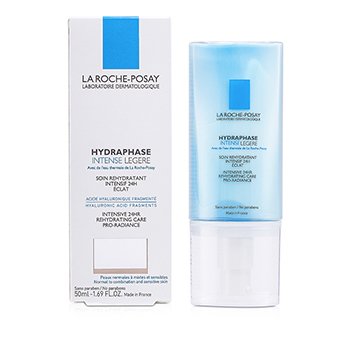


La-Roche Posay Hydraphase Intense Light 1.69 fl oz
Analysis updated August 2026 · How Scout scores
At a glance
Summary
This moisturizer contains beneficial ingredients like glycerin and hydrolyzed hyaluronic acid, which are excellent for skin hydration and maintaining the moisture barrier. However, the presence of alcohol denat, which can be drying and irritating, and parfum, which may cause allergic reactions, detracts from its overall safety profile. The inclusion of PEG compounds and acrylamide copolymers also indicates a moderate level of processing, which affects the product's rating.
Key ingredients 23
Hydrolyzed Hyaluronic AcidVery Good
Hydrolyzed Hyaluronic Acid is a powerful humectant that attracts and retains moisture in the skin. It helps improve skin hydration and elasticity. It is well-tolerated and suitable for all skin types.
Risks
There are minimal risks associated with its use.
Benefits
It provides deep hydration and helps plump the skin.
GlycerinGood
Glycerin is a humectant that attracts moisture to the skin, improving hydration. It is well-tolerated and suitable for all skin types. It helps maintain the skin's moisture barrier.
Risks
There are minimal risks, though in rare cases, it may cause irritation.
Benefits
Glycerin helps keep the skin hydrated and soft.
Zinc GluconateGood
Zinc Gluconate is used for its anti-inflammatory and soothing properties. It can help reduce redness and irritation in the skin. It is beneficial for acne-prone and sensitive skin types.
Risks
There are minimal risks associated with topical use.
Benefits
It helps calm and soothe irritated skin.
AquaNeutral
Aqua, or water, is a common solvent used in cosmetics. It helps dissolve other ingredients and provides hydration. It is generally considered safe and non-irritating.
Risks
There are no significant risks associated with water in cosmetics.
Benefits
Water is essential for hydration and helps in the application of the product.
Hydrogenated PolyisobuteneNeutral
Hydrogenated Polyisobutene is a synthetic emollient used to enhance the texture of products. It provides a smooth application and helps lock in moisture. It is generally considered safe for use in cosmetics.
Risks
There are no significant risks associated with this ingredient.
Benefits
It helps improve the texture and feel of the product on the skin.
PEG-20 StearateNeutral
PEG-20 Stearate is an emulsifier that helps blend water and oil components. It improves the texture and stability of formulations. It is generally considered safe for use in cosmetics.
Risks
There is a potential risk of contamination with ethylene oxide and 1,4-dioxane.
Benefits
It helps maintain product consistency and enhances application.
PEG-100 StearateNeutral
PEG-100 Stearate is an emulsifying agent that helps stabilize formulations. It allows for a smooth and even application of the product. It is generally considered safe for use in cosmetics.
Risks
Potential contamination with ethylene oxide and 1,4-dioxane is a concern.
Benefits
It enhances the texture and stability of the product.
CarbomerNeutral
Carbomer is a thickening agent used to control the viscosity of cosmetic products. It helps create a gel-like consistency and stabilizes emulsions. It is generally considered safe for use in cosmetics.
Risks
There are minimal risks, though it may cause mild irritation in sensitive individuals.
Benefits
It helps improve the texture and stability of formulations.
Glyceryl StearateNeutral
Glyceryl Stearate is an emulsifier that helps blend oil and water components. It improves the texture and stability of cosmetic formulations. It is generally considered safe for use in cosmetics.
Risks
There are minimal risks, though it may cause mild irritation in sensitive individuals.
Benefits
It enhances the texture and consistency of the product.
IsohexadecaneNeutral
Isohexadecane is a lightweight emollient that provides a silky feel to products. It helps improve the spreadability and texture of formulations. It is generally considered safe for use in cosmetics.
Risks
There are minimal risks, though it may cause mild irritation in sensitive individuals.
Benefits
It enhances the texture and application of the product.
Sodium HydroxideNeutral
Sodium Hydroxide is used to adjust the pH of cosmetic formulations. It helps maintain the stability and effectiveness of the product. It is generally considered safe in low concentrations.
Risks
In high concentrations, it can be irritating and corrosive.
Benefits
It helps maintain the desired pH level of the product.
Xanthan GumNeutral
Xanthan Gum is a natural thickening agent used to stabilize cosmetic formulations. It helps create a smooth and consistent texture. It is generally considered safe for use in cosmetics.
Risks
There are minimal risks, though it may cause mild irritation in sensitive individuals.
Benefits
It enhances the texture and stability of the product.
Pentylene GlycolNeutral
Pentylene Glycol is a multifunctional ingredient used as a solvent and humectant. It helps improve the texture and hydration of formulations. It is generally considered safe for use in cosmetics.
Risks
There are minimal risks, though it may cause mild irritation in sensitive individuals.
Benefits
It enhances the hydration and texture of the product.
Acrylamide/Sodium Acryloyldimethyltaurate CopolymerNeutral
This copolymer is used as a thickening and stabilizing agent in cosmetics. It helps create a smooth and gel-like texture. It is generally considered safe for use in cosmetics.
Risks
There are minimal risks, though it may cause mild irritation in sensitive individuals.
Benefits
It enhances the texture and stability of the product.
Cetyl AlcoholNeutral
Cetyl Alcohol is a fatty alcohol used as an emollient and thickening agent. It helps improve the texture and feel of cosmetic products. It is generally considered safe for use in cosmetics.
Risks
There are minimal risks, though it may cause mild irritation in sensitive individuals.
Benefits
It enhances the texture and moisturizing properties of the product.
Caprylyl GlycolNeutral
Caprylyl Glycol is a skin conditioning agent and humectant. It helps improve the texture and hydration of formulations. It is generally considered safe for use in cosmetics.
Risks
There are minimal risks, though it may cause mild irritation in sensitive individuals.
Benefits
It enhances the hydration and texture of the product.
DimethiconeBad
Occlusive silicone film-former — flagged under clean-beauty doctrine.
Risks
Some individuals may experience mild irritation or breakouts.
Benefits
Dimethicone helps smooth the skin and improve product spreadability.
Disodium EDTABad
Processed additive flagged under Scout's ingredient doctrine.
Risks
There are minimal risks, though it may cause mild irritation in sensitive individuals.
Benefits
It helps improve the stability and effectiveness of the product.
Copper SulfateBad
Processed additive flagged under Scout's ingredient doctrine.
Risks
In high concentrations, it can be toxic and irritating.
Benefits
It helps maintain the product's integrity by preventing microbial contamination.
Polysorbate 80Bad
Processed additive flagged under Scout's ingredient doctrine.
Risks
There are minimal risks, though it may cause mild irritation in sensitive individuals.
Benefits
It helps maintain the consistency and application of the product.
ParfumBad
Parfum, or fragrance, is used to add scent to cosmetic products. It can be irritating and allergenic, especially for sensitive skin. It may contain undisclosed chemicals that can cause adverse reactions.
Risks
It can cause irritation, allergic reactions, and exacerbate skin conditions.
Benefits
It provides a pleasant scent to the product.
Alcohol DenatVery Bad
Alcohol Denat is used as a solvent and astringent in cosmetics. It can be drying and irritating to the skin, especially in high concentrations. It may disrupt the skin's natural barrier.
Risks
It can cause dryness, irritation, and exacerbate skin conditions.
Benefits
It helps in quick drying of the product and enhances penetration of other ingredients.
PolyethyleneVery Bad
Heavily flagged ingredient class under Scout's doctrine.
Risks
There are environmental concerns regarding microplastics.
Benefits
It improves the texture and stability of the product.
Get the full breakdown in the Scout appTake Scout shopping
Scan any product to see lab results, healthy alternatives, and your personalized analysis.
Download on theApp Store GET IT ONGoogle Play