
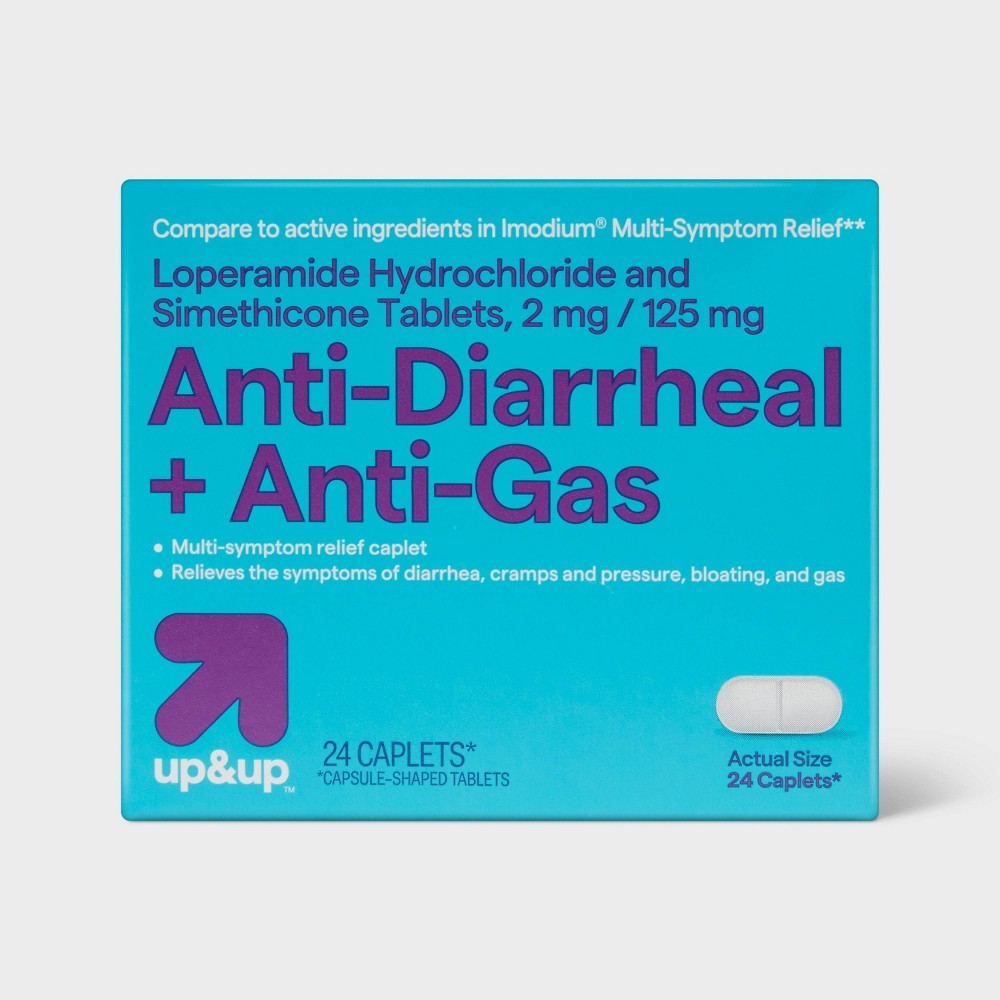


Loperamide Multi Symptom Caplet - 24ct - up&up™
Analysis updated August 2026 · How Scout scores
At a glance
Summary
This product contains acesulfame potassium, an artificial sweetener, which is often debated for its potential health concerns, leading to a deduction. Additionally, the use of 'Flavor' as a non-specific ingredient raises transparency issues, which can be problematic for consumers with allergies or sensitivities. Despite these concerns, the product's primary active ingredients, loperamide HCl and simethicone, are effective for their intended use, balancing the overall score.
Key ingredients 8
Loperamide HClNeutral
Loperamide HCl is an active ingredient used to treat diarrhea by slowing down gut movement. It is a synthetic compound and does not provide nutritional benefits. Its effectiveness is well-documented, but it should be used as directed to avoid potential side effects.
Risks
Overuse can lead to constipation and other gastrointestinal issues.
Benefits
Effective in reducing symptoms of diarrhea and improving comfort.
SimethiconeNeutral
Simethicone is used to relieve bloating and discomfort caused by excess gas. It is an inert substance that works by breaking up gas bubbles in the gut. It is generally considered safe with no significant nutritional benefits.
Benefits
Helps alleviate symptoms of gas and bloating, improving digestive comfort.
Croscarmellose sodiumNeutral
Croscarmellose sodium is a disintegrant used in tablets to help them dissolve properly. It is a chemically modified cellulose compound with no nutritional value. It is generally considered safe and effective for its intended use.
Benefits
Ensures proper dissolution of tablets, aiding in the effective delivery of active ingredients.
Dibasic calcium phosphateNeutral
Dibasic calcium phosphate is used as a dietary supplement and a tableting agent. It provides calcium and phosphorus, which are essential minerals. However, in this context, it primarily serves as a filler with minimal nutritional impact.
Risks
Excessive intake can lead to imbalances in calcium and phosphorus levels.
Benefits
Provides a source of calcium and phosphorus, essential for bone health.
Microcrystalline celluloseNeutral
Microcrystalline cellulose is a common filler and stabilizer in tablets. It is derived from plant fibers and is considered safe for consumption. It does not provide nutritional benefits but aids in the manufacturing process.
Benefits
Improves the structural integrity of tablets, ensuring consistent dosage and stability.
Stearic acidNeutral
Stearic acid is a fatty acid used as a lubricant in tablet manufacturing. It is naturally occurring and generally recognized as safe. It does not contribute to the nutritional profile of the product.
Benefits
Facilitates the manufacturing process by preventing ingredients from sticking to equipment.
Acesulfame potassiumBad
Acesulfame potassium is an artificial sweetener used to provide sweetness without calories. It is often criticized for potential health concerns related to artificial sweeteners. While approved by regulatory agencies, its long-term health effects are still debated.
Risks
May contribute to metabolic disorders and has been linked to potential negative health effects in some studies.
Benefits
Provides sweetness without adding calories, which can be beneficial for weight management.
FlavorBad
The term 'Flavor' is a catch-all for various compounds used to enhance taste, often without disclosure of specific ingredients. This lack of transparency can be concerning for consumers with allergies or sensitivities. It may include artificial or natural components, but specifics are not provided.
Risks
Potential allergens or artificial compounds may be included without clear labeling.
Benefits
Enhances the palatability of the product, making it more acceptable to consumers.
Processing
Processed Foods
Get the full breakdown in the Scout appTake Scout shopping
Scan any product to see lab results, healthy alternatives, and your personalized analysis.
Download on theApp Store GET IT ONGoogle Play