

Multi-Symptom Acetaminophen Menstrual Pain Reliever - 40ct - up&up™
Analysis updated August 2026 · How Scout scores
At a glance
Summary
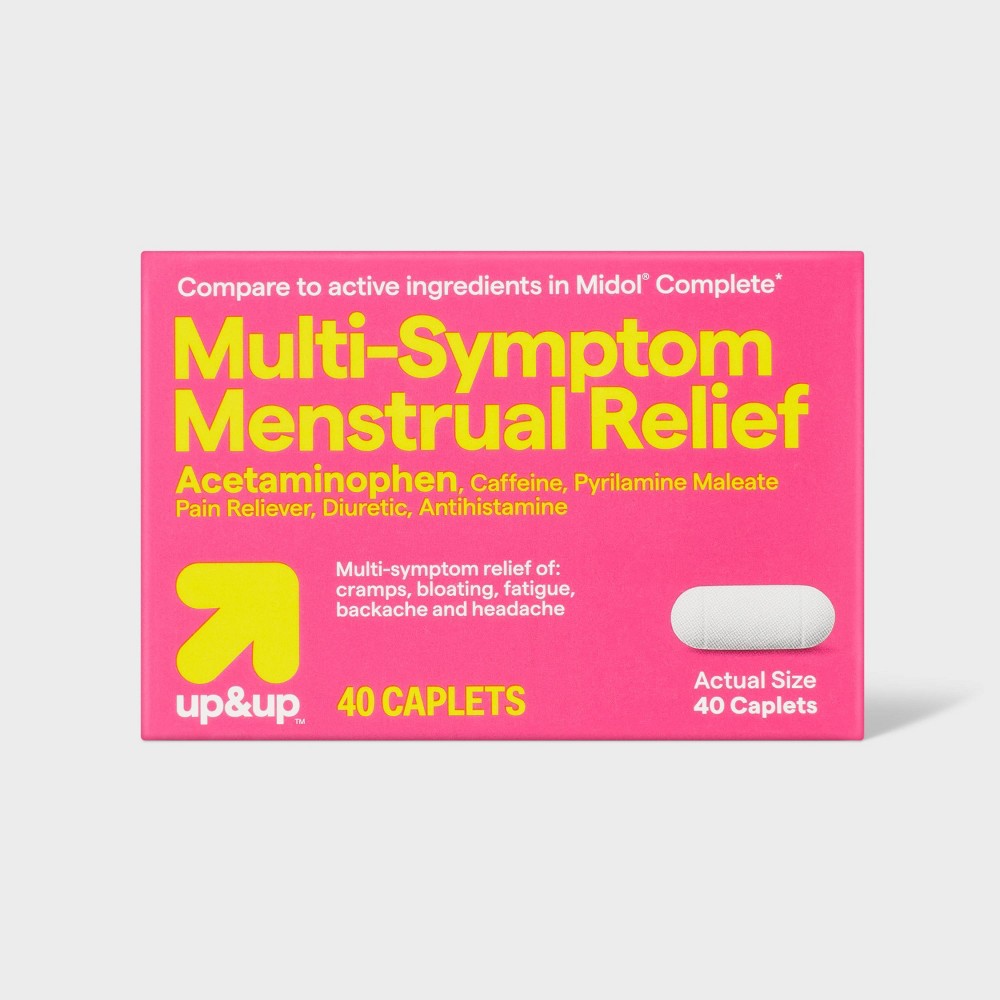
This product contains active ingredients like acetaminophen and caffeine, which are effective for pain relief but are accompanied by several additives such as titanium dioxide and polyethylene glycol. The presence of multiple excipients and processing agents contributes to a moderate level of processing, which impacts the overall formulation quality. While the active ingredients are appropriate for the intended use, the inclusion of numerous non-active components reduces the score.
Key ingredients 16
AcetaminophenNeutral
Acetaminophen is a common analgesic and antipyretic used to relieve pain and reduce fever. It is generally considered safe when used as directed, but excessive use can lead to liver damage. It does not provide nutritional benefits but is effective for symptom relief.
Risks
Excessive use can lead to severe liver damage, especially when combined with alcohol.
Benefits
Effective for reducing pain and fever, providing symptomatic relief.
CaffeineNeutral
Caffeine is a stimulant that can help increase alertness and reduce fatigue. It is often included in pain relievers to enhance the effectiveness of analgesics. While it can improve the efficacy of pain relief, it may cause jitteriness or insomnia in sensitive individuals.
Risks
May cause jitteriness, increased heart rate, or insomnia in sensitive individuals.
Benefits
Enhances the effectiveness of pain relievers and can improve alertness.
Pyrilamine MaleateNeutral
Pyrilamine maleate is an antihistamine used to relieve symptoms of allergy and colds. It can also have a mild sedative effect, which may help with sleep during discomfort. It does not provide nutritional benefits but aids in symptom management.
Risks
May cause drowsiness or dry mouth as side effects.
Benefits
Helps relieve allergy symptoms and may aid in sleep due to its sedative properties.
Corn StarchNeutral
Corn starch is used as a filler and binder in tablets to provide structure. It is a common excipient with no significant health risks or benefits. It is generally considered safe for consumption in small amounts.
See more about Corn Starch →Croscarmellose SodiumNeutral
Croscarmellose sodium is a disintegrant used in tablets to help them dissolve properly. It is an inert ingredient with no direct health benefits or risks. It ensures the tablet breaks down efficiently for absorption.
Benefits
Ensures proper dissolution and absorption of the tablet.
CrospovidoneNeutral
Crospovidone is used as a disintegrant in tablets to aid in their breakdown. It is an inert substance with no nutritional value or significant health risks. It helps ensure the tablet dissolves effectively for absorption.
Benefits
Facilitates the breakdown and absorption of the tablet.
HypromelloseNeutral
Hypromellose is used as a coating agent and controlled-release component in tablets. It is an inert ingredient with no direct health benefits or risks. It helps control the release of active ingredients for consistent efficacy.
Benefits
Helps control the release of active ingredients for consistent efficacy.
Magnesium StearateNeutral
Magnesium stearate is a common lubricant used in tablet manufacturing to prevent sticking. It is generally recognized as safe in small amounts, with no significant health benefits or risks. It ensures smooth tablet production and consistency.
Benefits
Ensures smooth tablet production and consistency.
Microcrystalline CelluloseNeutral
Microcrystalline cellulose is used as a filler and binder in tablets. It is an inert substance with no nutritional value or significant health risks. It provides structure and stability to the tablet.
Benefits
Provides structure and stability to the tablet.
PolydextroseNeutral
Polydextrose is a synthetic polymer used as a filler and fiber source in food and supplements. It is generally recognized as safe, with no significant health risks or benefits. It adds bulk and texture to the product.
Benefits
Adds bulk and texture to the product.
Polyethylene GlycolNeutral
Polyethylene glycol is used as a solvent and plasticizer in pharmaceuticals. It is generally considered safe in small amounts, with no significant health benefits or risks. It helps maintain the consistency and stability of the product.
Benefits
Helps maintain the consistency and stability of the product.
PovidoneNeutral
Povidone is used as a binder in tablets to ensure cohesion. It is an inert ingredient with no direct health benefits or risks. It helps maintain the integrity and uniformity of the tablet.
Benefits
Helps maintain the integrity and uniformity of the tablet.
Silicon DioxideNeutral
Silicon dioxide is used as an anti-caking agent in tablets to prevent clumping. It is generally recognized as safe, with no significant health benefits or risks. It ensures the free-flowing nature of the powder during manufacturing.
Benefits
Ensures the free-flowing nature of the powder during manufacturing.
Stearic AcidNeutral
Stearic acid is used as a lubricant in tablet manufacturing to prevent sticking. It is generally considered safe, with no significant health benefits or risks. It aids in the smooth production of tablets.
Benefits
Aids in the smooth production of tablets.
TriacetinNeutral
Triacetin is used as a plasticizer and solvent in pharmaceuticals. It is generally considered safe, with no significant health benefits or risks. It helps maintain the flexibility and stability of the product.
Benefits
Helps maintain the flexibility and stability of the product.
Titanium DioxideVery Bad
Heavily flagged ingredient class under Scout's doctrine.
Benefits
Enhances the visual appeal of the product.
Processing
Processed Foods
Get the full breakdown in the Scout appTake Scout shopping
Scan any product to see lab results, healthy alternatives, and your personalized analysis.
Download on theApp Store GET IT ONGoogle Play