
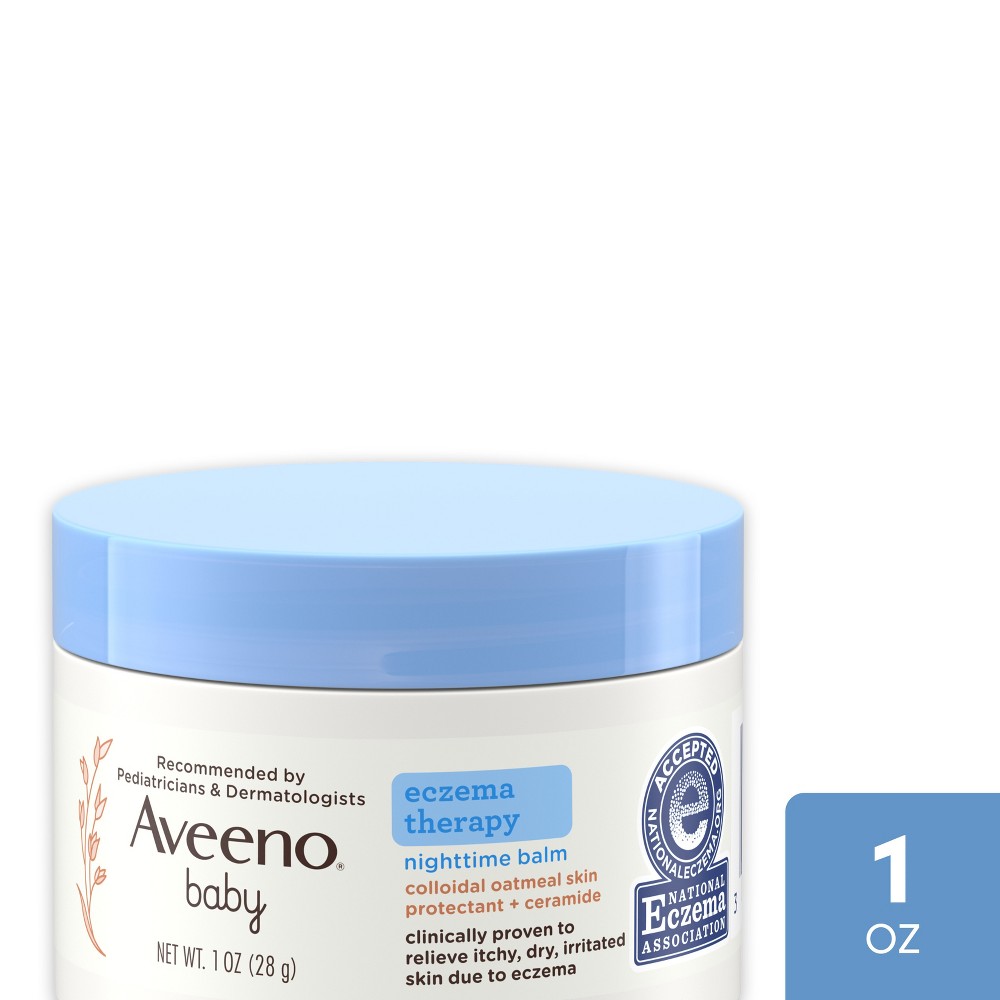


Aveeno Baby Eczema Therapy Nighttime Moisturizing Balm, Soothes & Relieves Dry, Itchy Skin - 1oz: Paraben-Free
AveenoAnalysis updated August 2026 · How Scout scores
At a glance
Summary
This moisturizer contains beneficial ingredients like colloidal oatmeal, glycerin, and ceramide NP, which are known for their soothing and hydrating properties, making it suitable for sensitive and eczema-prone skin. The presence of benzyl alcohol, a potential irritant, slightly detracts from its overall safety profile, but the product remains largely composed of skin-friendly components with minimal processing.
Key ingredients 21
Colloidal OatmealVery Good
Colloidal oatmeal is known for its soothing properties and ability to relieve dry, itchy skin. It forms a protective barrier on the skin, helping to lock in moisture. This ingredient is particularly beneficial for sensitive skin types.
Risks
There are minimal risks associated with colloidal oatmeal, though rare allergic reactions can occur.
Benefits
It provides anti-inflammatory and antioxidant benefits, making it ideal for eczema-prone skin.
Avena Sativa (Oat) Kernel OilVery Good
Avena Sativa Kernel Oil is rich in lipids and antioxidants, providing nourishment and protection to the skin. It is particularly beneficial for dry and sensitive skin due to its emollient properties. This ingredient helps to restore the skin's natural barrier.
Risks
Rarely, it may cause allergic reactions in sensitive individuals.
Benefits
It offers moisturizing and soothing benefits, enhancing skin softness and resilience.
Avena Sativa (Oat) Kernel ExtractVery Good
Avena Sativa Kernel Extract is rich in antioxidants and anti-inflammatory compounds, providing soothing benefits to the skin. It is particularly beneficial for sensitive and irritated skin. This ingredient helps to calm and protect the skin.
Risks
Rarely, it may cause allergic reactions in sensitive individuals.
Benefits
It offers soothing and protective benefits, reducing redness and irritation.
GlycerinGood
Glycerin is a humectant that attracts moisture to the skin, helping to maintain hydration. It is widely used in skincare for its ability to improve skin barrier function. This ingredient is generally well-tolerated by most skin types.
Risks
Overuse can lead to a sticky feeling on the skin.
Benefits
It enhances skin hydration and smoothness, supporting overall skin health.
Ceramide NPGood
Ceramide NP is a lipid molecule that helps to restore the skin's natural barrier and retain moisture. It is beneficial for improving skin hydration and reducing dryness. This ingredient is particularly useful for sensitive and eczema-prone skin.
Risks
There are minimal risks associated with ceramides.
Benefits
It strengthens the skin barrier and enhances moisture retention, improving overall skin health.
WaterNeutral
Water is a common solvent in skincare products, used to dissolve other ingredients. It is essential for formulating emulsions and creams. This ingredient is generally safe and non-irritating.
Risks
There are no significant risks associated with water in skincare.
Benefits
It acts as a base for the formulation, allowing other ingredients to be effectively delivered to the skin.
Cetearyl AlcoholNeutral
Cetearyl Alcohol is a fatty alcohol used as an emollient and thickener in skincare products. It helps to stabilize formulations and improve texture. This ingredient is generally well-tolerated and non-irritating.
Risks
In rare cases, it may cause skin irritation.
Benefits
It provides a creamy texture and helps to soften the skin.
Isocetyl AlcoholNeutral
Isocetyl Alcohol is used as an emollient and thickening agent in cosmetics. It helps to improve the texture and spreadability of products. This ingredient is generally considered safe for use in skincare.
Risks
Potential for mild irritation in sensitive skin types.
Benefits
It enhances the feel of the product and provides a smooth application.
Cetyl AlcoholNeutral
Cetyl Alcohol is a fatty alcohol that acts as an emollient and emulsifier in skincare products. It helps to thicken formulations and improve their stability. This ingredient is generally non-irritating and safe for most skin types.
Risks
May cause mild irritation in very sensitive skin.
Benefits
It provides a smooth texture and helps to soften the skin.
EthylhexylglycerinNeutral
Ethylhexylglycerin is used as a preservative and skin conditioning agent in cosmetics. It enhances the efficacy of other preservatives and provides mild moisturizing benefits. This ingredient is generally considered safe for use in skincare.
Risks
Rarely, it may cause skin irritation or allergic reactions.
Benefits
It helps to maintain product freshness and provides a slight moisturizing effect.
Sodium Cetearyl SulfateNeutral
Sodium Cetearyl Sulfate is an emulsifying agent used to blend oil and water components in formulations. It helps to stabilize products and improve their texture. This ingredient is generally considered safe for use in cosmetics.
Risks
May cause mild irritation in sensitive skin types.
Benefits
It enhances the stability and consistency of the product.
Benzoic AcidNeutral
Benzoic Acid is used as a preservative in cosmetics to prevent microbial growth. It is effective in maintaining product safety and extending shelf life. This ingredient is generally safe for use in skincare.
Risks
Potential for irritation or allergic reactions in sensitive individuals.
Benefits
It helps to preserve the product and prevent spoilage.
Stearic AcidNeutral
Stearic Acid is a fatty acid used as an emulsifier and thickener in skincare products. It helps to stabilize formulations and improve texture. This ingredient is generally well-tolerated and non-irritating.
Risks
May cause mild irritation in very sensitive skin.
Benefits
It provides a creamy texture and helps to maintain product stability.
Dipotassium PhosphateNeutral
Dipotassium Phosphate is used as a buffering agent in cosmetics to maintain pH balance. It helps to stabilize formulations and improve their efficacy. This ingredient is generally considered safe for use in skincare.
Risks
There are minimal risks associated with this ingredient.
Benefits
It helps to maintain the stability and effectiveness of the product.
Potassium PhosphateNeutral
Potassium Phosphate is used as a buffering agent to maintain pH balance in formulations. It helps to stabilize products and improve their performance. This ingredient is generally safe for use in cosmetics.
Risks
There are minimal risks associated with this ingredient.
Benefits
It helps to ensure the stability and efficacy of the product.
p-Anisic AcidNeutral
p-Anisic Acid is used as a preservative and fragrance ingredient in cosmetics. It helps to prevent microbial growth and maintain product freshness. This ingredient is generally considered safe for use in skincare.
Risks
Potential for irritation or allergic reactions in sensitive individuals.
Benefits
It helps to preserve the product and enhance its scent.
Caprylic/Capric TriglycerideNeutral
Caprylic/Capric Triglyceride is an emollient derived from coconut oil and glycerin. It helps to improve the spreadability and texture of skincare products. This ingredient is generally well-tolerated and non-irritating.
Risks
Rarely, it may cause skin irritation in sensitive individuals.
Benefits
It provides a lightweight, non-greasy feel and enhances skin hydration.
Sodium HydroxideNeutral
Sodium Hydroxide is used as a pH adjuster in cosmetics to maintain product stability. It helps to balance the acidity of formulations. This ingredient is generally safe when used in small amounts.
Risks
In high concentrations, it can be irritating to the skin and eyes.
Benefits
It helps to maintain the pH balance and stability of the product.
Citric AcidNeutral
Citric Acid is used as a pH adjuster and exfoliant in skincare products. It helps to maintain product stability and improve skin texture. This ingredient is generally safe for use in cosmetics.
Risks
In high concentrations, it can cause skin irritation or sensitivity.
Benefits
It helps to balance the pH of the product and can provide mild exfoliation benefits.
DimethiconeBad
Occlusive silicone film-former — flagged under clean-beauty doctrine.
Risks
Some individuals may experience irritation or allergic reactions.
Benefits
It effectively reduces water loss and improves the feel of the skin.
Benzyl AlcoholBad
Benzyl Alcohol is used as a preservative and solvent in cosmetics. While it is effective in preventing microbial growth, it can be irritating to the skin and eyes. This ingredient is often a concern for those with sensitive skin.
Risks
It may cause irritation or allergic reactions, especially in sensitive individuals.
Benefits
It helps to preserve the product and extend its shelf life.
Get the full breakdown in the Scout appTake Scout shopping
Scan any product to see lab results, healthy alternatives, and your personalized analysis.
Download on theApp Store GET IT ONGoogle PlayAmazon pricing & content
Amazon price as of . Product prices and availability are accurate as of the date/time indicated and are subject to change. Any price and availability information displayed on Amazon.com at the time of purchase will apply to the purchase of this product.
CERTAIN CONTENT THAT APPEARS ON THIS SITE COMES FROM AMAZON. THIS CONTENT IS PROVIDED “AS IS” AND IS SUBJECT TO CHANGE OR REMOVAL AT ANY TIME.