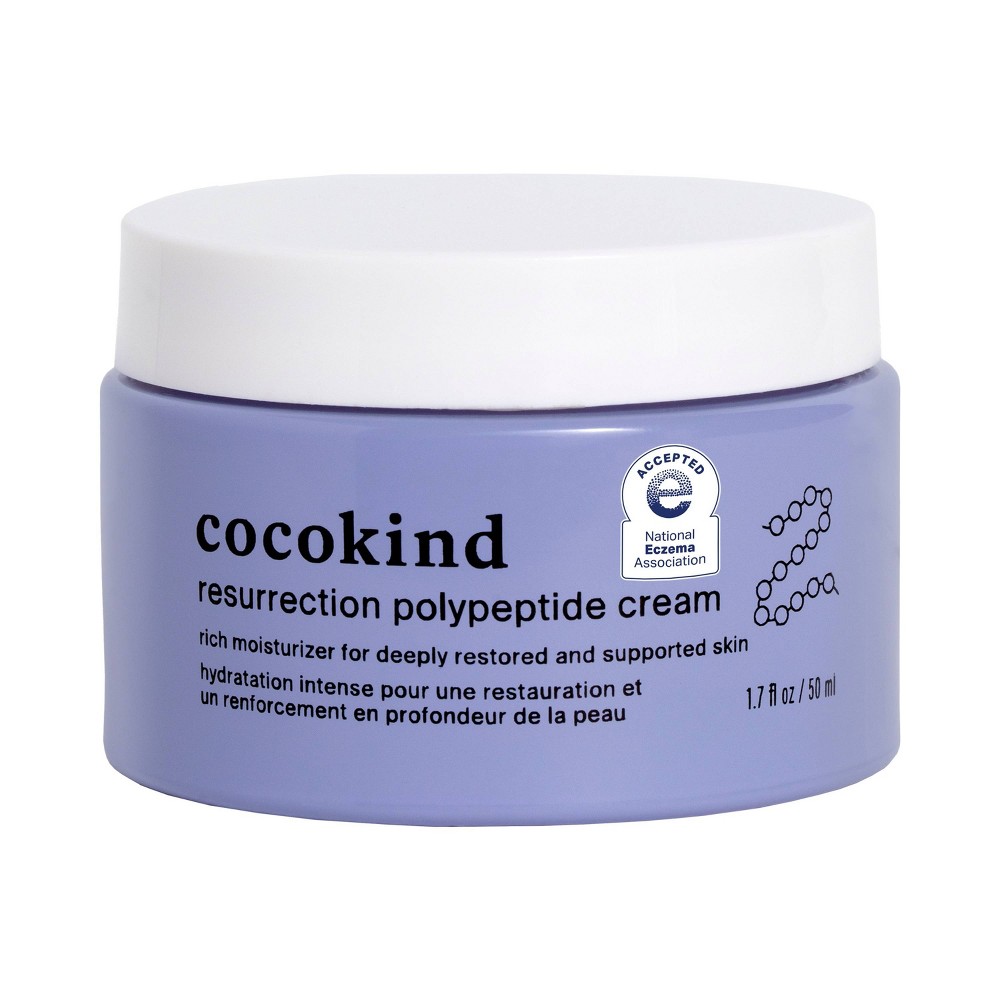
cocokind Resurrection Polypeptide Cream - 1.7 fl oz: Moisturizing Night Formula for Dry Skin Tone Improvement
At a glance
Summary
This moisturizer features a blend of natural and beneficial ingredients such as watermelon seed oil, squalane, and shea butter, which are known for their moisturizing and antioxidant properties. The product avoids harsh chemicals and synthetic additives, focusing instead on skin-friendly components that enhance hydration and improve skin texture. The clean ingredient list and minimal processing contribute to its high rating, making it suitable for sensitive and dry skin types. Its plastic packaging can shed microplastics into the product and lowers its score.
Key ingredients 35
Citrullus Lanatus (Watermelon) Seed OilVery Good
Watermelon seed oil is rich in essential fatty acids and antioxidants. It helps to moisturize and nourish the skin. It is considered beneficial for maintaining skin health.
Risks
There are minimal risks associated with watermelon seed oil, though rare allergic reactions may occur.
Benefits
It provides hydration and helps improve skin elasticity.
SqualaneVery Good
Squalane is a highly effective emollient and natural antioxidant. It mimics the skin's natural oils, making it an excellent moisturizer. It is non-comedogenic and suitable for all skin types.
Risks
Squalane is generally safe with no significant risks.
Benefits
It helps to lock in moisture and improve skin texture.
Butyrospermum Parkii (Shea) ButterVery Good
Shea butter is a natural fat extracted from the nuts of the shea tree. It is rich in vitamins and fatty acids, providing excellent moisturizing and healing properties. It is highly beneficial for dry and sensitive skin.
Risks
Shea butter is generally safe, though rare allergic reactions may occur.
Benefits
It deeply moisturizes and nourishes the skin, improving elasticity.
Jojoba EstersVery Good
Jojoba esters are derived from jojoba oil and provide excellent emollient properties. They help to moisturize and protect the skin. They are beneficial for improving skin texture and hydration.
Risks
Jojoba esters are generally safe with no significant risks.
Benefits
They enhance skin moisture and provide a smooth feel.
Palmitoyl Tripeptide-1Very Good
Palmitoyl tripeptide-1 is a peptide known for its anti-aging properties. It helps to stimulate collagen production and improve skin elasticity. It is beneficial for reducing the appearance of fine lines and wrinkles.
Risks
There are minimal risks associated with this peptide.
Benefits
It provides anti-aging benefits and enhances skin firmness.
Palmitoyl Tetrapeptide-7Very Good
Palmitoyl tetrapeptide-7 is a peptide that helps reduce inflammation and improve skin elasticity. It works synergistically with other peptides to enhance skin repair. It is beneficial for maintaining youthful and healthy skin.
Risks
There are minimal risks associated with this peptide.
Benefits
It provides anti-aging benefits and reduces inflammation.
TocopherolVery Good
Tocopherol, also known as Vitamin E, is a powerful antioxidant. It helps to protect the skin from free radical damage and improve moisture retention. It is beneficial for maintaining healthy and youthful skin.
Risks
Tocopherol is generally safe with no significant risks.
Benefits
It provides antioxidant protection and enhances skin hydration.
Musa Sapientum (Banana) Leaf/Trunk ExtractGood
Banana extract is known for its antioxidant properties and ability to soothe the skin. It can help reduce inflammation and improve skin tone. It is beneficial for maintaining healthy skin.
Risks
There are minimal risks, though some individuals may experience mild irritation.
Benefits
It provides antioxidants and helps soothe irritated skin.
GlycerinGood
Glycerin is a humectant that attracts moisture to the skin. It helps to keep the skin hydrated and soft. It is widely used in skincare for its moisturizing properties.
Risks
Glycerin is generally safe with no significant risks.
Benefits
It enhances skin hydration and barrier function.
BetaineGood
Betaine is a natural amino acid derivative that helps maintain skin hydration. It acts as an osmolyte, balancing moisture levels in the skin. It is beneficial for improving skin texture and hydration.
Risks
Betaine is generally safe with minimal risks.
Benefits
It helps to improve skin moisture retention and smoothness.
Cetearyl OlivateGood
Cetearyl olivate is an emulsifier derived from olive oil. It helps to blend oil and water components in formulations. It is considered beneficial for its moisturizing properties.
Risks
There are minimal risks associated with cetearyl olivate.
Benefits
It aids in skin hydration and improves product texture.
Crambe Abyssinica Seed Oil Phytosterol EstersGood
This ingredient is known for its emollient properties and ability to enhance skin barrier function. It helps to moisturize and protect the skin. It is beneficial for improving skin texture and hydration.
Risks
There are minimal risks associated with this ingredient.
Benefits
It provides moisture and helps strengthen the skin barrier.
Selaginella Lepidophylla ExtractGood
This extract is known for its ability to retain moisture and protect the skin. It helps to improve skin hydration and resilience. It is beneficial for maintaining healthy skin.
Risks
There are minimal risks associated with this extract.
Benefits
It provides hydration and helps protect the skin from environmental stressors.
Nicotiana Benthamiana Hexapeptide-40 SH-Polypeptide-76Good
This peptide complex is known for its anti-aging and skin-repairing properties. It helps to improve skin elasticity and reduce the appearance of fine lines. It is beneficial for maintaining youthful skin.
Risks
There are minimal risks associated with this peptide complex.
Benefits
It provides anti-aging benefits and enhances skin firmness.
Salix Alba (Willow) Bark ExtractGood
Willow bark extract is known for its anti-inflammatory and exfoliating properties. It contains salicin, which can help reduce acne and improve skin texture. It is beneficial for maintaining clear and smooth skin.
Risks
There are minimal risks, though some individuals may experience mild irritation.
Benefits
It provides exfoliation and helps reduce inflammation.
Sr-Hydrozoan Polypeptide-1Good
This polypeptide is known for its skin-repairing and anti-aging properties. It helps to improve skin elasticity and reduce the appearance of fine lines. It is beneficial for maintaining youthful skin.
Risks
There are minimal risks associated with this polypeptide.
Benefits
It provides anti-aging benefits and enhances skin firmness.
Lactobacillus FermentGood
Lactobacillus ferment is a probiotic ingredient that helps to balance the skin's microbiome. It can improve skin barrier function and reduce inflammation. It is beneficial for maintaining healthy and resilient skin.
Risks
There are minimal risks associated with this ferment.
Benefits
It supports skin health and reduces inflammation.
Water/EauNeutral
Water is a common solvent used in cosmetic formulations. It helps dissolve other ingredients and provides a base for the product. It does not have any direct benefits or risks.
Risks
There are no significant risks associated with water in cosmetics.
Benefits
Water helps in the application and absorption of the product.
TrioleinNeutral
Triolein is a triglyceride that acts as an emollient in skincare products. It helps to soften and smooth the skin. It does not have significant active benefits or risks.
Risks
There are no significant risks associated with triolein.
Benefits
It aids in skin hydration and texture improvement.
Glyceryl Stearate SENeutral
Glyceryl stearate SE is an emulsifier that helps blend ingredients in formulations. It provides a smooth texture to the product. It does not have significant active benefits or risks.
Risks
There are no significant risks associated with glyceryl stearate SE.
Benefits
It aids in product consistency and application.
Cetearyl AlcoholNeutral
Cetearyl alcohol is a fatty alcohol used as an emollient and thickener in cosmetics. It helps to soften and smooth the skin. It does not have significant active benefits or risks.
Risks
There are no significant risks associated with cetearyl alcohol.
Benefits
It aids in product texture and skin feel.
Cetyl PalmitateNeutral
Cetyl palmitate is an ester used as an emollient and thickening agent. It helps to improve the texture and application of the product. It does not have significant active benefits or risks.
Risks
There are no significant risks associated with cetyl palmitate.
Benefits
It enhances product consistency and skin feel.
Sorbitan OlivateNeutral
Sorbitan olivate is an emulsifier derived from olive oil. It helps to blend oil and water components in formulations. It does not have significant active benefits or risks.
Risks
There are no significant risks associated with sorbitan olivate.
Benefits
It aids in product stability and application.
Butylene GlycolNeutral
Butylene glycol is a solvent and conditioning agent used in cosmetics. It helps to improve the texture and application of the product. It does not have significant active benefits or risks.
Risks
There are no significant risks associated with butylene glycol.
Benefits
It aids in product consistency and skin feel.
Genipa Americana Fruit ExtractNeutral
Genipa americana fruit extract is used for its potential antioxidant properties. It helps to protect the skin from environmental stressors. It does not have significant active benefits or risks.
Risks
There are no significant risks associated with this extract.
Benefits
It provides antioxidant protection for the skin.
Sorbitan PalmitateNeutral
Sorbitan palmitate is an emulsifier used to stabilize formulations. It helps to blend oil and water components in cosmetics. It does not have significant active benefits or risks.
Risks
There are no significant risks associated with sorbitan palmitate.
Benefits
It aids in product stability and application.
Sorbitan OleateNeutral
Sorbitan oleate is an emulsifier derived from olive oil. It helps to blend oil and water components in formulations. It does not have significant active benefits or risks.
Risks
There are no significant risks associated with sorbitan oleate.
Benefits
It aids in product stability and application.
Xanthan GumNeutral
Xanthan gum is a thickening agent used in cosmetics to improve texture. It helps to stabilize formulations and provide a smooth application. It does not have significant active benefits or risks.
Risks
There are no significant risks associated with xanthan gum.
Benefits
It enhances product consistency and application.
Citric AcidNeutral
Citric acid is used to adjust the pH of cosmetic formulations. It helps to maintain product stability and effectiveness. It does not have significant active benefits or risks.
Risks
There are no significant risks associated with citric acid.
Benefits
It helps maintain the stability and pH balance of the product.
Sclerotium GumNeutral
Sclerotium gum is a natural thickening agent used in cosmetics. It helps to improve the texture and application of the product. It does not have significant active benefits or risks.
Risks
There are no significant risks associated with sclerotium gum.
Benefits
It enhances product consistency and application.
Sorbitan IsostearateNeutral
Sorbitan isostearate is an emulsifier used to stabilize formulations. It helps to blend oil and water components in cosmetics. It does not have significant active benefits or risks.
Risks
There are no significant risks associated with sorbitan isostearate.
Benefits
It aids in product stability and application.
Hydroxyethyl Acrylate/Sodium Acryloyldimethyl Taurate CopolymerNeutral
This copolymer is used as a thickening and stabilizing agent in cosmetics. It helps to improve the texture and application of the product. It does not have significant active benefits or risks.
Risks
There are no significant risks associated with this copolymer.
Benefits
It enhances product consistency and application.
Sodium LactateNeutral
Sodium lactate is a humectant that helps to attract moisture to the skin. It is used to improve skin hydration and texture. It does not have significant active benefits or risks.
Risks
There are no significant risks associated with sodium lactate.
Benefits
It enhances skin hydration and smoothness.
CarbomerNeutral
Carbomer is a thickening agent used to stabilize formulations. It helps to improve the texture and application of the product. It does not have significant active benefits or risks.
Risks
There are no significant risks associated with carbomer.
Benefits
It enhances product consistency and application.
Coco-GlucosideNeutral
Coco-glucoside is a mild surfactant used to improve the texture and application of cosmetics. It is derived from coconut oil and glucose. It does not have significant active benefits or risks.
Risks
There are no significant risks associated with coco-glucoside.
Benefits
It aids in product consistency and application.
Processing
Processed Foods
Get the full breakdown in the Scout appTake Scout shopping
Scan any product to see lab results, healthy alternatives, and your personalized analysis.
Are you Cocokind? Fix an error Get the badge Get tested
Amazon pricing & content
Amazon price as of . Product prices and availability are accurate as of the date/time indicated and are subject to change. Any price and availability information displayed on Amazon.com at the time of purchase will apply to the purchase of this product.
CERTAIN CONTENT THAT APPEARS ON THIS SITE COMES FROM AMAZON. THIS CONTENT IS PROVIDED “AS IS” AND IS SUBJECT TO CHANGE OR REMOVAL AT ANY TIME.