
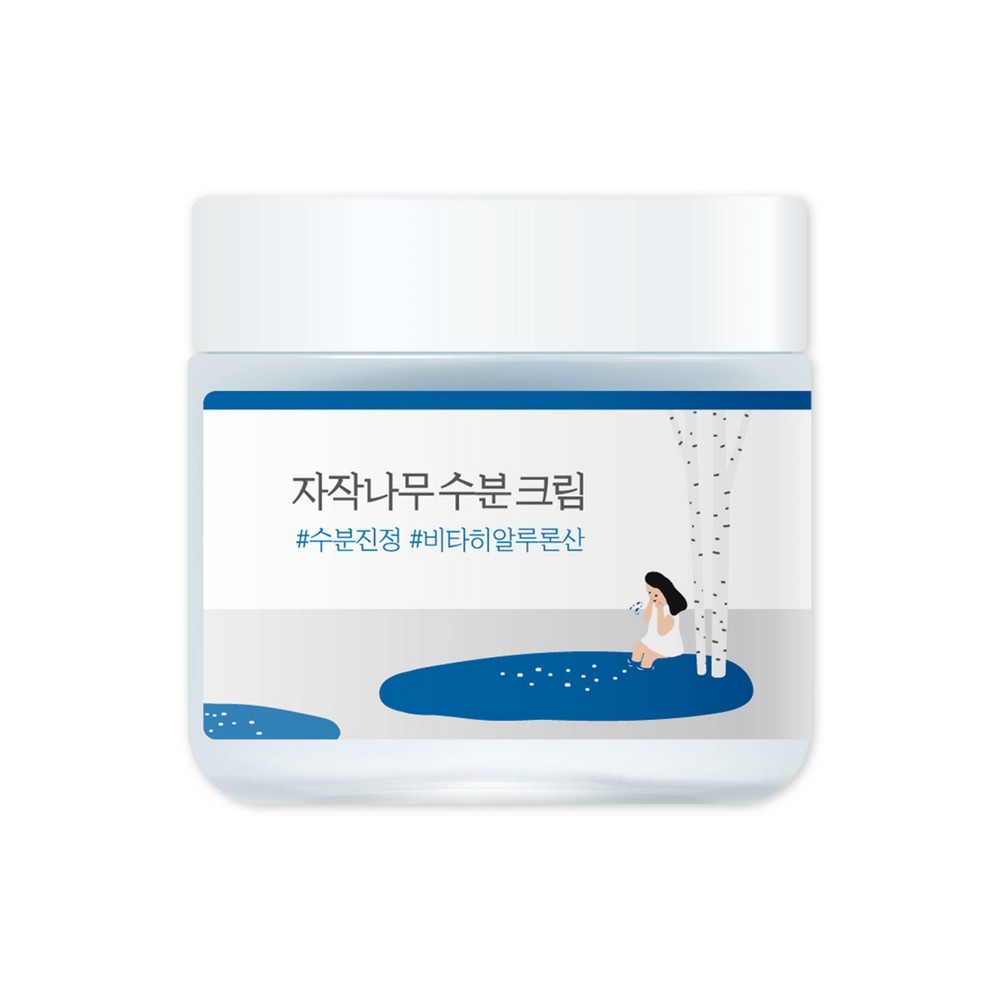


Round Lab Birch Juice Moisturizing Cream Korean Skincare for Long-Lasting Hydration and Skin Barrier Repair - 80ml
Analysis updated August 2026 · How Scout scores
At a glance
Summary
This moisturizer contains a variety of beneficial ingredients such as glycerin, jojoba esters, and hyaluronic acid, which are known for their excellent moisturizing and skin-conditioning properties. The inclusion of natural extracts like Betula Platyphylla Japonica Juice and Hydrolyzed Hibiscus Esculentus Extract adds to its appeal by providing antioxidants and soothing benefits. However, the presence of synthetic polymers and acrylates indicates a moderate level of processing, which slightly impacts the overall score.
Key ingredients 38
Jojoba EstersVery Good
Jojoba Esters are derived from jojoba oil and provide excellent moisturizing properties. They mimic the skin's natural oils, making them highly compatible with the skin. They are non-comedogenic and suitable for all skin types.
Risks
There are minimal risks, though it can cause irritation in very sensitive skin.
Benefits
They provide excellent moisturizing properties and are non-comedogenic.
PanthenolVery Good
Panthenol is a form of Vitamin B5 that acts as a moisturizer and skin conditioner. It helps to improve skin hydration and elasticity. It is known for its soothing and anti-inflammatory properties.
Risks
There are minimal risks, though it can cause irritation in very sensitive skin.
Benefits
It improves skin hydration and elasticity, providing soothing benefits.
Aloe Barbadensis Flower ExtractVery Good
Aloe Barbadensis Flower Extract is known for its soothing and hydrating properties. It helps to calm irritated skin and provide moisture. It is widely used in skincare for its soothing benefits.
Risks
There are minimal risks, though it can cause irritation in very sensitive skin.
Benefits
It soothes and hydrates the skin, providing calming benefits.
Curcuma Longa (Turmeric) Root ExtractVery Good
Curcuma Longa Root Extract is known for its anti-inflammatory and antioxidant properties. It helps to soothe the skin and protect against environmental stressors. It is widely used in skincare for its beneficial properties.
Risks
There are minimal risks, though it can cause irritation in very sensitive skin.
Benefits
It provides anti-inflammatory benefits and protects the skin.
GlycerinGood
Glycerin is a humectant that attracts moisture to the skin, helping to keep it hydrated. It is widely used in skincare for its moisturizing properties. It is generally well-tolerated by most skin types.
Risks
There are minimal risks, though it can cause irritation in very sensitive skin.
Benefits
Glycerin helps to maintain skin hydration and improve skin barrier function.
Betula Platyphylla Japonica JuiceGood
Betula Platyphylla Japonica Juice is known for its hydrating and soothing properties. It is rich in minerals and antioxidants that benefit the skin. It is a natural ingredient that is generally well-tolerated.
Risks
There are minimal risks, though it can cause irritation in very sensitive skin.
Benefits
It hydrates and soothes the skin, providing antioxidant benefits.
Hydrolyzed Hibiscus Esculentus ExtractGood
Hydrolyzed Hibiscus Esculentus Extract is known for its antioxidant and anti-aging properties. It helps to improve skin elasticity and reduce the appearance of wrinkles. It is a natural ingredient that is generally well-tolerated.
Risks
There are minimal risks, though it can cause irritation in very sensitive skin.
Benefits
It provides antioxidant benefits and improves skin elasticity.
Sodium HyaluronateGood
Sodium Hyaluronate is a form of hyaluronic acid that provides excellent hydration to the skin. It helps to retain moisture and improve skin elasticity. It is widely used in skincare for its hydrating properties.
Risks
There are minimal risks, though it can cause irritation in very sensitive skin.
Benefits
It provides excellent hydration and improves skin elasticity.
Hyaluronic AcidGood
Hyaluronic Acid is a powerful humectant that attracts and retains moisture in the skin. It helps to improve skin hydration and plumpness. It is widely used in skincare for its hydrating properties.
Risks
There are minimal risks, though it can cause irritation in very sensitive skin.
Benefits
It attracts and retains moisture, improving skin hydration and plumpness.
Lupinus Albus Seed ExtractGood
Lupinus Albus Seed Extract is known for its antioxidant and skin-conditioning properties. It helps to improve skin texture and protect against environmental stressors. It is a natural ingredient that is generally well-tolerated.
Risks
There are minimal risks, though it can cause irritation in very sensitive skin.
Benefits
It provides antioxidant benefits and improves skin texture.
Moringa Oleifera Seed ExtractGood
Moringa Oleifera Seed Extract is rich in antioxidants and nutrients that benefit the skin. It helps to protect against environmental stressors and improve skin health. It is a natural ingredient that is generally well-tolerated.
Risks
There are minimal risks, though it can cause irritation in very sensitive skin.
Benefits
It provides antioxidant benefits and improves skin health.
Melia Azadirachta Leaf ExtractGood
Melia Azadirachta Leaf Extract is known for its antibacterial and anti-inflammatory properties. It helps to soothe and protect the skin from environmental stressors. It is a natural ingredient that is generally well-tolerated.
Risks
There are minimal risks, though it can cause irritation in very sensitive skin.
Benefits
It provides antibacterial benefits and soothes the skin.
Melia Azadirachta Flower ExtractGood
Melia Azadirachta Flower Extract is known for its soothing and skin-conditioning properties. It helps to improve skin texture and protect against environmental stressors. It is a natural ingredient that is generally well-tolerated.
Risks
There are minimal risks, though it can cause irritation in very sensitive skin.
Benefits
It provides soothing benefits and improves skin texture.
Coccinia Indica Fruit ExtractGood
Coccinia Indica Fruit Extract is rich in antioxidants and nutrients that benefit the skin. It helps to protect against environmental stressors and improve skin health. It is a natural ingredient that is generally well-tolerated.
Risks
There are minimal risks, though it can cause irritation in very sensitive skin.
Benefits
It provides antioxidant benefits and improves skin health.
Solanum Melongena (Eggplant) Fruit ExtractGood
Solanum Melongena Fruit Extract is rich in antioxidants and nutrients that benefit the skin. It helps to protect against environmental stressors and improve skin health. It is a natural ingredient that is generally well-tolerated.
Risks
There are minimal risks, though it can cause irritation in very sensitive skin.
Benefits
It provides antioxidant benefits and improves skin health.
Ocimum Sanctum Leaf ExtractGood
Ocimum Sanctum Leaf Extract is known for its antibacterial and anti-inflammatory properties. It helps to soothe and protect the skin from environmental stressors. It is a natural ingredient that is generally well-tolerated.
Risks
There are minimal risks, though it can cause irritation in very sensitive skin.
Benefits
It provides antibacterial benefits and soothes the skin.
Corallina Officinalis ExtractGood
Corallina Officinalis Extract is rich in minerals and nutrients that benefit the skin. It helps to protect against environmental stressors and improve skin health. It is a natural ingredient that is generally well-tolerated.
Risks
There are minimal risks, though it can cause irritation in very sensitive skin.
Benefits
It provides mineral benefits and improves skin health.
Ascorbic AcidGood
Ascorbic Acid, also known as Vitamin C, is a powerful antioxidant that helps to brighten the skin and reduce signs of aging. It protects against environmental damage and improves skin tone. It is widely used in skincare for its brightening and protective properties.
Risks
There are minimal risks, though it can cause irritation in very sensitive skin.
Benefits
It brightens the skin and provides antioxidant protection.
Dipotassium GlycyrrhizateGood
Dipotassium Glycyrrhizate is derived from licorice root and is known for its soothing and anti-inflammatory properties. It helps to calm irritated skin and improve skin texture. It is generally well-tolerated and beneficial for sensitive skin.
Risks
There are minimal risks, though it can cause irritation in very sensitive skin.
Benefits
It soothes and calms irritated skin, providing anti-inflammatory benefits.
WaterNeutral
Water is a common solvent used in cosmetics to dissolve other ingredients. It helps in the application and absorption of the product. It does not provide direct benefits or risks.
Risks
There are no significant risks associated with water in cosmetics.
Benefits
Water helps in the application and absorption of the product.
Isononyl IsononanoateNeutral
Isononyl Isononanoate is an emollient that helps to soften and smooth the skin. It is used to improve the texture and feel of skincare products. It is generally considered safe for use in cosmetics.
Risks
There are minimal risks, though it can cause irritation in sensitive skin.
Benefits
It provides a smooth application and helps to soften the skin.
IsododecaneNeutral
Isododecane is used as an emollient and solvent in cosmetics, providing a lightweight feel. It helps to improve the spreadability of products. It is generally considered safe for use in cosmetics.
Risks
There are minimal risks, though it can cause irritation in sensitive skin.
Benefits
It provides a lightweight feel and improves product spreadability.
1,2-HexanediolNeutral
1,2-Hexanediol is used as a preservative and humectant in cosmetics. It helps to maintain product stability and moisture. It is generally considered safe for use in cosmetics.
Risks
There are minimal risks, though it can cause irritation in sensitive skin.
Benefits
It helps to maintain product stability and moisture.
Pentylene GlycolNeutral
Pentylene Glycol is a humectant and solvent that helps to retain moisture in the skin. It also enhances the penetration of other ingredients. It is generally considered safe for use in cosmetics.
Risks
There are minimal risks, though it can cause irritation in sensitive skin.
Benefits
It helps to retain moisture and enhance ingredient penetration.
PolydeceneNeutral
Polydecene is an emollient that provides a silky feel to the skin. It helps to improve the texture and spreadability of products. It is generally considered safe for use in cosmetics.
Risks
There are minimal risks, though it can cause irritation in sensitive skin.
Benefits
It provides a silky feel and improves product texture.
Glyceryl GlucosideNeutral
Glyceryl Glucoside is a humectant that helps to retain moisture in the skin. It is used to enhance the moisturizing properties of skincare products. It is generally considered safe for use in cosmetics.
Risks
There are minimal risks, though it can cause irritation in sensitive skin.
Benefits
It helps to retain moisture and enhance moisturizing properties.
Acacia Senegal GumNeutral
Acacia Senegal Gum is used as a thickening agent in cosmetics. It helps to improve the texture and stability of products. It is generally considered safe for use in cosmetics.
Risks
There are minimal risks, though it can cause irritation in sensitive skin.
Benefits
It improves product texture and stability.
Pentaerythrityl TetraethylhexanoateNeutral
Pentaerythrityl Tetraethylhexanoate is an emollient that helps to soften and smooth the skin. It is used to improve the texture and feel of skincare products. It is generally considered safe for use in cosmetics.
Risks
There are minimal risks, though it can cause irritation in sensitive skin.
Benefits
It provides a smooth application and helps to soften the skin.
Ammonium Acryloyldimethyltaurate/VP CopolymerNeutral
Ammonium Acryloyldimethyltaurate/VP Copolymer is used as a thickening agent in cosmetics. It helps to improve the texture and stability of products. It is generally considered safe for use in cosmetics.
Risks
There are minimal risks, though it can cause irritation in sensitive skin.
Benefits
It improves product texture and stability.
Polyglyceryl-3 Methylglucose DistearateNeutral
Polyglyceryl-3 Methylglucose Distearate is an emulsifier that helps to blend oil and water-based ingredients. It improves the texture and stability of skincare products. It is generally considered safe for use in cosmetics.
Risks
There are minimal risks, though it can cause irritation in sensitive skin.
Benefits
It improves product texture and stability by blending ingredients.
TromethamineNeutral
Tromethamine is used as a pH adjuster in cosmetics. It helps to maintain the stability and effectiveness of the product. It is generally considered safe for use in cosmetics.
Risks
There are minimal risks, though it can cause irritation in sensitive skin.
Benefits
It helps to maintain product stability and effectiveness.
Glyceryl Acrylate/Acrylic Acid CopolymerNeutral
Glyceryl Acrylate/Acrylic Acid Copolymer is used as a film-forming agent in cosmetics. It helps to improve the texture and feel of products. It is generally considered safe for use in cosmetics.
Risks
There are minimal risks, though it can cause irritation in sensitive skin.
Benefits
It improves product texture and feel.
EthylhexylglycerinNeutral
Ethylhexylglycerin is used as a preservative and skin-conditioning agent in cosmetics. It helps to enhance the effectiveness of other preservatives. It is generally considered safe for use in cosmetics.
Risks
There are minimal risks, though it can cause irritation in sensitive skin.
Benefits
It enhances preservative effectiveness and conditions the skin.
AgarNeutral
Agar is used as a thickening agent in cosmetics. It helps to improve the texture and stability of products. It is generally considered safe for use in cosmetics.
Risks
There are minimal risks, though it can cause irritation in sensitive skin.
Benefits
It improves product texture and stability.
Glyceryl CaprylateNeutral
Glyceryl Caprylate is used as an emulsifier and skin-conditioning agent in cosmetics. It helps to blend ingredients and improve product texture. It is generally considered safe for use in cosmetics.
Risks
There are minimal risks, though it can cause irritation in sensitive skin.
Benefits
It blends ingredients and improves product texture.
Butylene GlycolNeutral
Butylene Glycol is a humectant that helps to retain moisture in the skin. It also enhances the penetration of other ingredients. It is generally considered safe for use in cosmetics.
Risks
There are minimal risks, though it can cause irritation in sensitive skin.
Benefits
It helps to retain moisture and enhance ingredient penetration.
Acrylates/C10-30 Alkyl Acrylate CrosspolymerBad
Processed additive flagged under Scout's ingredient doctrine.
Risks
There are minimal risks, though it can cause irritation in sensitive skin.
Benefits
It improves product texture and consistency.
Disodium EDTABad
Processed additive flagged under Scout's ingredient doctrine.
Risks
There are minimal risks, though it can cause irritation in sensitive skin.
Benefits
It improves product stability and effectiveness.
Get the full breakdown in the Scout appTake Scout shopping
Scan any product to see lab results, healthy alternatives, and your personalized analysis.
Download on theApp Store GET IT ONGoogle PlayAmazon pricing & content
Amazon price as of . Product prices and availability are accurate as of the date/time indicated and are subject to change. Any price and availability information displayed on Amazon.com at the time of purchase will apply to the purchase of this product.
CERTAIN CONTENT THAT APPEARS ON THIS SITE COMES FROM AMAZON. THIS CONTENT IS PROVIDED “AS IS” AND IS SUBJECT TO CHANGE OR REMOVAL AT ANY TIME.