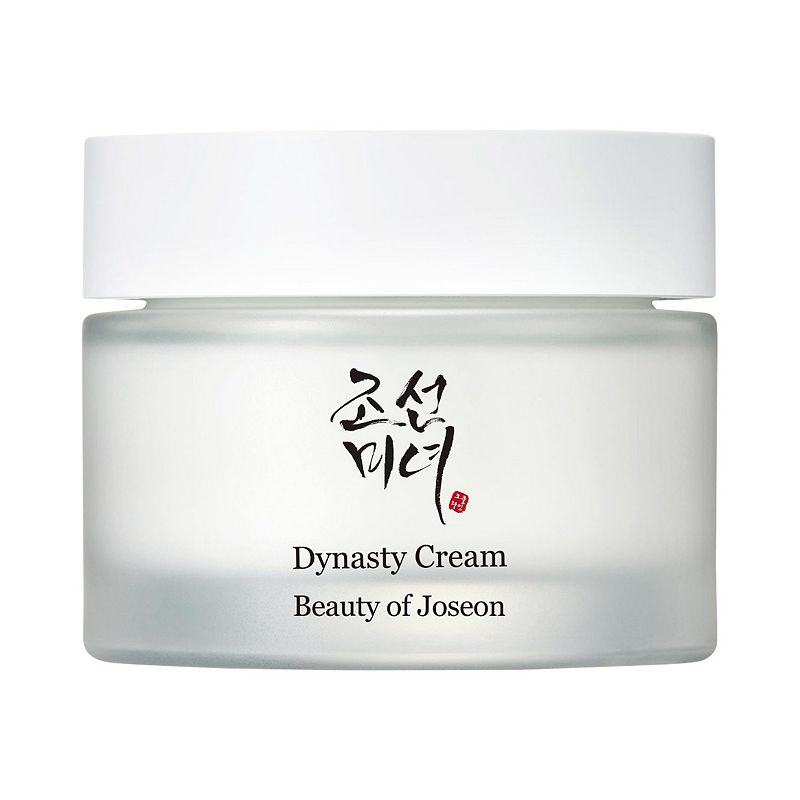
[ Beauty of Joseon ] Dynasty Cream 50ml / 1.69 fl.oz.
At a glance
Summary
This moisturizer contains a variety of beneficial ingredients such as niacinamide, squalane, and rice bran water, which are known for their moisturizing and skin-rejuvenating properties. The formulation is largely composed of natural and skin-friendly components, with minimal synthetic additives. The presence of acrylates and a copolymer is a minor concern, but overall, the product maintains a clean label with a focus on natural extracts and effective skin actives.
Key ingredients 34
SqualaneVery Good
Squalane is a highly effective emollient that mimics the skin's natural oils. It helps to moisturize and protect the skin without leaving a greasy residue.
Risks
Squalane is generally safe, with minimal risk of irritation.
Benefits
It provides excellent moisturizing and protective benefits for the skin.
Carthamus Tinctorius (Safflower) Seed OilVery Good
Safflower seed oil is rich in linoleic acid, which helps to moisturize and nourish the skin. It is known for its ability to improve skin texture and reduce inflammation.
Risks
There are minimal risks, though some individuals may experience mild irritation.
Benefits
It moisturizes, nourishes, and reduces inflammation in the skin.
AdenosineVery Good
Adenosine is known for its anti-aging properties, helping to reduce the appearance of wrinkles and fine lines. It also has soothing and skin-restoring benefits.
Risks
Adenosine is generally safe, with minimal risk of irritation.
Benefits
It reduces wrinkles and has soothing, skin-restoring benefits.
Hydrolyzed Hyaluronic AcidVery Good
Hydrolyzed hyaluronic acid has a smaller molecular size, allowing it to penetrate deeper into the skin. It provides intense hydration and helps improve skin elasticity.
Risks
It is generally safe, with minimal risk of irritation.
Benefits
It provides deep hydration and improves skin elasticity.
Oryza Sativa (Rice) Bran WaterGood
Rice bran water is known for its moisturizing and soothing properties. It contains antioxidants that can help protect the skin from environmental damage.
Risks
There are minimal risks associated with rice bran water, though some individuals may experience mild irritation.
Benefits
It provides moisturizing and antioxidant benefits to the skin.
GlycerinGood
Glycerin is a humectant that attracts moisture to the skin, helping to keep it hydrated. It is widely used in skincare for its ability to improve skin barrier function.
Risks
Glycerin is generally safe, but in rare cases, it may cause irritation if used in high concentrations.
Benefits
It helps to hydrate the skin and improve its barrier function.
Panax Ginseng Root WaterGood
Ginseng root water is known for its anti-aging and revitalizing properties. It can help improve skin elasticity and reduce the appearance of fine lines.
Risks
There are minimal risks, though some individuals may experience mild irritation.
Benefits
It provides anti-aging benefits and helps improve skin elasticity.
NiacinamideGood
Niacinamide is a form of Vitamin B3 that is known for its ability to improve skin tone and texture. It helps reduce the appearance of pores and fine lines.
Risks
Niacinamide is generally well-tolerated, but high concentrations may cause mild irritation.
Benefits
It improves skin tone, texture, and reduces the appearance of pores.
Cetearyl OlivateGood
Cetearyl olivate is an emulsifier derived from olive oil, known for its moisturizing properties. It helps to stabilize formulations and improve skin hydration.
Risks
There are minimal risks associated with cetearyl olivate.
Benefits
It provides moisturizing benefits and stabilizes formulations.
Sorbitan OlivateGood
Sorbitan olivate is an emulsifier that helps blend oil and water-based ingredients. It is derived from olive oil and provides moisturizing benefits.
Risks
There are minimal risks associated with sorbitan olivate.
Benefits
It helps blend ingredients and provides moisturizing benefits.
Hydrogenated Coconut OilGood
Hydrogenated coconut oil is used as an emollient to moisturize and soften the skin. It helps to improve skin barrier function and prevent moisture loss.
Risks
There are minimal risks, though some individuals may experience mild irritation.
Benefits
It moisturizes and improves skin barrier function.
Caprylic/Capric TriglycerideGood
This ingredient is used as an emollient and skin-conditioning agent. It helps to moisturize and improve the texture of the skin.
Risks
There are minimal risks, though some individuals may experience mild irritation.
Benefits
It moisturizes and improves skin texture.
Hyaluronic AcidGood
Hyaluronic acid is a powerful humectant that attracts and retains moisture in the skin. It helps to plump and hydrate the skin, reducing the appearance of fine lines.
Risks
Hyaluronic acid is generally safe, with minimal risk of irritation.
Benefits
It hydrates and plumps the skin, reducing fine lines.
Sodium HyaluronateGood
Sodium hyaluronate is a salt form of hyaluronic acid that is easily absorbed by the skin. It provides excellent hydration and helps to maintain skin moisture balance.
Risks
It is generally safe, with minimal risk of irritation.
Benefits
It provides excellent hydration and maintains moisture balance.
Honey ExtractGood
Honey extract is known for its moisturizing and soothing properties. It contains antioxidants that help protect the skin from environmental damage.
Risks
There are minimal risks, though some individuals may experience mild irritation.
Benefits
It moisturizes, soothes, and provides antioxidant protection.
Ceramide NPGood
Ceramide NP is a lipid that helps to restore the skin's natural barrier. It improves skin hydration and protects against environmental stressors.
Risks
Ceramide NP is generally safe, with minimal risk of irritation.
Benefits
It restores the skin barrier and improves hydration.
Hydrogenated LecithinGood
Hydrogenated lecithin is used as an emollient and emulsifier in cosmetics. It helps to moisturize and improve the texture of the skin.
Risks
There are minimal risks, though some individuals may experience mild irritation.
Benefits
It moisturizes and improves skin texture.
Coptis Japonica Root ExtractGood
Coptis japonica root extract is known for its anti-inflammatory and antioxidant properties. It helps to soothe and protect the skin from environmental damage.
Risks
There are minimal risks, though some individuals may experience mild irritation.
Benefits
It soothes and protects the skin with its antioxidant properties.
Raphanus Sativus (Radish) Seed ExtractGood
Radish seed extract is rich in vitamins and minerals that nourish the skin. It provides antioxidant protection and helps to improve skin texture.
Risks
There are minimal risks, though some individuals may experience mild irritation.
Benefits
It nourishes the skin and provides antioxidant protection.
Lycium Chinense Fruit ExtractGood
Lycium chinense fruit extract, also known as goji berry, is rich in antioxidants and vitamins. It helps to protect the skin from environmental damage and improve skin tone.
Risks
There are minimal risks, though some individuals may experience mild irritation.
Benefits
It protects the skin and improves skin tone with its antioxidant content.
Theobroma Cacao (Cocoa) Seed ExtractGood
Cocoa seed extract is rich in antioxidants and has moisturizing properties. It helps to protect the skin from environmental damage and improve skin texture.
Risks
There are minimal risks, though some individuals may experience mild irritation.
Benefits
It moisturizes and protects the skin with its antioxidant properties.
Phellinus Linteus ExtractGood
Phellinus linteus extract is known for its antioxidant and anti-inflammatory properties. It helps to soothe the skin and protect it from environmental stressors.
Risks
There are minimal risks, though some individuals may experience mild irritation.
Benefits
It soothes and protects the skin with its antioxidant properties.
Scutellaria Baicalensis Root ExtractGood
Scutellaria baicalensis root extract is known for its anti-inflammatory and antioxidant properties. It helps to soothe and protect the skin from environmental damage.
Risks
There are minimal risks, though some individuals may experience mild irritation.
Benefits
It soothes and protects the skin with its antioxidant properties.
WaterNeutral
Water is a common solvent used in cosmetics to dissolve other ingredients. It helps in the application and absorption of the product. It does not provide any direct benefits or risks.
Risks
There are no significant risks associated with water in cosmetics.
Benefits
Water helps in the application and absorption of the product.
Butylene GlycolNeutral
Butylene glycol is a common solvent and conditioning agent in cosmetics. It helps improve the texture and spreadability of products.
Risks
In rare cases, it may cause mild irritation or allergic reactions.
Benefits
It improves product texture and spreadability.
PropanediolNeutral
Propanediol is used as a solvent and skin-conditioning agent. It enhances the absorption of other ingredients in the formulation.
Risks
Propanediol is generally safe, but may cause mild irritation in sensitive individuals.
Benefits
It enhances ingredient absorption and conditions the skin.
Ammonium Acryloyldimethyltaurate/VP CopolymerNeutral
This copolymer is used as a thickening agent in cosmetics. It helps to improve the texture and stability of formulations.
Risks
There are minimal risks, though some individuals may experience mild irritation.
Benefits
It improves texture and stability of formulations.
Xanthan GumNeutral
Xanthan gum is a natural thickening agent used to stabilize cosmetic formulations. It helps to improve the texture and consistency of products.
Risks
Xanthan gum is generally safe, but may cause mild irritation in sensitive individuals.
Benefits
It stabilizes formulations and improves product texture.
TromethamineNeutral
Tromethamine is used as a pH adjuster in cosmetic formulations. It helps to maintain the stability and effectiveness of the product.
Risks
There are minimal risks, though some individuals may experience mild irritation.
Benefits
It helps maintain product stability and effectiveness.
Glyceryl Acrylate/Acrylic Acid CopolymerNeutral
This copolymer is used as a film-forming agent in cosmetics. It helps to improve the texture and longevity of products on the skin.
Risks
There are minimal risks, though some individuals may experience mild irritation.
Benefits
It improves texture and longevity of products on the skin.
EthylhexylglycerinNeutral
Ethylhexylglycerin is used as a preservative and skin-conditioning agent. It helps to enhance the effectiveness of other preservatives in the formulation.
Risks
There are minimal risks, though some individuals may experience mild irritation.
Benefits
It enhances preservative effectiveness and conditions the skin.
DextrinNeutral
Dextrin is used as a binding agent in cosmetics. It helps to improve the texture and consistency of products.
Risks
There are minimal risks, though some individuals may experience mild irritation.
Benefits
It improves product texture and consistency.
Acrylates/C10-30 Alkyl Acrylate CrosspolymerBad
Processed additive flagged under Scout's ingredient doctrine.
Risks
There are minimal risks, though some individuals may experience mild irritation.
Benefits
It enhances texture and spreadability of products.
Disodium EDTABad
Processed additive flagged under Scout's ingredient doctrine.
Risks
There are minimal risks, though some individuals may experience mild irritation.
Benefits
It improves product stability by binding metal ions.
Processing
Processed Foods
Get the full breakdown in the Scout appTake Scout shopping
Scan any product to see lab results, healthy alternatives, and your personalized analysis.
Amazon pricing & content
Amazon price as of . Product prices and availability are accurate as of the date/time indicated and are subject to change. Any price and availability information displayed on Amazon.com at the time of purchase will apply to the purchase of this product.
CERTAIN CONTENT THAT APPEARS ON THIS SITE COMES FROM AMAZON. THIS CONTENT IS PROVIDED “AS IS” AND IS SUBJECT TO CHANGE OR REMOVAL AT ANY TIME.