
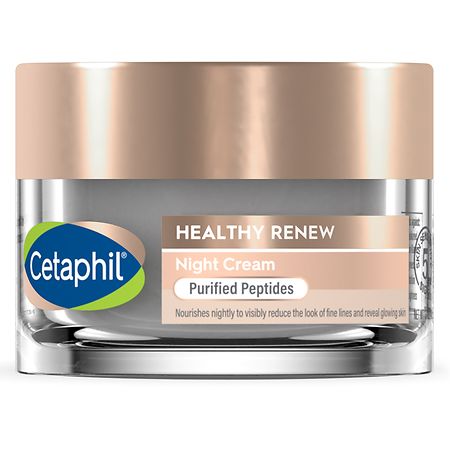

Cetaphil Healthy Renew Night Face Cream - 1.7oz
Analysis updated August 2026 · How Scout scores
At a glance
Summary
This moisturizer contains beneficial ingredients such as panthenol, glycerin, beeswax, niacinamide, and shea butter, which are known for their moisturizing and skin-soothing properties. The product avoids harsh chemicals and includes natural extracts like thyme and rice lees, contributing to its skin-friendly profile. However, the presence of some synthetic emulsifiers and preservatives, along with its processed nature, slightly reduces its overall rating.
Key ingredients 37
PanthenolVery Good
Panthenol is a provitamin of B5 known for its moisturizing and skin-soothing properties. It helps to improve skin hydration and elasticity. It is widely used in cosmetics for its beneficial effects on the skin.
Risks
There are no significant risks associated with panthenol.
Benefits
Panthenol improves skin hydration and soothes irritation.
BeeswaxVery Good
Beeswax is a natural wax that provides a protective barrier on the skin. It helps to lock in moisture and has emollient properties. It is considered safe and beneficial for skin care.
Risks
There are no significant risks associated with beeswax.
Benefits
Beeswax provides a protective barrier and locks in moisture.
Butyrospermum Parkii (Shea) ButterVery Good
Shea Butter is a natural fat extracted from the nuts of the shea tree. It is known for its moisturizing and anti-inflammatory properties. It is widely used in skincare for its ability to nourish and protect the skin.
Risks
There are no significant risks associated with shea butter.
Benefits
Shea Butter nourishes and protects the skin, providing deep moisture.
GlycerinGood
Glycerin is a humectant that attracts moisture to the skin, improving hydration. It is widely used in cosmetics for its moisturizing properties. It is considered safe and beneficial for most skin types.
Risks
There are no significant risks associated with glycerin.
Benefits
Glycerin attracts moisture to the skin, enhancing hydration.
NiacinamideGood
Niacinamide is a form of Vitamin B3 known for its anti-inflammatory and skin-brightening properties. It helps to improve skin texture and reduce the appearance of pores. It is widely used in skincare for its multiple benefits.
Risks
There are no significant risks associated with niacinamide.
Benefits
Niacinamide improves skin texture and reduces inflammation.
Tocopheryl AcetateGood
Beneficial ingredient — whole-food or functional value in this product class.
Risks
There are no significant risks associated with this ingredient.
Benefits
It provides antioxidant protection against free radicals.
WaterNeutral
Water is a common solvent used in cosmetics to dissolve other ingredients. It helps in the application and absorption of the product. It does not have any direct benefits or risks.
Risks
There are no known risks associated with water in cosmetics.
Benefits
Water helps in the application and absorption of the product.
PropanediolNeutral
Propanediol is used as a solvent and skin-conditioning agent. It helps to improve the texture and feel of the product. It is generally considered safe for use in cosmetics.
Risks
There are minimal risks, though some individuals may experience irritation.
Benefits
Propanediol can enhance the texture and moisture retention of the skin.
Cetyl EthylhexanoateNeutral
Cetyl Ethylhexanoate is an emollient that helps to soften and smooth the skin. It is commonly used in cosmetics for its non-greasy feel. It is considered safe for use in personal care products.
Risks
There are no significant risks associated with this ingredient.
Benefits
It provides a smooth, non-greasy feel to the skin.
Dibutyl AdipateNeutral
Dibutyl Adipate is used as a plasticizer and emollient in cosmetics. It helps to improve the spreadability of the product. It is generally regarded as safe for use in cosmetics.
Risks
There are minimal risks, though some individuals may experience mild irritation.
Benefits
It enhances the spreadability and texture of the product.
Hydrogenated PolydeceneNeutral
Hydrogenated Polydecene is used as an emollient and skin-conditioning agent. It provides a silky feel and helps to lock in moisture. It is considered safe for use in cosmetics.
Risks
There are no significant risks associated with this ingredient.
Benefits
It provides a silky feel and helps to retain moisture in the skin.
Coco-Caprylate/CaprateNeutral
Coco-Caprylate/Caprate is an emollient derived from coconut oil and caprylic acid. It is used to improve the spreadability and absorption of the product. It is considered safe for use in cosmetics.
Risks
There are minimal risks, though some individuals may experience mild irritation.
Benefits
It enhances the spreadability and absorption of the product.
Polyglyceryl-6 StearateNeutral
Polyglyceryl-6 Stearate is an emulsifier used to stabilize formulations. It helps to blend oil and water components in the product. It is considered safe for use in cosmetics.
Risks
There are no significant risks associated with this ingredient.
Benefits
It helps to stabilize formulations by blending oil and water.
Cetearyl AlcoholNeutral
Cetearyl Alcohol is a fatty alcohol used as an emollient and emulsifier. It helps to stabilize and thicken formulations. It is considered safe for use in cosmetics.
Risks
There are no significant risks associated with this ingredient.
Benefits
It stabilizes and thickens formulations, improving texture.
Palmitic AcidNeutral
Palmitic Acid is a fatty acid used as an emollient and surfactant. It helps to improve the texture and feel of the product. It is considered safe for use in cosmetics.
Risks
There are no significant risks associated with this ingredient.
Benefits
It improves the texture and feel of the product.
Stearic AcidNeutral
Stearic Acid is a fatty acid used as an emulsifier and thickener. It helps to stabilize formulations and improve texture. It is considered safe for use in cosmetics.
Risks
There are no significant risks associated with this ingredient.
Benefits
It stabilizes formulations and improves texture.
Glyceryl StearateNeutral
Glyceryl Stearate is an emulsifier that helps to blend oil and water components. It improves the texture and stability of the product. It is considered safe for use in cosmetics.
Risks
There are no significant risks associated with this ingredient.
Benefits
It improves texture and stability by blending oil and water.
Sodium Acrylate/Sodium Acryloyldimethyl Taurate CopolymerNeutral
This copolymer is used as a thickening agent and stabilizer in cosmetics. It helps to improve the texture and consistency of the product. It is considered safe for use in cosmetics.
Risks
There are no significant risks associated with this ingredient.
Benefits
It improves texture and consistency, enhancing product stability.
Caprylyl GlycolNeutral
Caprylyl Glycol is used as a skin-conditioning agent and preservative. It helps to improve the moisture content of the skin. It is considered safe for use in cosmetics.
Risks
There are no significant risks associated with this ingredient.
Benefits
It improves skin moisture content and acts as a preservative.
IsohexadecaneNeutral
Isohexadecane is used as an emollient and solvent in cosmetics. It provides a lightweight, non-greasy feel to the product. It is considered safe for use in cosmetics.
Risks
There are no significant risks associated with this ingredient.
Benefits
It provides a lightweight, non-greasy feel to the product.
Leontopodium Alpinum ExtractNeutral
Leontopodium Alpinum Extract, also known as Edelweiss extract, is used for its antioxidant properties. It helps to protect the skin from environmental stressors. It is considered safe for use in cosmetics.
Risks
There are no significant risks associated with this ingredient.
Benefits
It provides antioxidant protection against environmental stressors.
Polyglyceryl-6 BehenateNeutral
Polyglyceryl-6 Behenate is an emulsifier used to stabilize formulations. It helps to blend oil and water components in the product. It is considered safe for use in cosmetics.
Risks
There are no significant risks associated with this ingredient.
Benefits
It helps to stabilize formulations by blending oil and water.
EthylhexylglycerinNeutral
Ethylhexylglycerin is used as a skin-conditioning agent and preservative. It enhances the efficacy of other preservatives in the formulation. It is considered safe for use in cosmetics.
Risks
There are no significant risks associated with this ingredient.
Benefits
It enhances preservative efficacy and conditions the skin.
CarbomerNeutral
Carbomer is used as a thickening agent and stabilizer in cosmetics. It helps to improve the texture and consistency of the product. It is considered safe for use in cosmetics.
Risks
There are no significant risks associated with this ingredient.
Benefits
It improves texture and consistency, enhancing product stability.
TromethamineNeutral
Tromethamine is used as a pH adjuster in cosmetics. It helps to maintain the stability and efficacy of the product. It is considered safe for use in cosmetics.
Risks
There are no significant risks associated with this ingredient.
Benefits
It maintains product stability by adjusting pH levels.
Hydrogenated Olive Oil UnsaponifiablesNeutral
Hydrogenated Olive Oil Unsaponifiables are used as emollients in cosmetics. They help to soften and condition the skin. They are considered safe for use in cosmetics.
Risks
There are no significant risks associated with this ingredient.
Benefits
They soften and condition the skin, providing emollient benefits.
Oryza Sativa (Rice) Lees ExtractNeutral
Rice Lees Extract is used for its antioxidant and skin-conditioning properties. It helps to protect the skin from environmental damage. It is considered safe for use in cosmetics.
Risks
There are no significant risks associated with this ingredient.
Benefits
It provides antioxidant protection and conditions the skin.
1,2-HexanediolNeutral
1,2-Hexanediol is used as a solvent and preservative in cosmetics. It helps to improve the texture and stability of the product. It is considered safe for use in cosmetics.
Risks
There are no significant risks associated with this ingredient.
Benefits
It improves texture and stability, enhancing product efficacy.
AdenosineNeutral
Adenosine is used for its anti-aging and skin-soothing properties. It helps to improve the appearance of fine lines and wrinkles. It is considered safe for use in cosmetics.
Risks
There are no significant risks associated with this ingredient.
Benefits
It improves the appearance of fine lines and soothes the skin.
Sorbitan OleateNeutral
Sorbitan Oleate is an emulsifier used to stabilize formulations. It helps to blend oil and water components in the product. It is considered safe for use in cosmetics.
Risks
There are no significant risks associated with this ingredient.
Benefits
It helps to stabilize formulations by blending oil and water.
Citric AcidNeutral
Citric Acid is used as a pH adjuster and preservative in cosmetics. It helps to maintain the stability and efficacy of the product. It is considered safe for use in cosmetics.
Risks
There are no significant risks associated with this ingredient.
Benefits
It maintains product stability by adjusting pH levels.
Hydrolyzed Soy FlourNeutral
Hydrolyzed Soy Flour is used for its skin-conditioning properties. It helps to improve the texture and feel of the skin. It is considered safe for use in cosmetics.
Risks
There are no significant risks associated with this ingredient.
Benefits
It conditions the skin, improving texture and feel.
Buddleja Davidii ExtractNeutral
Buddleja Davidii Extract is used for its antioxidant properties. It helps to protect the skin from environmental stressors. It is considered safe for use in cosmetics.
Risks
There are no significant risks associated with this ingredient.
Benefits
It provides antioxidant protection against environmental stressors.
Thymus Vulgaris (Thyme) ExtractNeutral
Thyme Extract is used for its antimicrobial and antioxidant properties. It helps to protect the skin from environmental damage. It is considered safe for use in cosmetics.
Risks
There are no significant risks associated with this ingredient.
Benefits
It provides antimicrobial and antioxidant protection.
Polysorbate 80Bad
Processed additive flagged under Scout's ingredient doctrine.
Risks
There are no significant risks associated with this ingredient.
Benefits
It helps to stabilize formulations by blending oil and water.
Sodium BenzoateBad
Synthetic preservative that can form benzene in the presence of vitamin C.
Risks
There are no significant risks associated with this ingredient.
Benefits
It prevents microbial growth, extending product shelf life.
Potassium SorbateBad
Synthetic preservative — flagged in daily-use products.
Risks
There are no significant risks associated with this ingredient.
Benefits
It prevents microbial growth, extending product shelf life.
Get the full breakdown in the Scout appTake Scout shopping
Scan any product to see lab results, healthy alternatives, and your personalized analysis.
Download on theApp Store GET IT ONGoogle PlayAmazon pricing & content
Amazon price as of . Product prices and availability are accurate as of the date/time indicated and are subject to change. Any price and availability information displayed on Amazon.com at the time of purchase will apply to the purchase of this product.
CERTAIN CONTENT THAT APPEARS ON THIS SITE COMES FROM AMAZON. THIS CONTENT IS PROVIDED “AS IS” AND IS SUBJECT TO CHANGE OR REMOVAL AT ANY TIME.