
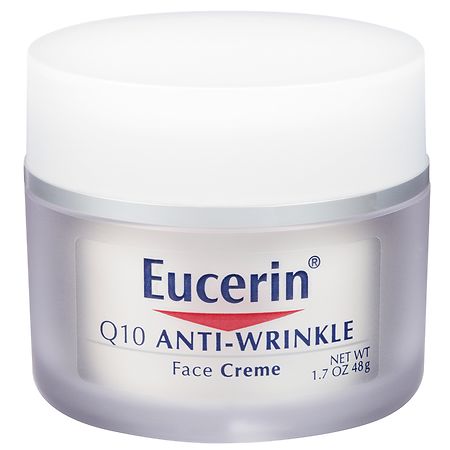



Eucerin Q10 Anti-Wrinkle Daily Face Cream with Coenzyme Q10 + Biotin Non-Comedogenic 1.7 oz
EucerinAnalysis updated September 2026 · How Scout scores
At a glance
Summary
This moisturizer contains a variety of beneficial ingredients such as glycerin, shea butter, and Coenzyme Q10, which provide hydration and antioxidant protection. The presence of phenoxyethanol as a preservative is a minor concern due to potential skin irritation, but the overall formulation is largely composed of safe and effective components. The product's ingredient list is relatively clean, with a focus on natural and skin-friendly elements, contributing to its high rating.
Key ingredients 25
Butyrospermum Parkii (Shea) ButterVery Good
Shea Butter is a natural fat extracted from the nuts of the shea tree. It is highly moisturizing and helps to soothe and protect the skin.
Risks
There are minimal risks, though it may cause allergic reactions in individuals with nut allergies.
Benefits
It deeply moisturizes and nourishes the skin, providing a protective barrier.
UbiquinoneVery Good
Ubiquinone, also known as Coenzyme Q10, is an antioxidant that helps to protect the skin from oxidative stress. It is known for its anti-aging properties.
Risks
There are minimal risks associated with this ingredient.
Benefits
It helps to reduce the appearance of fine lines and wrinkles and protects the skin from damage.
Sodium Ascorbyl PhosphateVery Good
Sodium Ascorbyl Phosphate is a stable form of Vitamin C, known for its antioxidant properties. It helps to brighten the skin and reduce signs of aging.
Risks
There are minimal risks, though it may cause irritation in very sensitive skin.
Benefits
It helps to brighten the complexion and protect the skin from environmental damage.
GlycerinGood
Glycerin is a humectant that attracts moisture to the skin, helping to keep it hydrated. It is well-tolerated by most skin types and enhances the skin's natural barrier function.
Risks
There are minimal risks associated with glycerin, though it can be sticky in high concentrations.
Benefits
Glycerin helps maintain skin hydration and improves skin barrier function.
Caprylic/Capric TriglycerideGood
Caprylic/Capric Triglyceride is an emollient derived from coconut oil and glycerin. It helps to moisturize and replenish the skin without leaving a greasy residue.
Risks
There are minimal risks associated with this ingredient.
Benefits
It provides lightweight hydration and improves skin texture.
Tocopheryl AcetateGood
Tocopheryl Acetate is a form of Vitamin E, an antioxidant that helps to protect the skin from free radical damage. It also has moisturizing properties.
Risks
There are minimal risks, though it may cause irritation in very sensitive skin.
Benefits
It helps to protect the skin from environmental damage and provides hydration.
BiotinGood
Biotin is a B-vitamin that supports skin health and helps to improve the skin's barrier function. It is often used in cosmetics for its conditioning properties.
Risks
There are minimal risks associated with biotin in topical applications.
Benefits
It helps to improve skin texture and supports overall skin health.
Beta-CaroteneGood
Beta-Carotene is a precursor to Vitamin A and has antioxidant properties. It helps to protect the skin from free radical damage and improve skin health.
Risks
There are minimal risks associated with this ingredient.
Benefits
It helps to protect the skin and improve its overall appearance.
TocopherolGood
Tocopherol, a form of Vitamin E, is an antioxidant that helps to protect the skin from oxidative stress. It also has moisturizing properties.
Risks
There are minimal risks, though it may cause irritation in very sensitive skin.
Benefits
It helps to protect the skin from environmental damage and provides hydration.
WaterNeutral
Water is a common solvent used in cosmetics to dissolve other ingredients. It helps in forming emulsions and provides hydration. It is generally considered safe and non-irritating.
Risks
There are no significant risks associated with water in cosmetics.
Benefits
Water helps in hydrating the skin and acts as a base for other ingredients.
Ethylhexyl CocoateNeutral
Ethylhexyl Cocoate is an emollient derived from coconut oil, used to soften and smooth the skin. It is generally considered safe for use in cosmetics.
Risks
There are minimal risks, though it may cause mild irritation in sensitive individuals.
Benefits
It provides a smooth application and helps to soften the skin.
Hydrogenated Coco-GlyceridesNeutral
Hydrogenated Coco-Glycerides are used as emollients and thickeners in cosmetic formulations. They help to improve the texture and feel of the product.
Risks
There are minimal risks associated with this ingredient.
Benefits
They help to moisturize and condition the skin.
Stearyl AlcoholNeutral
Stearyl Alcohol is a fatty alcohol used as an emollient and thickener in cosmetics. It helps to stabilize emulsions and improve texture.
Risks
It is generally safe, but can cause irritation in very sensitive skin.
Benefits
It provides a creamy texture and helps to soften the skin.
Butylene GlycolNeutral
Butylene Glycol is a solvent and conditioning agent that helps to improve the texture and spreadability of products. It is generally considered safe for use in cosmetics.
Risks
It may cause mild irritation in sensitive skin types.
Benefits
It helps to improve product texture and provides a smooth application.
Cetyl AlcoholNeutral
Cetyl Alcohol is a fatty alcohol used as an emollient and thickener in cosmetics. It helps to stabilize emulsions and improve texture.
Risks
It is generally safe, but can cause irritation in very sensitive skin.
Benefits
It provides a creamy texture and helps to soften the skin.
Glyceryl Stearate CitrateNeutral
Glyceryl Stearate Citrate is an emulsifier that helps to blend oil and water-based ingredients. It is generally considered safe for use in cosmetics.
Risks
There are minimal risks associated with this ingredient.
Benefits
It helps to stabilize emulsions and improve product texture.
OctyldodecanolNeutral
Octyldodecanol is a fatty alcohol used as an emollient and thickener in cosmetics. It helps to improve the texture and feel of the product.
Risks
It is generally safe, but can cause irritation in very sensitive skin.
Benefits
It provides a smooth application and helps to soften the skin.
Biosaccharide Gum-1Neutral
Biosaccharide Gum-1 is a polysaccharide used as a moisturizing and soothing agent in cosmetics. It helps to improve the texture and feel of the product.
Risks
There are minimal risks associated with this ingredient.
Benefits
It provides hydration and soothes the skin.
Zea Mays (Corn) OilNeutral
Corn Oil is used as an emollient in cosmetics, providing moisture and improving skin texture. It is generally considered safe for use.
Risks
There are minimal risks, though it may cause allergic reactions in individuals with corn allergies.
Benefits
It helps to moisturize and soften the skin.
1,2-HexanediolNeutral
1,2-Hexanediol is a solvent and preservative used in cosmetics to improve product stability. It is generally considered safe for use.
Risks
There are minimal risks associated with this ingredient.
Benefits
It helps to preserve the product and improve its texture.
CarbomerNeutral
Carbomer is a thickening agent used to stabilize and thicken cosmetic formulations. It is generally considered safe for use.
Risks
There are minimal risks, though it may cause irritation in very sensitive skin.
Benefits
It helps to improve product texture and stability.
Sodium HydroxideNeutral
Sodium Hydroxide is used to adjust the pH of cosmetic formulations. It is used in very small amounts and is generally considered safe.
Risks
In high concentrations, it can be irritating, but it is used in safe amounts in cosmetics.
Benefits
It helps to maintain the stability and effectiveness of the product.
Trisodium EDTANeutral
Trisodium EDTA is a chelating agent used to improve the stability and efficacy of cosmetic formulations. It is generally considered safe for use.
Risks
There are minimal risks associated with this ingredient.
Benefits
It helps to enhance the stability and performance of the product.
Dehydroacetic AcidNeutral
Dehydroacetic Acid is a preservative used to prevent microbial growth in cosmetics. It is generally considered safe for use.
Risks
There are minimal risks associated with this ingredient.
Benefits
It helps to preserve the product and extend its shelf life.
PhenoxyethanolBad
Phenoxyethanol is a preservative used to prevent microbial growth in cosmetics. It has been associated with skin irritation and allergic reactions in some individuals.
Risks
It can cause irritation and allergic reactions, particularly in sensitive skin.
Benefits
It helps to preserve the product and prevent contamination.
Get the full breakdown in the Scout appTake Scout shopping
Scan any product to see lab results, healthy alternatives, and your personalized analysis.
Download on theApp Store GET IT ONGoogle PlayAmazon pricing & content
Amazon price as of . Product prices and availability are accurate as of the date/time indicated and are subject to change. Any price and availability information displayed on Amazon.com at the time of purchase will apply to the purchase of this product.
CERTAIN CONTENT THAT APPEARS ON THIS SITE COMES FROM AMAZON. THIS CONTENT IS PROVIDED “AS IS” AND IS SUBJECT TO CHANGE OR REMOVAL AT ANY TIME.