
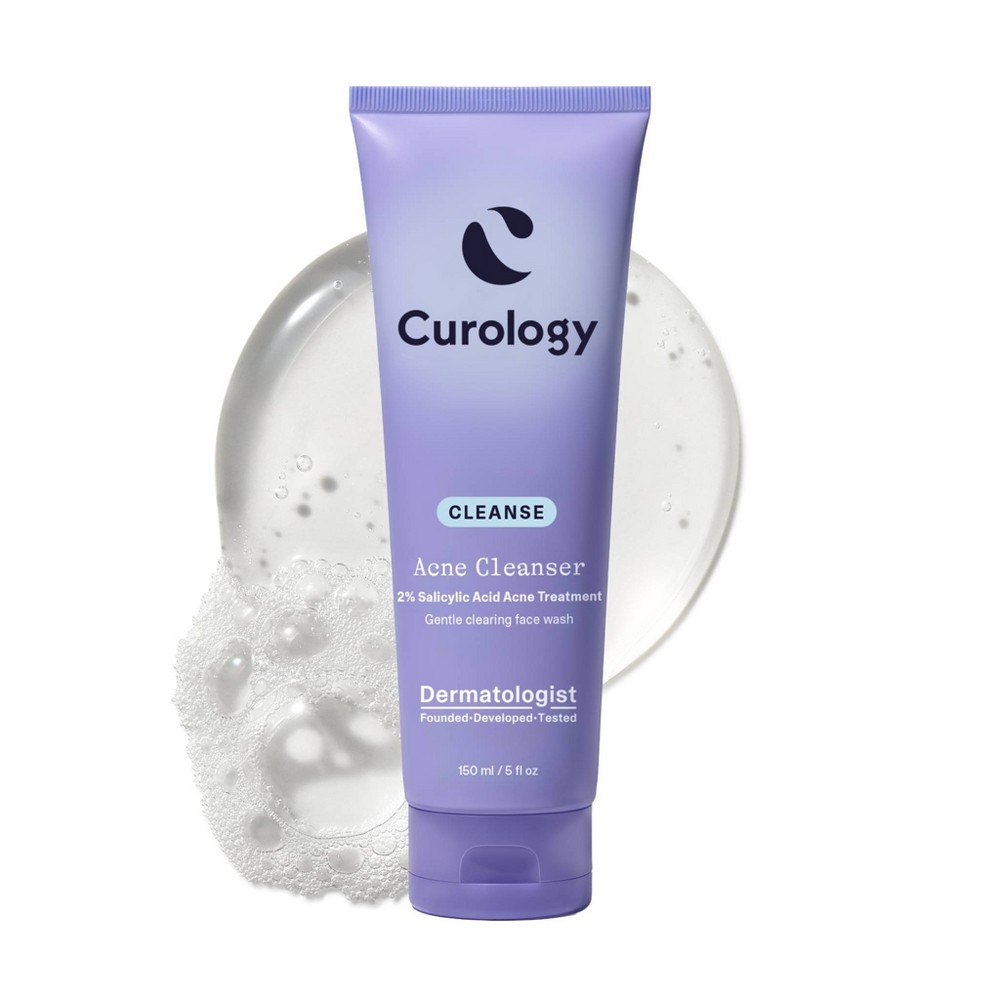

Curology Salicylic Acid Acne Cleanser - 150ml: Paraben-Free, Sulfate-Free, For Combination & Sensitive Skin
Analysis updated July 2026 · How Scout scores
At a glance
Summary
This cleanser features a gentle formulation with beneficial ingredients like sodium cocoyl glutamate and glycerin, which are known for their mild cleansing and moisturizing properties. The absence of harsh sulfates, parabens, and synthetic fragrances contributes to its suitability for sensitive skin. However, the presence of cocamidopropyl dimethylamine, while not harmful, is a synthetic ingredient that slightly affects the overall natural profile of the product.
Key ingredients 8
Sodium Cocoyl GlutamateGood
Sodium Cocoyl Glutamate is a mild surfactant derived from coconut oil and glutamic acid. It is known for its gentle cleansing properties and is suitable for sensitive skin. It helps maintain the skin's natural barrier.
Risks
There are minimal risks associated with this ingredient, making it suitable for sensitive skin.
Benefits
It effectively cleanses the skin while being gentle and non-irritating.
GlycerinGood
Glycerin is a humectant that attracts moisture to the skin. It helps maintain skin hydration and improves skin barrier function. It is widely used in skincare for its moisturizing properties.
Risks
There are no significant risks associated with glycerin in cosmetic formulations.
Benefits
It provides excellent hydration and helps keep the skin soft and supple.
WaterNeutral
Water is a common solvent used in cosmetic formulations. It helps dissolve other ingredients and provides a base for the product. It is generally considered safe and non-irritating.
Risks
There are no significant risks associated with water in cosmetic products.
Benefits
Water hydrates the skin and helps in the application of the product.
Cocamidopropyl HydroxysultaineNeutral
Cocamidopropyl Hydroxysultaine is a mild surfactant derived from coconut oil. It is used to create foam and cleanse the skin without stripping natural oils. It is generally well-tolerated by most skin types.
Risks
In rare cases, it may cause mild irritation or allergic reactions in sensitive individuals.
Benefits
It provides gentle cleansing and helps maintain skin moisture.
Lactic AcidNeutral
Lactic Acid is an alpha hydroxy acid (AHA) used for exfoliation and improving skin texture. It helps remove dead skin cells and promotes cell turnover. It is effective in improving skin hydration and brightness.
Risks
Overuse can lead to skin irritation or increased sensitivity to sunlight.
Benefits
It enhances skin smoothness and radiance by gently exfoliating the skin.
Cocamidopropyl DimethylamineNeutral
Cocamidopropyl Dimethylamine is used as a conditioning agent in cosmetics. It helps improve the texture and feel of the product. It is generally considered safe for use in personal care products.
Risks
May cause mild irritation in sensitive individuals if used in high concentrations.
Benefits
It enhances the conditioning properties of the product, leaving skin feeling soft.
Sorbeth-230 TetraoleateNeutral
Sorbeth-230 Tetraoleate is an emulsifier used to stabilize formulations. It helps blend oil and water components in the product. It is generally considered safe for use in cosmetics.
Risks
There are minimal risks associated with this ingredient.
Benefits
It ensures the stability and consistency of the product formulation.
Caprylhydroxamic AcidNeutral
Caprylhydroxamic Acid is a preservative used to prevent microbial growth in cosmetics. It is effective in maintaining product safety and shelf life. It is considered a safer alternative to traditional preservatives.
Risks
There are minimal risks associated with this ingredient when used in appropriate concentrations.
Benefits
It helps preserve the product and ensures its safety for use over time.
Get the full breakdown in the Scout appTake Scout shopping
Scan any product to see lab results, healthy alternatives, and your personalized analysis.
Download on theApp Store GET IT ONGoogle Play