
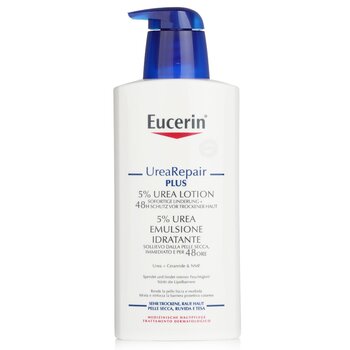


EucerinUreaRepair Plus 5% Urea Lotion 400ml
EucerinAnalysis updated July 2026 · How Scout scores
At a glance
Summary
EucerinUreaRepair Plus 5% Urea Lotion contains beneficial ingredients like urea, which is known for its moisturizing properties, and glycerin, which helps retain skin moisture. However, the presence of synthetic preservatives and emulsifiers slightly lowers its score, as these can be concerning for sensitive skin types. The product is moderately processed, but it does not contain any major harmful substances, making it a generally safe choice for skincare.
Key ingredients 33
UreaVery Good
Urea is a natural moisturizing factor that helps to retain moisture in the skin. It also has keratolytic properties, which help to exfoliate dead skin cells. It is beneficial for dry and rough skin conditions.
Risks
High concentrations can cause irritation in sensitive skin.
Benefits
Improves skin hydration and smoothness by exfoliating and moisturizing.
Butyrospermum Parkii ButterVery Good
Butyrospermum Parkii Butter, or Shea Butter, is a natural fat extracted from the nuts of the shea tree. It is known for its moisturizing and anti-inflammatory properties. It is highly beneficial for dry and irritated skin.
Risks
May cause allergic reactions in individuals with nut allergies.
Benefits
Deeply moisturizes and soothes dry, irritated skin.
GlycerinGood
Glycerin is a humectant that attracts moisture to the skin, helping to keep it hydrated. It is widely used in skincare for its moisturizing properties. It is considered safe and beneficial for most skin types.
Risks
Rarely, glycerin can cause irritation in very sensitive skin.
Benefits
Helps maintain skin hydration and improves skin barrier function.
Glyceryl GlucosideGood
Glyceryl Glucoside is known for its moisturizing properties and ability to enhance skin hydration. It helps to improve the skin's barrier function. It is considered beneficial for maintaining skin moisture.
Benefits
Enhances skin hydration and supports the skin barrier.
Caprylic/Capric TriglycerideGood
Caprylic/Capric Triglyceride is an emollient derived from coconut oil and glycerin. It helps to moisturize and condition the skin without leaving a greasy residue. It is considered safe and effective for most skin types.
Risks
Rarely, it can cause mild irritation in sensitive skin.
Benefits
Provides lightweight moisture and improves skin texture.
Ceramide NPGood
Ceramide NP is a lipid that helps to restore the skin barrier and retain moisture. It is essential for maintaining healthy skin and preventing moisture loss. It is highly beneficial for dry and sensitive skin.
Benefits
Restores the skin barrier and enhances moisture retention.
CholesterolGood
Cholesterol is a lipid that helps to maintain the skin barrier and improve hydration. It works synergistically with ceramides to enhance skin health. It is considered safe and beneficial for dry skin.
Benefits
Supports the skin barrier and improves hydration.
Chondrus Crispus ExtractGood
Chondrus Crispus Extract, also known as Irish Moss, is used for its moisturizing and soothing properties. It helps to improve skin hydration and calm irritation. It is considered safe and beneficial for sensitive skin.
Benefits
Moisturizes and soothes the skin, reducing irritation.
GlycineGood
Beneficial ingredient — whole-food or functional value in this product class.
Benefits
Conditions the skin and supports hydration.
Helianthus Annuus Seed OilGood
Helianthus Annuus Seed Oil, or sunflower seed oil, is rich in fatty acids and vitamin E. It helps to moisturize and protect the skin barrier. It is considered safe and beneficial for most skin types.
Risks
May cause allergic reactions in individuals with sunflower allergies.
Benefits
Moisturizes and protects the skin, enhancing barrier function.
Sodium PCAGood
Sodium PCA is a natural moisturizing factor that helps to retain moisture in the skin. It is effective in improving skin hydration and elasticity. It is considered safe and beneficial for dry skin.
Benefits
Enhances skin hydration and elasticity.
TocopherolGood
Tocopherol, or Vitamin E, is an antioxidant that helps to protect the skin from free radical damage. It also has moisturizing and anti-inflammatory properties. It is beneficial for maintaining healthy skin.
Risks
Rarely, it can cause irritation in very sensitive skin.
Benefits
Protects the skin from oxidative stress and improves moisture retention.
AquaNeutral
Aqua, or water, is a common solvent used in cosmetic formulations. It helps dissolve other ingredients and provides a base for the product. It does not have any direct benefits or risks.
Benefits
Provides a base for the formulation and helps in the application of the product.
Cetearyl AlcoholNeutral
Standard formulation ingredient — neither beneficial nor harmful at typical use.
Risks
Very rarely, it can cause mild irritation in sensitive skin.
Benefits
Acts as an emollient, providing a smooth and soft texture to the skin.
Ethylhexyl CocoateNeutral
Ethylhexyl Cocoate is an emollient derived from coconut oil, used to improve the texture of skincare products. It helps to soften the skin and improve product spreadability. It is generally considered safe.
Risks
May cause mild irritation in very sensitive skin.
Benefits
Improves skin texture and product application.
Sodium LactateNeutral
Standard formulation ingredient — neither beneficial nor harmful at typical use.
Risks
Rarely, it can cause irritation in sensitive skin.
Benefits
Enhances skin hydration and helps maintain moisture balance.
OctyldodecanolNeutral
Octyldodecanol is a fatty alcohol used as an emollient and thickener in skincare products. It helps to improve the texture and spreadability of formulations. It is generally considered safe and non-irritating.
Risks
May cause mild irritation in very sensitive skin.
Benefits
Improves product texture and application.
Dicaprylyl EtherNeutral
Dicaprylyl Ether is an emollient that provides a silky feel to skincare products. It helps to improve the spreadability and absorption of formulations. It is considered safe for use in cosmetics.
Benefits
Enhances product texture and absorption.
Tapioca StarchNeutral
Tapioca Starch is used as a thickening agent and absorbent in skincare products. It helps to improve the texture and reduce greasiness. It is generally considered safe and non-irritating.
Benefits
Improves product texture and reduces greasiness.
Glyceryl Stearate SENeutral
Glyceryl Stearate SE is an emulsifier that helps to blend oil and water components in formulations. It also acts as a skin conditioning agent. It is considered safe and effective for use in cosmetics.
Benefits
Stabilizes formulations and conditions the skin.
Hydrogenated Coco-GlyceridesNeutral
Hydrogenated Coco-Glycerides are used as emollients and thickeners in skincare products. They help to improve the texture and moisturizing properties of formulations. They are generally considered safe.
Benefits
Enhances product texture and provides moisture.
AlanineNeutral
Alanine is an amino acid used in skincare for its conditioning properties. It helps to improve skin texture and hydration. It is considered safe and beneficial for skin health.
Benefits
Conditions the skin and supports hydration.
Arginine HclNeutral
Arginine Hcl is an amino acid that helps to improve skin hydration and elasticity. It is used in skincare for its conditioning properties. It is considered safe and beneficial for skin health.
Benefits
Enhances skin hydration and elasticity.
CarnitineNeutral
Carnitine is an amino acid derivative used in skincare for its conditioning properties. It helps to improve skin texture and hydration. It is considered safe and beneficial for skin health.
Benefits
Conditions the skin and supports hydration.
Lactic AcidNeutral
Standard formulation ingredient — neither beneficial nor harmful at typical use.
Risks
Can cause irritation and sensitivity, especially in high concentrations.
Benefits
Exfoliates and hydrates the skin, improving texture and tone.
Sodium Cetearyl SulfateNeutral
Sodium Cetearyl Sulfate is an emulsifier used to blend oil and water components in formulations. It helps to stabilize and thicken products. It is generally considered safe for use in cosmetics.
Risks
May cause mild irritation in very sensitive skin.
Benefits
Stabilizes formulations and improves product texture.
Sodium ChlorideNeutral
Sodium Chloride, or salt, is used as a thickening agent and stabilizer in skincare products. It helps to improve the texture and consistency of formulations. It is generally considered safe.
Benefits
Improves product texture and stability.
Methyl BenzoateNeutral
Methyl Benzoate is used as a fragrance and solvent in cosmetic formulations. It helps to improve the scent and texture of products. It is generally considered safe for use in cosmetics.
Risks
May cause irritation in sensitive skin due to fragrance properties.
Benefits
Enhances product scent and texture.
Pentylene GlycolNeutral
Pentylene Glycol is a humectant and solvent used to improve skin hydration and product stability. It helps to enhance the texture and efficacy of formulations. It is generally considered safe.
Benefits
Improves skin hydration and product stability.
Decylene GlycolNeutral
Decylene Glycol is used as a skin conditioning agent and antimicrobial in cosmetics. It helps to improve skin texture and product preservation. It is generally considered safe.
Benefits
Conditions the skin and enhances product preservation.
DimethiconeBad
Occlusive silicone film-former — flagged under clean-beauty doctrine.
Risks
May cause breakouts in acne-prone skin due to occlusive properties.
Benefits
Smooths and protects the skin, reducing moisture loss.
PhenoxyethanolBad
Phenoxyethanol is a preservative used to prevent microbial growth in cosmetics. It is effective but can cause irritation and allergic reactions in some individuals. It is considered a moderate risk ingredient.
Risks
Can cause skin irritation and allergic reactions, especially in sensitive individuals.
Benefits
Prevents microbial growth, extending product shelf life.
ParfumBad
Parfum, or fragrance, is used to add scent to cosmetic products. It can cause skin irritation and allergic reactions, especially in sensitive individuals. It is considered a high-risk ingredient due to potential sensitization.
Risks
Can cause skin irritation, allergic reactions, and sensitization.
Benefits
Enhances the scent of the product, improving user experience.
Get the full breakdown in the Scout appTake Scout shopping
Scan any product to see lab results, healthy alternatives, and your personalized analysis.
Download on theApp Store GET IT ONGoogle PlayAmazon pricing & content
Amazon price as of . Product prices and availability are accurate as of the date/time indicated and are subject to change. Any price and availability information displayed on Amazon.com at the time of purchase will apply to the purchase of this product.
CERTAIN CONTENT THAT APPEARS ON THIS SITE COMES FROM AMAZON. THIS CONTENT IS PROVIDED “AS IS” AND IS SUBJECT TO CHANGE OR REMOVAL AT ANY TIME.