
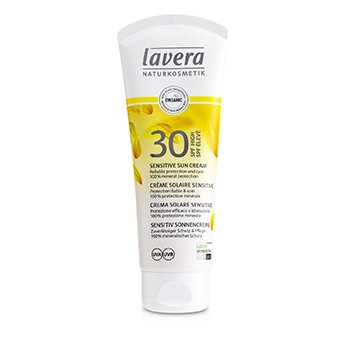

LaveraSensitive Sun Cream SPF 30 100ml/3.5oz
Analysis updated August 2026 · How Scout scores
At a glance
Summary
This sunscreen features beneficial ingredients such as zinc oxide and titanium dioxide, which are mineral UV filters known for their safety and effectiveness. The inclusion of natural oils like coconut oil and papaya extract further enhances its skin-friendly profile. However, the presence of denatured alcohol and fragrance, which can cause skin irritation, slightly detracts from its overall score.
Key ingredients 7
Cocos Nucifera (Coconut) OilVery Good
Coconut Oil is a natural oil known for its moisturizing and antibacterial properties. It helps to nourish and protect the skin. It is highly regarded in skincare for its ability to improve skin health.
Risks
May cause breakouts in acne-prone skin due to its comedogenic nature.
Benefits
Deeply moisturizes the skin and provides antibacterial benefits.
Pongamia Glabra Seed OilGood
Pongamia Glabra Seed Oil is a natural oil known for its emollient properties. It helps to moisturize and soothe the skin. It is generally considered safe and beneficial for skin health.
Risks
There are minimal risks associated with this oil, though allergic reactions are possible.
Benefits
It provides moisturizing benefits and can help soothe irritated skin.
Zinc OxideGood
Zinc Oxide is a mineral sunscreen agent that provides broad-spectrum UV protection. It is considered safe and effective for protecting the skin from sun damage. It is often used in natural and sensitive skin formulations.
Risks
There are minimal risks, though it can leave a white cast on the skin.
Benefits
Provides effective protection against UVA and UVB rays.
GlycerinGood
Glycerin is a humectant that attracts moisture to the skin. It helps to keep the skin hydrated and soft. It is widely used in skincare for its moisturizing properties.
Risks
There are minimal risks, though overuse can lead to a sticky feeling.
Benefits
Helps maintain skin hydration and improves skin barrier function.
Carica Papaya (Papaya) Fruit ExtractGood
Papaya Fruit Extract is rich in vitamins and enzymes that help exfoliate and brighten the skin. It is known for its skin-renewing properties. It is beneficial for improving skin texture and tone.
Risks
May cause irritation in sensitive skin types.
Benefits
Helps exfoliate dead skin cells and promotes a brighter complexion.
Water (Aqua)Neutral
Water is a common solvent used in many cosmetic formulations. It helps to dissolve other ingredients and provides a base for the product. It does not have any direct benefits or risks.
Risks
There are no significant risks associated with water in cosmetic products.
Benefits
Water helps in hydrating the skin by providing moisture.
Fragrance (Parfum)Very Bad
Fragrance is often added to cosmetics for scent but can cause skin irritation and allergic reactions. It is a common allergen in skincare products. It is generally considered a negative ingredient due to potential skin sensitivity issues.
Risks
Can cause skin irritation and allergic reactions, especially in sensitive individuals.
Benefits
Provides a pleasant scent to the product.
Get the full breakdown in the Scout appTake Scout shopping
Scan any product to see lab results, healthy alternatives, and your personalized analysis.
Download on theApp Store GET IT ONGoogle Play