


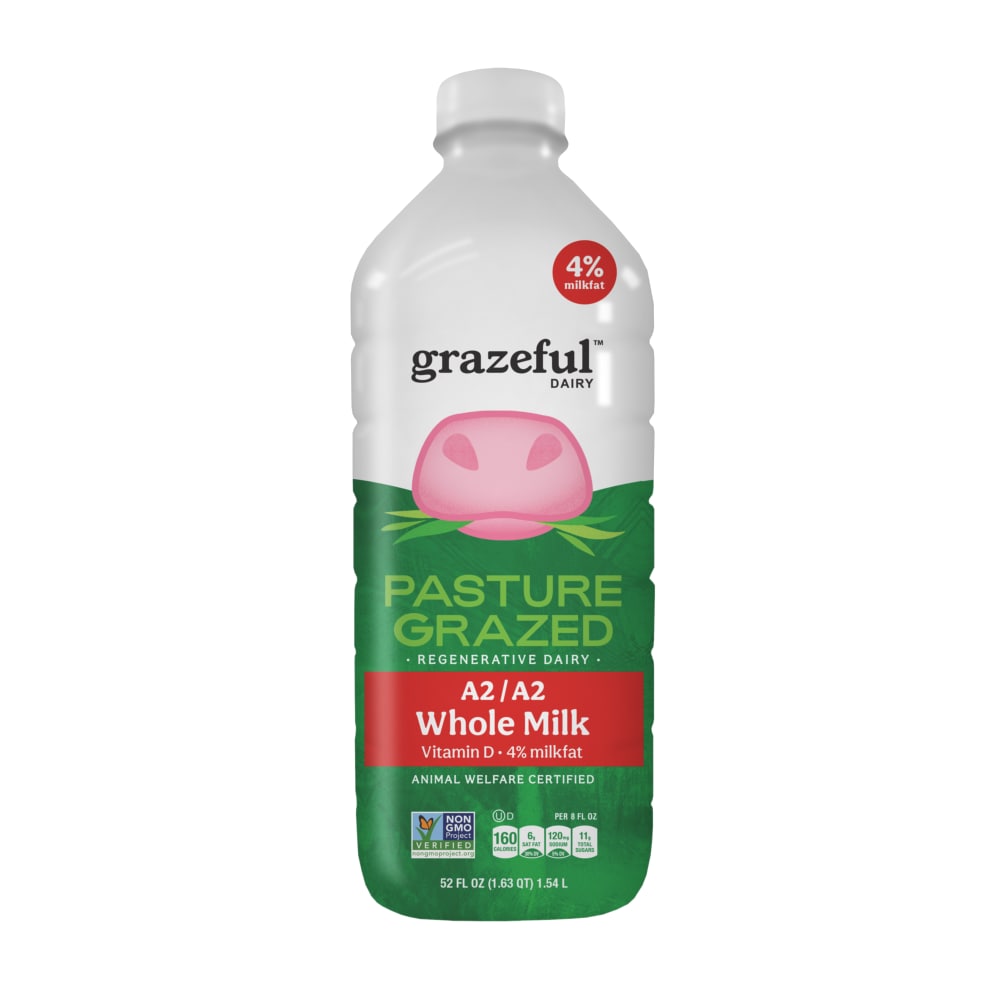
At a glance
Summary
This lactose-free whole milk is minimally processed, retaining its natural nutritional profile while being suitable for lactose-intolerant individuals due to the addition of lactase enzyme. The inclusion of Vitamin D3 enhances its nutritional value, supporting bone health. The product's clean ingredient list and minimal processing contribute to its high rating.
Key ingredients 3
MilkGood
Milk is a natural source of high-quality protein and essential nutrients like calcium and vitamin B12. It is minimally processed, retaining its nutritional profile. The absence of lactose makes it suitable for lactose-intolerant individuals.
Risks
Some individuals may have allergies to milk proteins, which can cause adverse reactions.
Benefits
Provides essential nutrients such as calcium and vitamin D, which are important for bone health.
Lactase enzymeGood
Lactase enzyme is added to break down lactose, making the milk digestible for lactose-intolerant individuals. It is a natural enzyme that aids in the digestion of dairy products. The inclusion of lactase does not alter the nutritional content of the milk.
Benefits
Enables lactose-intolerant individuals to consume milk without discomfort.
Vitamin D3Good
Vitamin D3 is essential for calcium absorption and bone health. It is often added to milk to enhance its nutritional profile. The fortification process ensures adequate intake of this vital nutrient.
Benefits
Supports bone health by enhancing calcium absorption and maintaining proper bone structure.
Processing
Unprocessed or Minimally Processed Foods
Get the full breakdown in the Scout appTake Scout shopping
Scan any product to see lab results, healthy alternatives, and your personalized analysis.
Download on theApp Store GET IT ONGoogle Play