

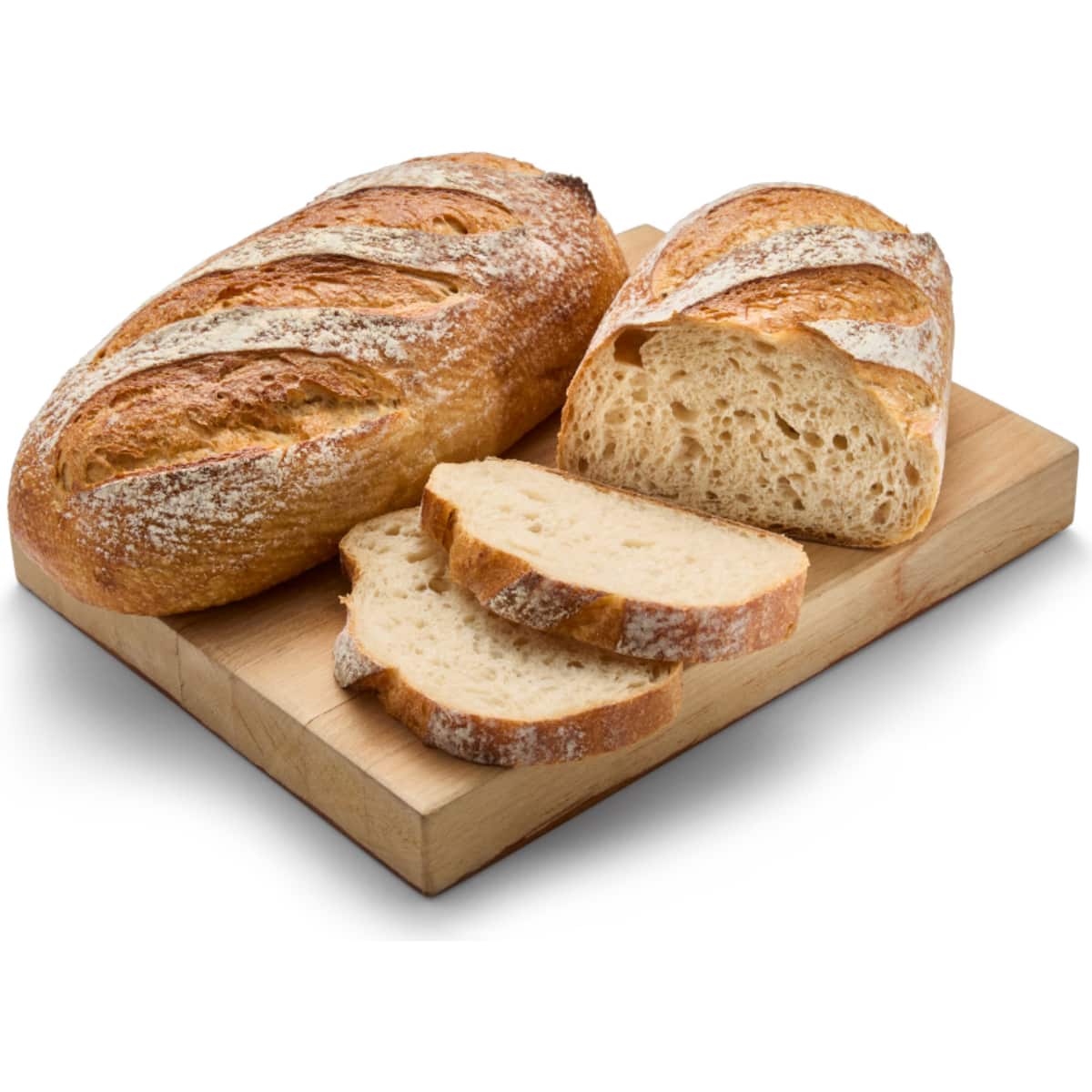


New York Bakery Sourdough NYC Bagels
Analysis updated August 2026 · How Scout scores
At a glance
Summary
This product is a processed food with a relatively clean ingredient list, featuring beneficial components like an active sourdough starter and sea salt. However, it includes refined ingredients such as bread flour and added sugars, which contribute to its processing level. The presence of multiple sweeteners and additives like molasses powder and enzymes further impacts its score, despite the absence of harmful seed oils or artificial additives.
Key ingredients 13
Active sourdough starterGood
Active sourdough starter is a natural leavening agent that enhances the flavor and texture of bread. It contains beneficial bacteria and yeast that can improve gut health. The fermentation process can also increase the bioavailability of nutrients.
Benefits
Contains beneficial probiotics that support gut health and enhance nutrient absorption.
Sea saltGood
Sea salt is a minimally processed salt that contains trace minerals. It is used to enhance flavor and preserve food. Unlike refined table salt, it retains natural minerals that can be beneficial to health.
Risks
Excessive sodium intake can lead to hypertension and cardiovascular issues.
Benefits
Provides essential minerals and enhances the flavor of food.
Ascorbic acidGood
Vitamin C — beneficial even when serving as a preservative.
Benefits
Acts as an antioxidant and improves dough quality and shelf life.
Bread flourNeutral
Bread flour is a refined flour commonly used in baking for its high gluten content. It provides structure and texture to baked goods but lacks the nutritional benefits of whole grain flours. It is a staple ingredient in many bread products.
Risks
Refined flour can contribute to blood sugar spikes and lacks fiber.
Benefits
Provides structure and elasticity to baked goods, making it ideal for bread making.
WaterNeutral
Water is a fundamental ingredient in baking, providing moisture and aiding in the activation of yeast. It is essential for the dough formation process. Water itself does not provide nutritional benefits but is crucial for hydration.
Benefits
Essential for hydration and dough formation in baking.
Barley malt powderNeutral
Barley malt powder is used as a sweetener and flavor enhancer in baking. It is derived from sprouted barley grains and adds a mild sweetness and color to baked goods. It is less processed than refined sugars but still contributes to sugar intake.
Risks
May contribute to sugar intake if consumed in large amounts.
Benefits
Provides a natural sweetness and enhances the flavor profile of baked goods.
Malt syrupNeutral
Malt syrup is a sweetener derived from malted barley, used to add flavor and color to baked goods. It is less refined than white sugar but still contributes to sugar content. It is often used in bagels for its distinct taste.
Risks
May contribute to sugar intake and related health issues if consumed excessively.
Benefits
Enhances flavor and provides a natural sweetness to baked goods.
Raisin juice concentrateNeutral
Raisin juice concentrate is used as a natural sweetener and flavor enhancer. It is derived from raisins and contains natural sugars and some antioxidants. It is a less processed alternative to refined sugars.
Risks
High in natural sugars, which can contribute to calorie intake.
Benefits
Contains natural sugars and antioxidants, providing a healthier alternative to refined sugars.
YeastNeutral
Yeast is a leavening agent used in baking to help dough rise. It is a natural ingredient that contributes to the texture and flavor of bread. Yeast fermentation can also enhance the nutritional profile of baked goods.
Benefits
Aids in dough rising and enhances the flavor and texture of baked goods.
Molasses powderNeutral
Molasses powder is a dehydrated form of molasses used for flavoring and coloring. It contains some vitamins and minerals but is primarily used for its taste. It is less processed than refined sugars but still contributes to sugar content.
Risks
May contribute to sugar intake if consumed in large amounts.
Benefits
Adds flavor and color to baked goods and contains trace minerals.
EnzymesNeutral
Enzymes are used in baking to improve dough handling and texture. They are naturally occurring proteins that catalyze biochemical reactions. Enzymes can enhance the quality of baked goods without adding calories or altering taste.
Benefits
Improve dough texture and quality, enhancing the final product.
CornmealNeutral
Cornmeal is a coarse flour made from dried corn, used for texture and flavor in baking. It is a whole grain product that provides fiber and some nutrients. It is often used to prevent sticking and add a crunchy texture to baked goods.
Benefits
Provides fiber and nutrients, enhancing the texture and flavor of baked goods.
Brown sugarBad
Processed additive flagged under Scout's ingredient doctrine.
Risks
Excessive consumption can lead to health issues such as obesity and diabetes.
Benefits
Adds flavor and moisture to baked goods due to its molasses content.
Processing
Processed Foods
Get the full breakdown in the Scout appTake Scout shopping
Scan any product to see lab results, healthy alternatives, and your personalized analysis.
Download on theApp Store GET IT ONGoogle Play