
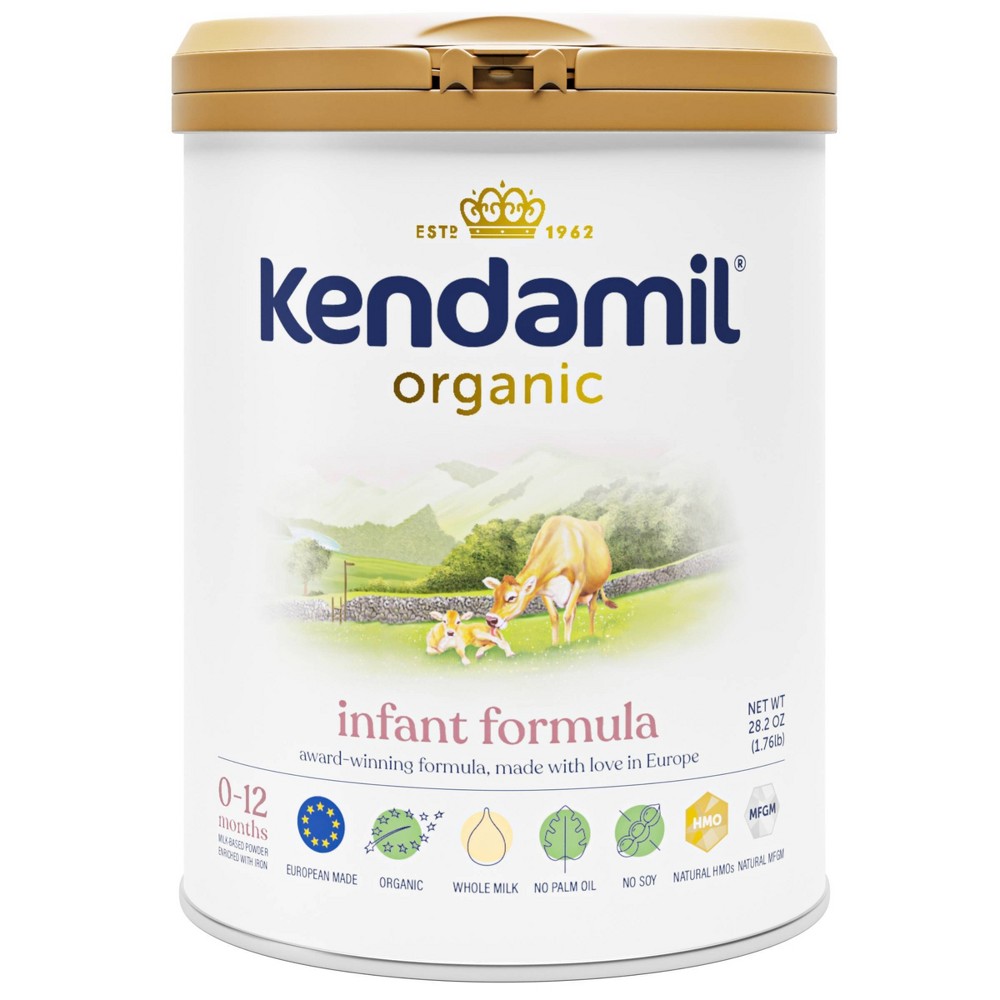
Kendamil Organic Stage 1 Powder Infant Formula - 28.2oz

73 Good
$24.64 · 14.1 oz
View on Amazon
Verified Amazon match

Summary

This infant formula is made with high-quality organic ingredients, including whole milk and whey protein, which provide essential nutrients for growth and development. However, the presence of organic vegetable oils, particularly rapeseed oil, introduces a high omega-6 content, which can be inflammatory. The product is moderately processed, which limits its score despite the overall clean ingredient list.

At a glance

Beneficial ingredients 13
Harmful ingredients 1
Category Milk

Key ingredients 36

Organic whole milk
Very Good

Organic whole milk is a high-quality source of essential nutrients for infants. It provides a natural balance of fats, proteins, and carbohydrates necessary for growth and development. Being organic, it is free from synthetic pesticides and hormones.

Benefits

Rich in essential nutrients such as calcium, vitamin D, and healthy fats that support infant growth and bone development.

See more about Organic whole milk →
Organic demineralised milk whey protein
Good

This ingredient is a high-quality protein source derived from milk, providing essential amino acids. It is demineralized to reduce mineral content, making it suitable for infant formulas. The organic certification ensures it is free from synthetic additives.

Benefits

Provides essential amino acids necessary for infant growth and development.

Organic skimmed milk
Good

Organic skimmed milk is a low-fat source of protein and calcium. It is used to balance the fat content in infant formulas while providing essential nutrients. The organic certification ensures it is free from synthetic additives and hormones.

Benefits

Provides protein and calcium essential for bone health and development.

Organic vegetable oils
Bad

This blend includes sunflower, coconut, and rapeseed oils, which are used to provide essential fatty acids. However, rapeseed oil is a seed oil with high omega-6 content, which may promote inflammation. The organic certification ensures no synthetic pesticides are used.

Risks

High omega-6 content in rapeseed oil may promote inflammation when consumed in excess.

Benefits

Provides essential fatty acids necessary for brain development and energy.

Organic galacto-oligosaccharides
Good

Galacto-oligosaccharides are prebiotics that support gut health by promoting beneficial bacteria growth. Derived from milk, they are included to mimic the prebiotic effects of human milk. Being organic, they are free from synthetic additives.

Benefits

Supports digestive health by promoting the growth of beneficial gut bacteria.

Calcium citrate
Neutral

Calcium citrate is a calcium salt used to fortify infant formulas with calcium. It is well-absorbed and helps support bone development. It is a common additive in fortified foods.

Benefits

Provides calcium necessary for bone development and maintenance.

See more about Calcium citrate →
Sodium citrate
Neutral

Sodium citrate is used as an acidity regulator and stabilizer in infant formulas. It helps maintain the pH balance and stability of the formula. It is generally recognized as safe when used in food products.

Benefits

Helps maintain the stability and pH balance of the formula.

See more about Sodium citrate →
Potassium chloride
Neutral

Potassium chloride is used to provide potassium, an essential mineral for various bodily functions. It helps maintain electrolyte balance in the formula. It is a common additive in fortified foods.

Benefits

Provides potassium necessary for maintaining electrolyte balance and proper muscle function.

See more about Potassium chloride →
Calcium lactate
Neutral

Calcium lactate is a calcium salt used to fortify infant formulas with calcium. It is easily absorbed and supports bone health. It is a common additive in fortified foods.

Benefits

Provides calcium necessary for bone development and maintenance.

See more about Calcium lactate →
Magnesium chloride
Neutral

Magnesium chloride is used to provide magnesium, an essential mineral for various bodily functions. It helps maintain electrolyte balance in the formula. It is a common additive in fortified foods.

Benefits

Provides magnesium necessary for maintaining electrolyte balance and proper muscle function.

Oil from the microalgae Schizochytrium sp.
Good

This oil is a source of DHA, an omega-3 fatty acid important for brain and eye development. It is derived from microalgae, making it a sustainable and vegetarian source of DHA. It is included to mimic the fatty acid profile of human milk.

Benefits

Provides DHA, an essential omega-3 fatty acid for brain and eye development.

Vitamin C
Good

Vitamin C is an essential nutrient that supports immune function and acts as an antioxidant. It is added to infant formulas to ensure adequate intake for growth and development. It helps enhance iron absorption from the formula.

Benefits

Supports immune function and enhances iron absorption.

See more about Vitamin C →
Potassium hydroxide
Neutral

Potassium hydroxide is used as a pH adjuster in infant formulas. It helps maintain the formula's stability and pH balance. It is generally recognized as safe when used in food products.

Benefits

Helps maintain the stability and pH balance of the formula.

See more about Potassium hydroxide →
Choline bitartrate
Good

Choline bitartrate is a source of choline, an essential nutrient for brain development and function. It is added to infant formulas to support cognitive development. Choline is important for the formation of cell membranes.

Benefits

Supports brain development and cognitive function.

Inositol
Good

Inositol is a carbohydrate that plays a role in cell membrane formation and nerve function. It is included in infant formulas to support brain development. It is naturally present in human milk.

Benefits

Supports brain development and nerve function.

See more about Inositol →
Oil from Mortierella alpina
Good

This oil is a source of ARA, an omega-6 fatty acid important for brain and eye development. It is derived from fungi, making it a sustainable source of ARA. It is included to mimic the fatty acid profile of human milk.

Benefits

Provides ARA, an essential omega-6 fatty acid for brain and eye development.

Taurine
Neutral

Taurine is an amino acid important for brain development and function. It is added to infant formulas to support cognitive development. It is naturally present in human milk.

Benefits

Supports brain development and cognitive function.

See more about Taurine →
Nucleotides
Neutral

Nucleotides are the building blocks of DNA and RNA, important for cell growth and repair. They are added to infant formulas to support immune function and development. They are naturally present in human milk.

Benefits

Supports immune function and cell growth.

Iron pyrophosphate
Neutral

Iron pyrophosphate is a source of iron, an essential mineral for oxygen transport and cognitive development. It is added to infant formulas to prevent iron deficiency anemia. It is a common additive in fortified foods.

Benefits

Provides iron necessary for oxygen transport and cognitive development.

Zinc sulphate
Neutral

Zinc sulphate is a source of zinc, an essential mineral for immune function and growth. It is added to infant formulas to ensure adequate intake for development. It is a common additive in fortified foods.

Benefits

Provides zinc necessary for immune function and growth.

Vitamin E
Good

Vitamin E is an antioxidant that protects cells from oxidative damage. It is added to infant formulas to support immune function and skin health. It is naturally present in human milk.

Benefits

Supports immune function and protects cells from oxidative damage.

See more about Vitamin E →
Niacin
Neutral

Niacin, also known as vitamin B3, is important for energy metabolism and skin health. It is added to infant formulas to ensure adequate intake for growth and development. It is a common additive in fortified foods.

Benefits

Supports energy metabolism and skin health.

See more about Niacin →
Pantothenic acid
Neutral

Pantothenic acid, also known as vitamin B5, is important for energy metabolism and the synthesis of hormones. It is added to infant formulas to ensure adequate intake for growth and development. It is a common additive in fortified foods.

Benefits

Supports energy metabolism and hormone synthesis.

Copper sulphate
Neutral

Copper sulphate is a source of copper, an essential mineral for iron metabolism and immune function. It is added to infant formulas to ensure adequate intake for development. It is a common additive in fortified foods.

Benefits

Provides copper necessary for iron metabolism and immune function.

Thiamin
Neutral

Thiamin, also known as vitamin B1, is important for energy metabolism and nerve function. It is added to infant formulas to ensure adequate intake for growth and development. It is a common additive in fortified foods.

Benefits

Supports energy metabolism and nerve function.

See more about Thiamin →
Riboflavin
Neutral

Riboflavin, also known as vitamin B2, is important for energy metabolism and skin health. It is added to infant formulas to ensure adequate intake for growth and development. It is a common additive in fortified foods.

Benefits

Supports energy metabolism and skin health.

See more about Riboflavin →
Vitamin A
Good

Vitamin A is essential for vision, immune function, and skin health. It is added to infant formulas to ensure adequate intake for growth and development. It is naturally present in human milk.

Benefits

Supports vision, immune function, and skin health.

See more about Vitamin A →
Vitamin B6
Neutral

Vitamin B6 is important for protein metabolism and cognitive development. It is added to infant formulas to ensure adequate intake for growth and development. It is a common additive in fortified foods.

Benefits

Supports protein metabolism and cognitive development.

See more about Vitamin B6 →
Manganese sulphate
Neutral

Manganese sulphate is a source of manganese, an essential mineral for bone development and metabolism. It is added to infant formulas to ensure adequate intake for growth and development. It is a common additive in fortified foods.

Benefits

Provides manganese necessary for bone development and metabolism.

Folic acid
Good

Folic acid is important for DNA synthesis and cell growth. It is added to infant formulas to ensure adequate intake for growth and development. It is essential for preventing neural tube defects.

Benefits

Supports DNA synthesis and cell growth, and prevents neural tube defects.

See more about Folic acid →
Potassium iodide
Neutral

Potassium iodide is a source of iodine, an essential mineral for thyroid function and metabolism. It is added to infant formulas to ensure adequate intake for growth and development. It is a common additive in fortified foods.

Benefits

Provides iodine necessary for thyroid function and metabolism.

Sodium selenite
Neutral

Sodium selenite is a source of selenium, an essential mineral for antioxidant defense and immune function. It is added to infant formulas to ensure adequate intake for growth and development. It is a common additive in fortified foods.

Benefits

Provides selenium necessary for antioxidant defense and immune function.

Vitamin K
Neutral

Vitamin K is important for blood clotting and bone health. It is added to infant formulas to ensure adequate intake for growth and development. It is a common additive in fortified foods.

Benefits

Supports blood clotting and bone health.

Vitamin D3
Good

Vitamin D3 is essential for calcium absorption and bone health. It is added to infant formulas to ensure adequate intake for growth and development. It is naturally present in human milk.

Benefits

Supports calcium absorption and bone health.

See more about Vitamin D3 →
Biotin
Neutral

Biotin, also known as vitamin B7, is important for energy metabolism and skin health. It is added to infant formulas to ensure adequate intake for growth and development. It is a common additive in fortified foods.

Benefits

Supports energy metabolism and skin health.

See more about Biotin →
Vitamin B12
Neutral

Vitamin B12 is important for red blood cell formation and cognitive development. It is added to infant formulas to ensure adequate intake for growth and development. It is a common additive in fortified foods.

Benefits

Supports red blood cell formation and cognitive development.

See more about Vitamin B12 →

Processing

Group 3 · Processed

Processed Foods

Get the full breakdown in the Scout app

Scan any product to see lab results, healthy alternatives, and your personalized analysis.

Download on theApp Store